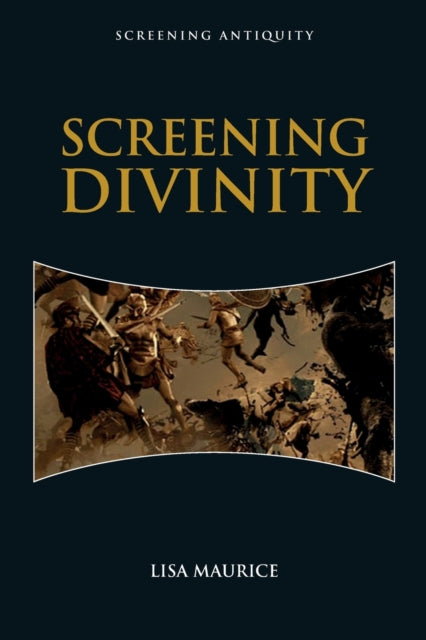
Lisa Maurice
Screening Divinity
Screening Divinity
💎 Earn 92 Points (£0.92) on this item.
YOU SAVE £5.59
- Condition: Brand new
- UK Delivery times: Usually arrives within 2 - 3 working days
- UK Shipping: Fee starts at £3.89. Subject to product weight & dimension
Bulk ordering. Want 15 or more copies? Get a personalised quote and bigger discounts. Learn more about bulk orders.
Couldn't load pickup availability
- More about Screening Divinity
Lisa Maurice explores the gods of Greek and Roman mythology and compares them to the biblical God in her work.
\n Format: Paperback / softback
\n Length: 240 pages
\n Publication date: 28 February 2021
\n Publisher: Edinburgh University Press
\n
Lisa Maurice delves into the captivating realm of film studies, exploring the intricate connections between film and theology, as well as the rich tapestry of classical reception. With a keen eye for scholarship, she examines the fascinating gods of Greek and Roman mythology, juxtaposed against the profound and enduring presence of the biblical God of the Judeo-Christian tradition.
In her scholarly inquiry, Maurice uncovers the profound resonances and parallels between these ancient deities and the divine figure central to the Judeo-Christian faith. She delves into the rich tapestry of mythological narratives, tracing the themes and symbols that intertwine with the teachings of the Bible. Through this comparative analysis, she sheds light on the enduring themes of love, justice, and redemption that transcend cultural boundaries and time periods.
Maurice's exploration of film and theology is not limited to the classical realm. She also delves into contemporary cinematic interpretations of religious themes, analyzing how filmmakers have reimagined and reinterpreted ancient narratives for modern audiences. By examining the ways in which film can convey spiritual truths and evoke emotional responses, she highlights the power of visual storytelling to engage and inspire.
Furthermore, Maurice's work extends to the realm of classical reception, where she examines how classical texts and artworks have influenced the development of film and storytelling. She explores the ways in which classical themes and motifs have been reinterpreted and adapted in contemporary films, highlighting the enduring influence of the classical world on modern culture.
Through her comprehensive and interdisciplinary approach, Lisa Maurice offers a fresh perspective on the complex relationship between film, theology, and classical reception. Her work encourages us to think critically about the ways in which these cultural expressions intersect and shape our understanding of the divine and the human experience.
In conclusion, Lisa Maurice's scholarship on film, particularly film and theology as well as classical reception, is a testament to her dedication to exploring the rich tapestry of human creativity and spirituality. Through her meticulous research and thoughtful analysis, she provides a valuable contribution to our understanding of the complex interplay between these three realms and offers insights that resonate beyond the academic sphere.
Maurice's exploration of film and theology delves into the intricate connections between these two disciplines, shedding light on the ways in which film can be used as a medium for religious expression and exploration. Through her analysis of classical reception, she highlights the enduring influence of classical texts and artworks on the development of film and storytelling.
In her examination of the gods of Greek and Roman mythology, Maurice explores the themes and symbols that resonate with the Judeo-Christian tradition. She notes how these ancient deities were often portrayed as anthropomorphic representations of human qualities and virtues, such as love, justice, and redemption. By comparing these representations with the biblical God, Maurice highlights the shared themes of morality and ethics that underpin both religious traditions.
One of the key insights that Maurice offers is the way in which film can convey spiritual truths and evoke emotional responses. She argues that film has the ability to tap into the human psyche and evoke a sense of transcendence and awe, similar to the experience of prayer or meditation. Through the use of visual imagery, sound design, and storytelling techniques, filmmakers can create powerful narratives that resonate with audiences on a spiritual level.
Furthermore, Maurice explores how contemporary cinematic interpretations of religious themes have shaped our understanding of the divine and the human experience. She analyzes how filmmakers have reimagined and reinterpreted ancient narratives for modern audiences, often incorporating new technologies and visual effects to create immersive and visually stunning experiences. By examining these contemporary interpretations, Maurice highlights the ways in which film can be used as a tool for cultural dialogue and exploration.
In addition to her analysis of film and theology, Maurice also delves into the realm of classical reception. She examines how classical texts and artworks have influenced the development of film and storytelling, highlighting the ways in which classical themes and motifs have been reinterpreted and adapted in contemporary films. Through this lens, she explores the enduring influence of the classical world on modern culture and the ways in which film can be used as a means of preserving and celebrating this legacy.
Overall, Maurice's scholarship on film, particularly film and theology as well as classical reception, offers a comprehensive and interdisciplinary approach to understanding the complex relationship between these three realms. Through her meticulous research and thoughtful analysis, she provides valuable insights that resonate beyond the academic sphere.
In conclusion, Lisa Maurice's scholarship on film, particularly film and theology as well as classical reception, is a testament to her dedication to exploring the rich tapestry of human creativity and spirituality. Through her meticulous research and thoughtful analysis, she provides valuable insights that resonate beyond the academic sphere. Her work encourages us to think critically about the ways in which these cultural expressions intersect and shape our understanding of the divine and the human experience.
\n Weight: 372g\n
Dimension: 154 x 234 x 24 (mm)\n
ISBN-13: 9781474425742\n \n
UK and International shipping information
UK and International shipping information
We deliver throughout the United Kingdom and to 128 countries and territories worldwide, including the United States, Australia, Canada, Germany, Spain and France.