Stephen J. Nelson
Searching the Soul of the College and University in America: Religious and Democratic Covenants and Controversies
Searching the Soul of the College and University in America: Religious and Democratic Covenants and Controversies
💎 Earn 504 Points (£5.04) on this item.
We can order this item for you. Delivery usually takes about 4 to 6 weeks.
This item is not held in our immediate stock. We will order it for you after checkout.
Estimated delivery: About 4 to 6 weeks
- Condition: Brand new
- UK Delivery times: Usually arrives within 2 - 3 working days
- UK Shipping: Fee starts at £2.39. Subject to product weight & dimension
Bulk ordering. Want 15 or more copies? Get a personalised quote and bigger discounts. Learn more about bulk orders.
Couldn't load pickup availability
- More about Searching the Soul of the College and University in America: Religious and Democratic Covenants and Controversies
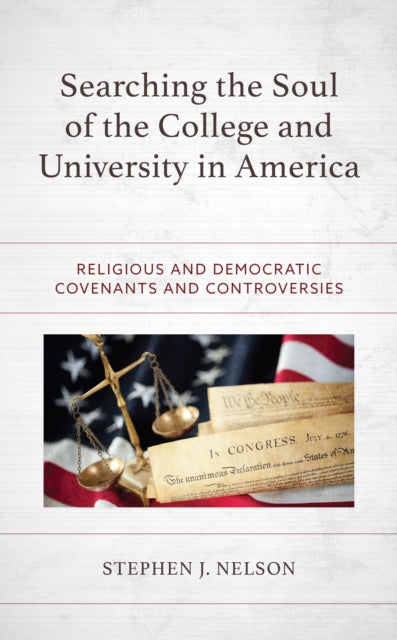
The story of religious and democratic covenants and controversies in the foundations of the American nation and its colleges and universities is a complex one, involving religion, politics, creeds, and convictions. The nation and its colleges share the same space, history, and religious and democratic heralds and heroes, and democratic and political theories and philosophies have been reflected in battles waged about the essential nature of the American nation and its colleges and universities. These traits constitute how America, its public, and its citizens have wrestled with the aspirations and ideals that define civic duty, the commons, and the common good.
Format: Hardback
Length: 358 pages
Publication date: 30 October 2023
Publisher: Bloomsbury Publishing Plc
The story of religious and democratic covenants and controversies in the foundations of the American nation and in the soul of its colleges and universities is a complex and multifaceted one. It encompasses the interplay of religion and politics, the creeds and convictions of citizens and religious people, and the competing and cooperating religious faiths and impulses that have shaped the nation and its institutions. At the heart of this story is the intertwining of the religion of the Republic in America with a symbiotic religion of the academy in its colleges and universities. The nation and its colleges share the same space, history, and religious and democratic heralds and heroes, and democratic and political theories and philosophies have been reflected both in the Republic and in battles waged about the essential nature of the American nation and its colleges and universities. These traits constitute how America, its public, and its citizens have wrestled with the aspirations and ideals that define civic duty, the commons, and the common good.
One of the key themes in this story is the tension between religious freedom and the separation of church and state. While the United States was founded on the principle of religious freedom, it has also been a nation that has struggled with the question of how to balance religious beliefs and practices with the demands of a democratic society. This tension has been particularly acute in the context of higher education, where religious institutions have often sought to influence the curriculum and the teaching of religious beliefs.
One of the most significant examples of this tension is the debate over the teaching of evolution in public schools. In the early 20th century, a group of religious fundamentalists argued that the teaching of evolution was a threat to their religious beliefs and that it should be banned from public schools. This debate led to a series of court cases, including the landmark case of Epperson v. Arkansas, which ruled that the teaching of evolution was constitutional. However, the debate over the teaching of evolution has continued to this day, with some religious groups continuing to oppose the teaching of evolution in public schools.
Another example of the tension between religious freedom and the separation of church and state is the debate over the use of religious symbols and imagery in public spaces. In the United States, there is a long history of religious symbols and imagery being used in public spaces, such as the American flag, the national anthem, and the Pledge of Allegiance. However, there have been concerns that these symbols and imagery may be offensive to non-religious individuals or may promote a particular religious belief or ideology.
To address these tensions, the United States has developed a system of religious freedom and separation of church and state. This system includes the First Amendment to the Constitution, which guarantees the right to religious freedom, and the Establishment Clause, which prohibits the government from establishing a religion or favoring one religion over another. The Supreme Court has played a critical role in interpreting these clauses and has ruled on a wide range of cases involving religious freedom and the separation of church and state.
Despite these efforts, there have been ongoing challenges to religious freedom and the separation of church and state in the United States. For example, there have been attempts to restrict the ability of religious organizations to engage in political activity, such as the Johnson Amendment, which prohibits churches from endorsing political candidates. There have also been concerns about the impact of religious beliefs and practices on public health and safety, such as the debate over the use of medical marijuana.
In addition to the tension between religious freedom and the separation of church and state, there have also been controversies over the role of religion in higher education. Some religious groups have argued that higher education should be primarily focused on religious education and that secular education should be limited. Others have argued that higher education should be a place for open and critical inquiry, where students can explore a wide range of religious and non-religious beliefs and ideas.
To address these controversies, higher education institutions have developed a range of policies and practices. Some institutions have established religious studies programs, which provide students with a deeper understanding of religious beliefs and practices. Others have established religious centers and chapels, which provide students with a place to worship and engage in religious activities.
However, there have also been concerns about the impact of religious institutions on the academic freedom of students and faculty. Some religious institutions have been accused of trying to control the curriculum and the teaching of religious beliefs, and some faculty members have been accused of promoting their religious beliefs in the classroom.
To address these concerns, higher education institutions have developed a range of policies and practices. Some institutions have established academic freedom policies, which protect the right of students and faculty to express their beliefs and engage in academic inquiry without fear of retaliation. Others have established religious studies programs that are open to students of all religious backgrounds and that provide a balanced and critical understanding of religious beliefs and practices.
In conclusion, the story of religious and democratic covenants and controversies in the foundations of the American nation and in the soul of its colleges and universities is a complex and multifaceted one. It encompasses the interplay of religion and politics, the creeds and convictions of citizens and religious people, and the competing and cooperating religious faiths and impulses that have shaped the nation and its institutions. While the United States has developed a system of religious freedom and separation of church and state, there have been ongoing challenges to these principles. Higher education institutions have developed a range of policies and practices to address these challenges, but there is still work to be done to ensure that religious freedom and the separation of church and state are protected in the United States.
Weight: 739g
Dimension: 240 x 157 x 32 (mm)
ISBN-13: 9781793624239
This item can be found in:
UK and International shipping information
UK and International shipping information
UK Delivery and returns information:
- Delivery within 2 - 3 days when ordering in the UK.
- Shipping fee for UK customers from £2.39. Fully tracked shipping service available.
- Returns policy: Return within 30 days of receipt for full refund.
International deliveries:
Shulph Ink now ships to Australia, Belgium, Canada, France, Germany, Ireland, Italy, India, Luxembourg Saudi Arabia, Singapore, Spain, Netherlands, New Zealand, United Arab Emirates, United States of America.
- Delivery times: within 5 - 10 days for international orders.
- Shipping fee: charges vary for overseas orders. Only tracked services are available for most international orders. Some countries have untracked shipping options.
- Customs charges: If ordering to addresses outside the United Kingdom, you may or may not incur additional customs and duties fees during local delivery.