YanivVoller
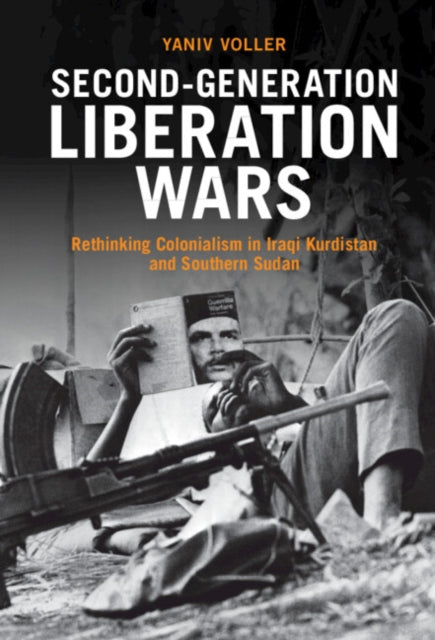
Second-Generation Liberation Wars: Rethinking Colonialism in Iraqi Kurdistan and Southern Sudan
Second-Generation Liberation Wars: Rethinking Colonialism in Iraqi Kurdistan and Southern Sudan
💎 Earn 387 Points (£3.87) on this item.
We can order this item for you. Delivery usually takes about 4 to 6 weeks.
This item is not held in our immediate stock. We will order it for you after checkout.
Estimated delivery: About 4 to 6 weeks
YOU SAVE £4.59
- Condition: Brand new
- UK Delivery times: Usually arrives within 2 - 3 working days
- UK Shipping: Fee starts at £2.39. Subject to product weight & dimension
Bulk ordering. Want 15 or more copies? Get a personalised quote and bigger discounts. Learn more about bulk orders.
Couldn't load pickup availability
- More about Second-Generation Liberation Wars: Rethinking Colonialism in Iraqi Kurdistan and Southern Sudan
Yaniv Voller's book explores the strategies governments and insurgents employed in post-colonial separatist wars, shaping their identities, aims, and strategies. It focuses on two conflicts: Iraqi Kurdistan and Southern Sudan, offering a new understanding of colonialism, decolonisation, and international politics.
Format: Hardback
Length: 304 pages
Publication date: 24 February 2022
Publisher: Cambridge University Press
The birth of post-colonial states in Africa and the Middle East sparked prolonged separatist conflicts. In his insightful examination, Yaniv Voller delves into the evolution of these wars, exploring the strategies employed by both governments and insurgents. Drawing from a wealth of primary sources, Voller focuses on two notable post-colonial separatist conflicts: the Iraqi Kurdistan conflict between Kurdish separatists and the government in Baghdad and the Southern Sudan conflict between black African insurgents and the government in Khartoum. Through his detailed account of these conflicts, Voller offers a fresh perspective on colonialism, decolonization, and the complex international politics of the post-colonial world.
The emergence of post-colonial states in Africa and the Middle East marked a significant period in world history, characterized by the process of decolonization and the formation of new nation-states. However, this transition was not without its challenges, as it gave rise to prolonged separatist wars that continued to shape the political landscape of these regions. In this essay, we will explore the evolution of these separatist wars, examining the strategies employed by both governments and insurgents, as well as the historical context that influenced their development.
One of the most notable examples of post-colonial separatist wars is the Iraqi Kurdistan conflict. This conflict emerged in the aftermath of the Gulf War, as the Kurds sought to establish their own independent state within Iraq. The Kurds had long been marginalized by the Iraqi government, which had suppressed their cultural and political rights. The conflict between the Kurds and the government in Baghdad was marked by intense violence, with both sides employing a range of tactics to gain control of territory and resources.
The Iraqi government, for its part, relied heavily on military force to suppress the Kurdish separatists. The government launched a series of air strikes and ground campaigns against Kurdish positions, using heavy weapons and tanks to crush the rebellion. The Kurds, on the other hand, employed guerrilla tactics, including suicide bombings and ambushes, to inflict casualties on the Iraqi military and gain support from the international community.
The conflict in Iraqi Kurdistan was also influenced by the broader regional dynamics of the Middle East. The region was characterized by a complex web of sectarian and ethnic tensions, with the Kurds representing a significant minority population in several countries. The conflict between the Kurds and the government in Baghdad was seen by some as a proxy war between competing sectarian and ethnic groups, with the Iraqi government attempting to maintain its hold on power by suppressing the Kurdish separatists.
In contrast to the Iraqi Kurdistan conflict, the Southern Sudan conflict was characterized by a different set of dynamics. This conflict emerged in the aftermath of the civil war in Sudan, which lasted for over two decades and resulted in the deaths of millions of people. The conflict in Southern Sudan was between the government in Khartoum, which was dominated by the Arab majority, and the separatist movements of the black African communities in the south.
The separatist movements in Southern Sudan sought to establish their own independent state, known as South Sudan, which would have equal representation for all ethnic groups in the region. The conflict between the government in Khartoum and the separatist movements was marked by intense violence, with both sides employing a range of tactics to gain control of territory and resources.
The government in Khartoum, for its part, relied heavily on military force resources to suppress the separatist movements. The government launched a series of air strikes and ground campaigns against separatist positions, using heavy weapons and tanks to crush the rebellion. The separatist movements, on the other hand, employed guerrilla tactics, including ambushes and raids, to inflict casualties on the government forces and gain support from the international community.
The Southern Sudan conflict was also influenced by the broader regional dynamics of the Middle East. The region was characterized by a complex web of sectarian and ethnic tensions, with the black African communities in the south representing a significant minority population in several countries. The conflict between the government in Khartoum and the separatist movements was seen by some as a proxy war between competing sectarian and ethnic groups, with the government attempting to maintain its hold on power by suppressing the separatist movements.
In conclusion, the birth of post-colonial states in Africa and the Middle East gave birth to prolonged separatist wars that continued to shape the political landscape of these regions for decades to come. These conflicts were marked by intense violence and a range of tactics employed by both governments and insurgents. The evolution of these separatist wars was influenced by a complex web of historical, social, and political factors, including colonialism, decolonization, sectarian and ethnic tensions, and regional dynamics. By examining the strategies employed by both governments and insurgents, as well as the historical context that shaped their development, we can gain a deeper understanding of the complex dynamics of post-colonialism and the challenges that continue to shape the political landscape of these regions today.
Weight: 558g
Dimension: 159 x 236 x 24 (mm)
ISBN-13: 9781316513132
Edition number: New ed
This item can be found in:
UK and International shipping information
UK and International shipping information
UK Delivery and returns information:
- Delivery within 2 - 3 days when ordering in the UK.
- Shipping fee for UK customers from £2.39. Fully tracked shipping service available.
- Returns policy: Return within 30 days of receipt for full refund.
International deliveries:
Shulph Ink now ships to Australia, Belgium, Canada, France, Germany, Ireland, Italy, India, Luxembourg Saudi Arabia, Singapore, Spain, Netherlands, New Zealand, United Arab Emirates, United States of America.
- Delivery times: within 5 - 10 days for international orders.
- Shipping fee: charges vary for overseas orders. Only tracked services are available for most international orders. Some countries have untracked shipping options.
- Customs charges: If ordering to addresses outside the United Kingdom, you may or may not incur additional customs and duties fees during local delivery.