Shulph Ink
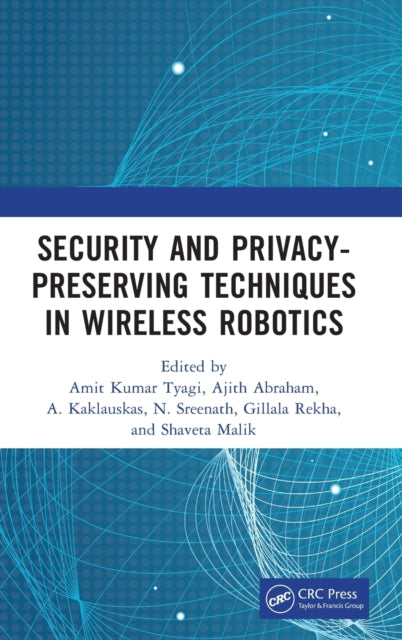
Security and Privacy-Preserving Techniques in Wireless Robotics
Security and Privacy-Preserving Techniques in Wireless Robotics
💎 Earn 689 Points (£6.89) on this item.
We can order this item for you. Delivery usually takes about 4 to 6 weeks.
This item is not held in our immediate stock. We will order it for you after checkout.
Estimated delivery: About 4 to 6 weeks
YOU SAVE £8.18
- Condition: Brand new
- UK Delivery times: Usually arrives within 2 - 3 working days
- UK Shipping: Fee starts at £2.39. Subject to product weight & dimension
Bulk ordering. Want 15 or more copies? Get a personalised quote and bigger discounts. Learn more about bulk orders.
Couldn't load pickup availability
- More about Security and Privacy-Preserving Techniques in Wireless Robotics
A secure and dependable Wireless Robotics (WR) architecture is essential for ensuring confidentiality, authentication, and availability. Blockchain Technology can secure data at the end/server side, and open issues and challenges are discussed. Two chapters on ethical concerns and privacy law are provided for service providers.
Format: Hardback
Length: 338 pages
Publication date: 17 August 2022
Publisher: Taylor & Francis Ltd
A secure and dependable Wireless Robotics (WR) architecture is essential to ensure the confidentiality, authenticity, and availability of data in this rapidly evolving field. Blockchain technology, for instance, can play a crucial role in securing data at both the end and server sides, providing a tamper-proof and transparent record of transactions. However, there are still several open issues and challenges that need to be addressed in order to fully realize the potential of wireless robotics.
One of the major challenges is the lack of standardization in wireless robotics protocols and communication technologies. This can make it difficult for different devices and systems to communicate seamlessly, leading to interoperability issues and reduced efficiency. Another challenge is the security of data transmitted over wireless networks, as hackers can exploit vulnerabilities to steal sensitive information or disrupt the operation of robots.
To address these challenges, researchers and industry experts are working on developing new technologies and protocols that can improve the security and reliability of wireless robotics. One promising approach is the use of decentralized networks, such as blockchain, which can provide a secure and decentralized platform for data storage and transmission. Another approach is the use of machine learning and artificial intelligence algorithms to detect and prevent security threats, such as unauthorized access or data tampering.
In addition to these technical challenges, there are also ethical concerns and privacy laws that need to be considered in wireless robotics. For example, robots that are used in surveillance or security applications may raise concerns about privacy and the use of personal data. Similarly, the use of autonomous robots in public spaces may raise concerns about the safety and liability of these devices.
To address these ethical concerns, service providers and manufacturers of wireless robotics devices need to adhere to strict guidelines and regulations. For example, they may need to obtain explicit consent from users before collecting or using personal data, or they may need to implement privacy-protecting measures such as encryption and data anonymization.
In conclusion, wireless robotics is a rapidly evolving field with significant potential for innovation and growth. However, there are still several challenges that need to be addressed in order to ensure the security, reliability, and ethical use of these devices. By developing new technologies and protocols, and by adhering to strict guidelines and regulations, we can create a secure and dependable WR architecture that can benefit society as a whole.
Wireless robotics is a rapidly evolving field with significant potential for innovation and growth. However, there are still several challenges that need to be addressed in order to ensure the security, reliability, and ethical use of these devices. By developing new technologies and protocols, and by adhering to strict guidelines and regulations, we can create a secure and dependable WR architecture that can benefit society as a whole.
One of the major challenges in wireless robotics is the lack of standardization in protocols and communication technologies. This can make it difficult for different devices and systems to communicate seamlessly, leading to interoperability issues and reduced efficiency. Another challenge is the security of data transmitted over wireless networks, as hackers can exploit vulnerabilities to steal sensitive information or disrupt the operation of robots. To address these challenges, researchers and industry experts are working on developing new technologies and protocols that can improve the security and reliability of wireless robotics.
One promising approach is the use of decentralized networks, such as blockchain, which can provide a secure and decentralized platform for data storage and transmission. Blockchain technology has the potential to create a tamper-proof and transparent record of transactions, making it an ideal solution for secure data storage and transmission in wireless robotics. Another approach is the use of machine learning and artificial intelligence algorithms to detect and prevent security threats, such as unauthorized access or data tampering. Machine learning algorithms can analyze large amounts of data and identify patterns that may indicate a security breach, while artificial intelligence algorithms can respond to security threats in real-time.
In addition to these technical challenges, there are also ethical concerns and privacy laws that need to be considered in wireless robotics. For example, robots that are used in surveillance or security applications may raise concerns about privacy and the use of personal data. Similarly, the use of autonomous robots in public spaces may raise concerns about the safety and liability of these devices. To address these ethical concerns, service providers and manufacturers of wireless robotics devices need to adhere to strict guidelines and regulations.
For example, they may need to obtain explicit consent from users before collecting or using personal data, or they may need to implement privacy-protecting measures such as encryption and data anonymization. In conclusion, wireless robotics is a rapidly evolving field with significant potential for innovation and growth. However, there are still several challenges that need to be addressed in order to ensure the security, reliability, and ethical use of these devices. By developing new technologies and protocols, and by adhering to strict guidelines and regulations, we can create a secure and dependable WR architecture that can benefit society as a whole.
Weight: 640g
Dimension: 164 x 240 x 27 (mm)
ISBN-13: 9780367741730
This item can be found in:
UK and International shipping information
UK and International shipping information
UK Delivery and returns information:
- Delivery within 2 - 3 days when ordering in the UK.
- Shipping fee for UK customers from £2.39. Fully tracked shipping service available.
- Returns policy: Return within 30 days of receipt for full refund.
International deliveries:
Shulph Ink now ships to Australia, Belgium, Canada, France, Germany, Ireland, Italy, India, Luxembourg Saudi Arabia, Singapore, Spain, Netherlands, New Zealand, United Arab Emirates, United States of America.
- Delivery times: within 5 - 10 days for international orders.
- Shipping fee: charges vary for overseas orders. Only tracked services are available for most international orders. Some countries have untracked shipping options.
- Customs charges: If ordering to addresses outside the United Kingdom, you may or may not incur additional customs and duties fees during local delivery.