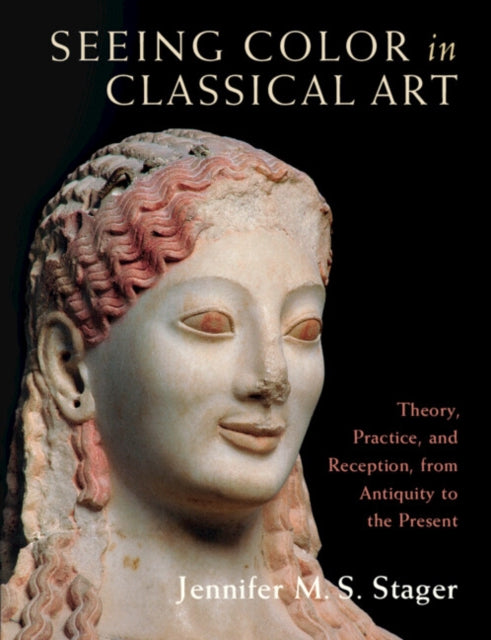
Jennifer M. S.Stager
Seeing Color in Classical Art: Theory, Practice, and Reception, from Antiquity to the Present
Seeing Color in Classical Art: Theory, Practice, and Reception, from Antiquity to the Present
💎 Earn 207 Points (£2.07) on this item.
YOU SAVE £2.46
- Condition: Brand new
- UK Delivery times: Usually arrives within 2 - 3 working days
- UK Shipping: Fee starts at £2.39. Subject to product weight & dimension
Bulk ordering. Want 15 or more copies? Get a personalised quote and bigger discounts. Learn more about bulk orders.
Couldn't load pickup availability
- More about Seeing Color in Classical Art: Theory, Practice, and Reception, from Antiquity to the Present
The remains of ancient Mediterranean art and architecture that have survived over the centuries present the modern viewer with images of white, the color of the stone often used for sculpture. Antiquarian debates and recent scholarship, however, have challenged this aspect of ancient sculpture. Color has consequently become one of the most important issues in the study of classical art. Jennifer Stager's landmark book makes a vital contribution to this discussion, analyzing the dyes, pigments, stones, earth, and metals found in ancient art works, along with the language that writers in antiquity used to describe color. Stager also discusses the significance of a reception history that has emphasized whiteness, revealing how ancient artistic practice and ancient philosophies of color significantly influenced one another.
Format: Hardback
Length: 350 pages
Publication date: 15 December 2022
Publisher: Cambridge University Press
The remnants of ancient Mediterranean art and architecture that have endured through the ages offer the contemporary viewer a glimpse into the world of white, the predominant color often employed in sculpture. However, antiquarian debates and recent scholarship have called into question this aspect of ancient sculpture. It is now widely accepted that sculptures created in the ancient Mediterranean world, as well as art objects in various media, were polychromatic. Consequently, color has emerged as one of the most crucial aspects in the study of classical art. Jennifer Stager's groundbreaking book makes a significant contribution to this ongoing discussion. By examining the dyes, pigments, stones, earth, and metals used in ancient art works, as well as the language employed by writers in antiquity to describe color, Stager delves into the traces of color across various media. Moreover, she explores the significance of a reception history that has prioritized whiteness, shedding light on how ancient artistic practices and ancient philosophies of color intermingled and influenced each other.
The Persistence of White in Ancient Sculpture:
Throughout the centuries, the color white has been associated with ancient sculpture, symbolizing purity, elegance, and timelessness. However, as antiquarian debates and scholarly research have progressed, it has become evident that the sculptures produced in the ancient Mediterranean world were not limited to a single hue. The meticulous examination of dyes, pigments, stones, earth, and metals used in ancient art works has revealed a rich tapestry of colors.
Antiquarian Debates:
In the past, some scholars argued that the use of white in ancient sculpture was a deliberate choice to convey a sense of purity and simplicity. They believed that the color white was associated with religious and philosophical beliefs, and it was used to emphasize the spiritual aspects of the sculptures. However, recent scholarship has challenged this notion.
Scholarly Research:
Through meticulous analysis of ancient texts, art historical records, and scientific techniques, scholars have demonstrated that sculptures produced in the ancient Mediterranean world were often polychromatic. They found evidence of a wide range of colors, including blue, green, red, yellow, and black. These colors were used to create depth, contrast, and visual interest in the sculptures.
Polychromatic Sculptures:
Polychromatic sculptures not only reflect the diversity of cultures and artistic traditions in the ancient Mediterranean world but also demonstrate the sophistication of the artists and their understanding of color theory. The use of multiple colors allowed sculptors to create a sense of realism and depth, making their works more lifelike and captivating.
Reception History:
The emphasis on whiteness in the reception history of ancient sculpture has had a significant impact on our understanding of the works. Over time, the perception of white has been influenced by cultural, historical, and artistic factors. In some periods, white was seen as a symbol of purity and innocence, while in others, it was associated with power and grandeur.
Significance of Color:
Color has become one of the most important issues in the study of classical art. It plays a crucial role in conveying emotions, themes, and cultural significance. The use of color in ancient sculpture adds depth and complexity to the works, allowing the viewer to interpret and appreciate them in new ways.
Jennifer Stager's Contribution:
Jennifer Stager's book, "The Color of Stone: The Ancient Mediterranean World and the Legacy of Polychromy," is a vital contribution to the discussion on the color of ancient sculpture. Stager's extensive research and analysis of ancient art works, as well as the language used to describe color, provide a comprehensive understanding of the traces of color in various media.
Conclusion:
The remnants of ancient Mediterranean art and architecture that have survived through the ages offer a glimpse into the world of white, the predominant color often employed in sculpture. However, the consensus among scholars now is that sculptures produced in the ancient Mediterranean world were polychromatic, with a wide range of colors used to create depth, contrast, and visual interest. Color has become one of the most important issues in the study of classical art, and Jennifer Stager's book contributes significantly to our understanding of this aspect. By examining the dyes, pigments, stones, earth, and metals used in ancient art works, as well as the language employed by writers in antiquity to describe color, Stager sheds light on the traces of color across various media. Moreover, she explores the significance of a reception history that has prioritized whiteness, revealing how ancient artistic practices and ancient philosophies of color intermingled and influenced each other.
Weight: 1186g
Dimension: 286 x 223 x 25 (mm)
ISBN-13: 9781316516454
This item can be found in:
UK and International shipping information
UK and International shipping information
UK Delivery and returns information:
- Delivery within 2 - 3 days when ordering in the UK.
- Shipping fee for UK customers from £2.39. Fully tracked shipping service available.
- Returns policy: Return within 30 days of receipt for full refund.
International deliveries:
Shulph Ink now ships to Australia, Belgium, Canada, France, Germany, Ireland, Italy, India, Luxembourg Saudi Arabia, Singapore, Spain, Netherlands, New Zealand, United Arab Emirates, United States of America.
- Delivery times: within 5 - 10 days for international orders.
- Shipping fee: charges vary for overseas orders. Only tracked services are available for most international orders. Some countries have untracked shipping options.
- Customs charges: If ordering to addresses outside the United Kingdom, you may or may not incur additional customs and duties fees during local delivery.