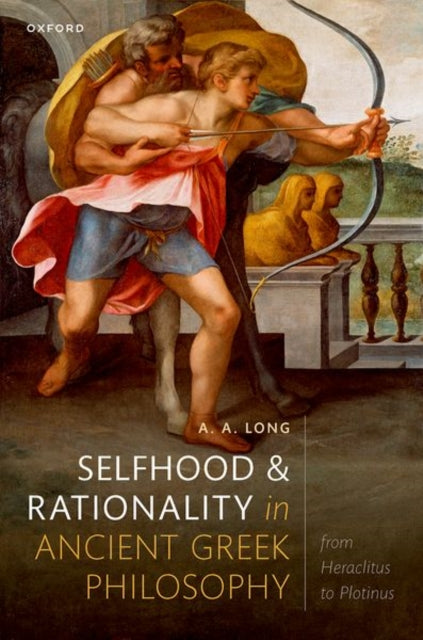
A. A. Long
Selfhood and Rationality in Ancient Greek Philosophy: From Heraclitus to Plotinus
Selfhood and Rationality in Ancient Greek Philosophy: From Heraclitus to Plotinus
💎 Earn 520 Points (£5.20) on this item.
We can order this item for you. Delivery usually takes about 4 to 6 weeks.
This item is not held in our immediate stock. We will order it for you after checkout.
Estimated delivery: About 4 to 6 weeks
- Condition: Brand new
- UK Delivery times: Usually arrives within 2 - 3 working days
- UK Shipping: Fee starts at £2.39. Subject to product weight & dimension
Bulk ordering. Want 15 or more copies? Get a personalised quote and bigger discounts. Learn more about bulk orders.
Couldn't load pickup availability
- More about Selfhood and Rationality in Ancient Greek Philosophy: From Heraclitus to Plotinus
A. A. Long's book explores the themes of selfhood and rationality in ancient Greek philosophy, covering seven centuries of innovative thought. It discusses the notion of a rational self bound up with questions about divinity and happiness called eudaimonia. The book's themes are placed in modern discussions of the self and its normative relation to other people and the world. Ideas and behavior attributed to Socrates and developed by Plato are at the book's center, preceded by essays that explore general facets of the soul's rationality. Later chapters bring in contributions made by Aristotle and Stoic philosophers. The book is written in a style that makes it accessible to many kinds of readers, including professors, graduate students, and anyone interested in the history of our identity as rational animals.
Format: Hardback
Length: 288 pages
Publication date: 27 October 2022
Publisher: Oxford University Press
Long's fourteen essays delve into the themes of selfhood and rationality in ancient Greek philosophy,spanning a remarkable seven centuries of innovative thought. The discussion begins with Heraclitus' injunction to heed the cosmic logos and concludes with Plotinus' criticism of those who prioritize embodiment as the essence of human identity. For the Greek philosophers, the concept of a rational self was intricately linked to inquiries into divinity and happiness, known as eudaimonia, which encompassed a god-favored life or a life of resemblance to the divine. Although these profound questions may seem distant from contemporary perspectives, Long also contextualizes the book's themes within modern discussions of the self and its normative relationship with others and the broader world. At the heart of the book lies the exploration of ideas and behaviors attributed to Socrates and further developed by Plato. These foundational essays are preceded by essays that examine broader aspects of the soul's rationality. As the narrative progresses, later chapters introduce significant contributions from Aristotle and Stoic philosophers. Remarkably, all but one of these pieces have been previously published in periodicals or conference volumes, yet the author has diligently revised and updated them to ensure their accuracy and relevance. The book is written in a style that is accessible to a wide range of readers, including professors, graduate students, and anyone with an interest in the history of our identity as rational animals.
Long's fourteen essays delve into the themes of selfhood and rationality in ancient Greek philosophy,spanning a remarkable seven centuries of innovative thought. The discussion begins with Heraclitus' injunction to heed the cosmic logos and concludes with Plotinus' criticism of those who prioritize embodiment as the essence of human identity. For the Greek philosophers, the concept of a rational self was intricately linked to inquiries into divinity and happiness, known as eudaimonia, which encompassed a god-favored life or a life of resemblance to the divine. Although these profound questions may seem distant from contemporary perspectives, Long also contextualizes the book's themes within modern discussions of the self and its normative relationship with others and the broader world. At the heart of the book lies the exploration of ideas and behaviors attributed to Socrates and further developed by Plato. These foundational essays are preceded by essays that examine broader aspects of the soul's rationality. As the narrative progresses, later chapters introduce significant contributions from Aristotle and Stoic philosophers. Remarkably, all but one of these pieces have been previously published in periodicals or conference volumes, yet the author has diligently revised and updated them to ensure their accuracy and relevance. The book is written in a style that is accessible to a wide range of readers, including professors, graduate students, and anyone with an interest in the history of our identity as rational animals.
Weight: 594g
Dimension: 165 x 240 x 26 (mm)
ISBN-13: 9780198803393
This item can be found in:
UK and International shipping information
UK and International shipping information
UK Delivery and returns information:
- Delivery within 2 - 3 days when ordering in the UK.
- Shipping fee for UK customers from £2.39. Fully tracked shipping service available.
- Returns policy: Return within 30 days of receipt for full refund.
International deliveries:
Shulph Ink now ships to Australia, Belgium, Canada, France, Germany, Ireland, Italy, India, Luxembourg Saudi Arabia, Singapore, Spain, Netherlands, New Zealand, United Arab Emirates, United States of America.
- Delivery times: within 5 - 10 days for international orders.
- Shipping fee: charges vary for overseas orders. Only tracked services are available for most international orders. Some countries have untracked shipping options.
- Customs charges: If ordering to addresses outside the United Kingdom, you may or may not incur additional customs and duties fees during local delivery.