JeremyPitt
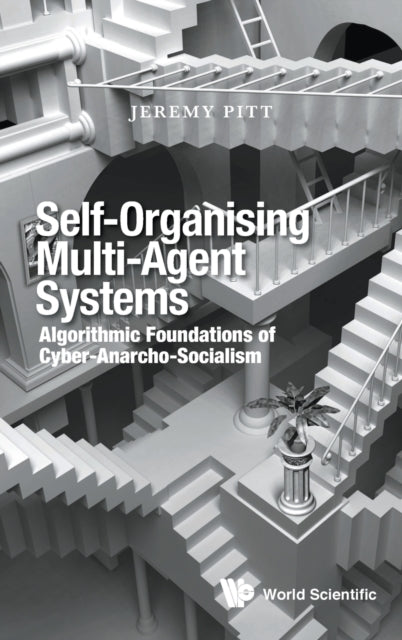
Self-organising Multi-agent Systems: Algorithmic Foundations Of Cyber-anarcho-socialism
Self-organising Multi-agent Systems: Algorithmic Foundations Of Cyber-anarcho-socialism
💎 Earn 516 Points (£5.16) on this item.
We can order this item for you. Delivery usually takes about 4 to 6 weeks.
This item is not held in our immediate stock. We will order it for you after checkout.
Estimated delivery: About 4 to 6 weeks
YOU SAVE £21.75
- Condition: Brand new
- UK Delivery times: Usually arrives within 2 - 3 working days
- UK Shipping: Fee starts at £2.39. Subject to product weight & dimension
Bulk ordering. Want 15 or more copies? Get a personalised quote and bigger discounts. Learn more about bulk orders.
Couldn't load pickup availability
- More about Self-organising Multi-agent Systems: Algorithmic Foundations Of Cyber-anarcho-socialism
The paradigm of self-organization is fundamental to theories of collective action in economic science and democratic governance. This book provides an innovative and systematic approach to transforming these theories into an executable logical specification of conventional rules, which can be used to design and implement cyber-physical systems that manage themselves in the face of competition for scarce resources. It also provides a basis for implementing socio-technical systems with interacting human and computational intelligences in a way that is sustainable, fair, and legitimate.
Format: Hardback
Length: 400 pages
Publication date: 07 October 2021
Publisher: World Scientific Europe Ltd
The concept of self-organization holds significant importance in the realms of economic science and democratic governance, as it underpins theories of collective action. In these social systems, self-organization relies heavily on voluntary adherence to conventional rules, which are established, mutually agreed upon, and adaptable on the fly. This poses a crucial question: how can we draw inspiration from the self-organization observed in these social systems and apply it to decentralized computer systems, which encounter similar challenges in terms of coordination, cooperation, and collaboration among autonomous peers?
To address this question, Self-Organising Multi-Agent Systems presents a groundbreaking and comprehensive approach. It endeavors to transform theories from various fields, including economics, politics, philosophy, psychology, and jurisprudence, into an executable logical specification of conventional rules. By doing so, it establishes a framework for designing and implementing cyber-physical systems that enable intelligent software processes, known as agents, to autonomously manage themselves in the face of competition for scarce resources. Moreover, this book provides a foundation for developing socio-technical systems that seamlessly integrate human and computational intelligences, promoting sustainable, fair, and legitimate outcomes.
This interdisciplinary book is a must-read for anyone interested in the deliberate emergence of global properties, shared values, or successful collective action, particularly as a result of social construction, knowledge management, and political arrangements. For students studying both computer science and social sciences, this book offers a novel gateway to a transformative understanding of complex system development and social system modeling. By delving into the computational representation of qualitative values, it sheds light on the mechanisms that drive self-organization and collaboration in social systems, offering valuable insights for designing decentralized computer systems that can emulate and enhance these processes.
In conclusion, the paradigm of self-organization plays a pivotal role in understanding collective action in economic science and democratic governance. By leveraging the principles of self-organization observed in social systems, we can develop decentralized computer systems that emulate and enhance these processes, fostering coordination, cooperation, and collaboration among autonomous peers. Through the interdisciplinary lens of Self-Organising Multi-Agent Systems, we gain a deeper understanding of complex system development and social system modeling, paving the way for a more sustainable, fair, and legitimate future.
Weight: 728g
Dimension: 159 x 237 x 30 (mm)
ISBN-13: 9781800610422
This item can be found in:
UK and International shipping information
UK and International shipping information
UK Delivery and returns information:
- Delivery within 2 - 3 days when ordering in the UK.
- Shipping fee for UK customers from £2.39. Fully tracked shipping service available.
- Returns policy: Return within 30 days of receipt for full refund.
International deliveries:
Shulph Ink now ships to Australia, Belgium, Canada, France, Germany, Ireland, Italy, India, Luxembourg Saudi Arabia, Singapore, Spain, Netherlands, New Zealand, United Arab Emirates, United States of America.
- Delivery times: within 5 - 10 days for international orders.
- Shipping fee: charges vary for overseas orders. Only tracked services are available for most international orders. Some countries have untracked shipping options.
- Customs charges: If ordering to addresses outside the United Kingdom, you may or may not incur additional customs and duties fees during local delivery.