Claudia Lanza
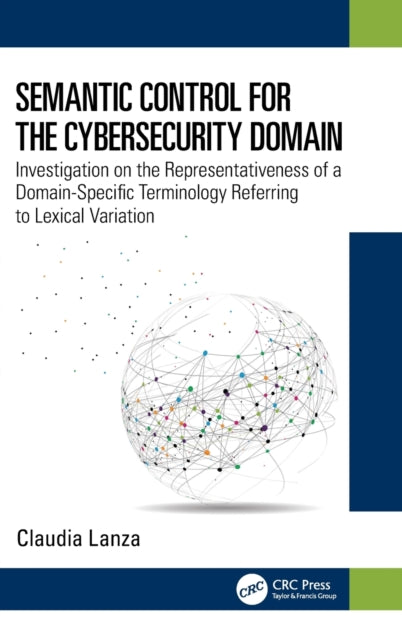
Semantic Control for the Cybersecurity Domain: Investigation on the Representativeness of a Domain-Specific Terminology Referring to Lexical Variation
Semantic Control for the Cybersecurity Domain: Investigation on the Representativeness of a Domain-Specific Terminology Referring to Lexical Variation
💎 Earn 689 Points (£6.89) on this item.
We can order this item for you. Delivery usually takes about 4 to 6 weeks.
This item is not held in our immediate stock. We will order it for you after checkout.
Estimated delivery: About 4 to 6 weeks
YOU SAVE £8.18
- Condition: Brand new
- UK Delivery times: Usually arrives within 2 - 3 working days
- UK Shipping: Fee starts at £2.39. Subject to product weight & dimension
Bulk ordering. Want 15 or more copies? Get a personalised quote and bigger discounts. Learn more about bulk orders.
Couldn't load pickup availability
- More about Semantic Control for the Cybersecurity Domain: Investigation on the Representativeness of a Domain-Specific Terminology Referring to Lexical Variation
A terminological resource that organizes and monitors cybersecurity knowledge is called a thesaurus. It uses methodology to identify the semantic coverage threshold with respect to term variation within specialized domains of study. It also uses distributional semantics methods to identify the best condition for a semantic resource to remain representative over time.
Format: Hardback
Length: 170 pages
Publication date: 24 October 2022
Publisher: Taylor & Francis Ltd
Here is the rephrased text:
Cybersecurity is a complex and ever-evolving field that requires a comprehensive approach to ensure the protection of digital assets and systems from malicious attacks. One of the key challenges in cybersecurity is the management and monitoring of the vast amount of knowledge associated with the field. This knowledge encompasses a wide range of concepts, terms, and definitions, making it difficult to organize and track effectively.
To address this challenge, terminological resources have been developed to organize and monitor the cybersecurity knowledge-domain with respect to lexical variation. These resources aim to provide a structured and standardized way of referring to cybersecurity-related concepts, terms, and definitions, enabling researchers, practitioners, and policymakers to communicate and collaborate more effectively.
One methodology used to identify the semantic coverage threshold with respect to term variation within specialized domains of study is called semantic analysis. Semantic analysis involves the use of advanced natural language processing (NLP) techniques to analyze the relationships between words and their meanings. By analyzing the semantic context of words, researchers can identify patterns and relationships that are specific to a particular domain. This information can then be used to determine the semantic coverage threshold, which represents the minimum level of understanding that a semantic resource for a specialized domain should possess.
Another approach to exploiting distributional semantics methods for the identification of the best condition according to which a semantic resource for specialized domains keeps being representative by time is called semantic drift analysis. Semantic drift analysis involves monitoring the changes in the usage of words and their meanings over time within a specialized domain. By analyzing these changes, researchers can identify patterns and trends that indicate whether a semantic resource is becoming outdated or irrelevant. This information can then be used to update and maintain the semantic resource, ensuring that it remains representative of the current state of knowledge in the field.
In conclusion, terminological resources, semantic analysis, and semantic drift analysis are essential tools for managing and monitoring the cybersecurity knowledge-domain with respect to lexical variation. These methods enable researchers, practitioners, and policymakers to identify the semantic coverage threshold, maintain the relevance of semantic resources, and contribute to the development of effective cybersecurity strategies and policies.
Weight: 520g
Dimension: 234 x 156 (mm)
ISBN-13: 9781032250809
UK and International shipping information
UK and International shipping information
UK Delivery and returns information:
- Delivery within 2 - 3 days when ordering in the UK.
- Shipping fee for UK customers from £2.39. Fully tracked shipping service available.
- Returns policy: Return within 30 days of receipt for full refund.
International deliveries:
Shulph Ink now ships to Australia, Belgium, Canada, France, Germany, Ireland, Italy, India, Luxembourg Saudi Arabia, Singapore, Spain, Netherlands, New Zealand, United Arab Emirates, United States of America.
- Delivery times: within 5 - 10 days for international orders.
- Shipping fee: charges vary for overseas orders. Only tracked services are available for most international orders. Some countries have untracked shipping options.
- Customs charges: If ordering to addresses outside the United Kingdom, you may or may not incur additional customs and duties fees during local delivery.