Shulph Ink
Semantiken und Narrative des Entscheidens vom Mittelalter bis zur Gegenwart
Semantiken und Narrative des Entscheidens vom Mittelalter bis zur Gegenwart
💎 Earn 339 Points (£3.39) on this item.
We can order this item for you. Delivery usually takes about 4 to 6 weeks.
This item is not held in our immediate stock. We will order it for you after checkout.
Estimated delivery: About 4 to 6 weeks
YOU SAVE £4.03
- Condition: Brand new
- UK Delivery times: Usually arrives within 2 - 3 working days
- UK Shipping: Fee starts at £2.39. Subject to product weight & dimension
Bulk ordering. Want 15 or more copies? Get a personalised quote and bigger discounts. Learn more about bulk orders.
Couldn't load pickup availability
- More about Semantiken und Narrative des Entscheidens vom Mittelalter bis zur Gegenwart
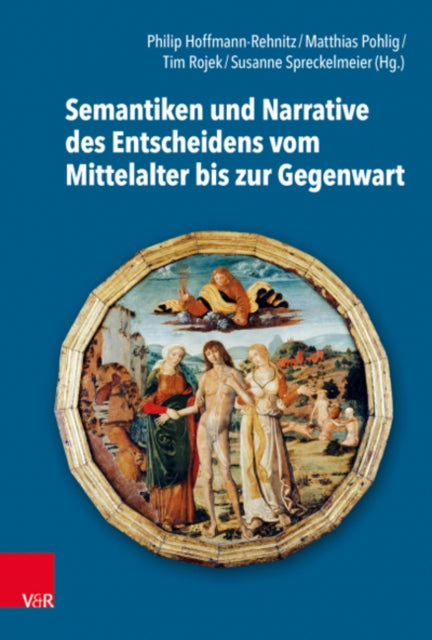
The semantics and narratives of decision-making vary across social and cultural contexts, and the volume explores this topic from an interdisciplinary perspective, examining different case studies from the Middle Ages to the present.
Format: Hardback
Length: 528 pages
Publication date: 09 August 2021
Publisher: Vandenhoeck & Ruprecht GmbH & Co KG
Decision-making is a fundamental concept that permeates modern societies and shapes their identity. It encompasses the processes, strategies, and outcomes involved in making choices that shape our lives and societies. However, the way and extent to which decisions are discussed, conceptualized, and communicated have been shaped by historical factors and cultural contexts. The semantics and narratives surrounding decision-making vary significantly across different social and cultural backgrounds.
The volume aims to explore the historical evolution of the concept of decision and the narratives used to present decisions as a form of social action. It adopts an interdisciplinary approach, spanning multiple epochs and regions, including Europe and India. Through the use of historical-semantic and narratological methods, the contributions examine a range of case studies, shedding light on the diverse ways in which decisions have been made and interpreted throughout history.
One significant aspect of decision-making is the role of language and storytelling. The way we use words and narratives to describe and explain decisions can have a profound impact on how they are perceived and interpreted. Historical-semantic analysis reveals the linguistic patterns and cultural meanings associated with decision-making terms and concepts. Narratological analysis, on the other hand, explores the ways in which stories and narratives shape our understanding of decision-making processes and outcomes.
The contributions to the volume examine a diverse range of case studies, spanning different historical periods and cultural contexts. From the Middle Ages to the present, they explore the decision-making processes of individuals, groups, and societies in various settings, such as political, economic, religious, and social contexts. These case studies provide valuable insights into the complexities and nuances of decision-making, highlighting the role of individual agency, social structures, and cultural norms in shaping decision-making outcomes.
One notable theme that emerges from the case studies is the interplay between rationality and emotion in decision-making. While rationality is often emphasized as the dominant factor in decision-making, emotions play a crucial role as well. The contributions explore how emotions influence decision-making processes, how they are expressed and managed, and how they can lead to both rational and irrational decisions. They also examine the ways in which decision-making can be influenced by cultural norms, social pressures, and individual biases, which can lead to different interpretations and outcomes.
Another important aspect of decision-making is the role of power and authority. The distribution of power and authority within societies can have a significant impact on decision-making processes and outcomes. The contributions explore how power dynamics shape decision-making processes, how they are contested and negotiated, and how they can lead to both democratic and authoritarian decision-making. They also examine the ways in which decision-making can be influenced by historical events, such as wars, revolutions, and economic crises, which can reshape power structures and influence decision-making outcomes.
In conclusion, decision-making is a complex and multifaceted concept that has been shaped by historical, social, and cultural factors. The volume explores the historical evolution of the concept of decision and the narratives used to present decisions as a form of social action. It adopts an interdisciplinary approach, spanning multiple epochs and regions, to shed light on the diverse ways in which decisions have been made and interpreted throughout history. Through the use of historical-semantic and narratological methods, the contributions provide valuable insights into the complexities and nuances of decision-making, highlighting the role of language the individual agency, social structures, and cultural norms in shaping decision-making outcomes.
ISBN-13: 9783525366035
This item can be found in:
UK and International shipping information
UK and International shipping information
UK Delivery and returns information:
- Delivery within 2 - 3 days when ordering in the UK.
- Shipping fee for UK customers from £2.39. Fully tracked shipping service available.
- Returns policy: Return within 30 days of receipt for full refund.
International deliveries:
Shulph Ink now ships to Australia, Belgium, Canada, France, Germany, Ireland, Italy, India, Luxembourg Saudi Arabia, Singapore, Spain, Netherlands, New Zealand, United Arab Emirates, United States of America.
- Delivery times: within 5 - 10 days for international orders.
- Shipping fee: charges vary for overseas orders. Only tracked services are available for most international orders. Some countries have untracked shipping options.
- Customs charges: If ordering to addresses outside the United Kingdom, you may or may not incur additional customs and duties fees during local delivery.