Shulph Ink
Semiconductor Solar Photocatalysts: Fundamentals and Applications
Semiconductor Solar Photocatalysts: Fundamentals and Applications
💎 Earn 590 Points (£5.90) on this item.
We can order this item for you. Delivery usually takes about 4 to 6 weeks.
This item is not held in our immediate stock. We will order it for you after checkout.
Estimated delivery: About 4 to 6 weeks
YOU SAVE £35.87
- Condition: Brand new
- UK Delivery times: Usually arrives within 2 - 3 working days
- UK Shipping: Fee starts at £3.89. Subject to product weight & dimension
Bulk ordering. Want 15 or more copies? Get a personalised quote and bigger discounts. Learn more about bulk orders.
Couldn't load pickup availability
- More about Semiconductor Solar Photocatalysts: Fundamentals and Applications
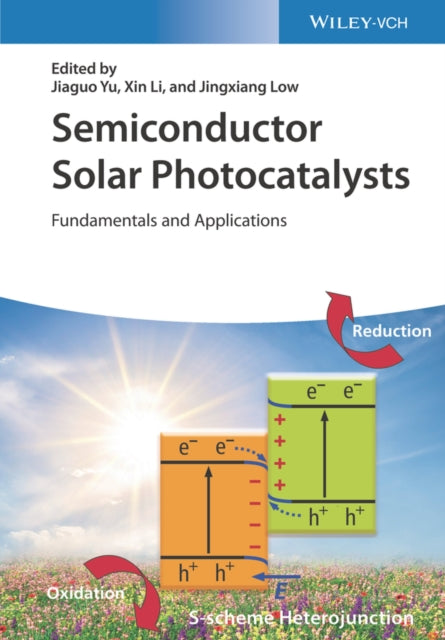
Semiconductor Solar Photocatalysts: Fundamentals and Applications provides a comprehensive overview of novel photocatalytic systems, including heterojunction systems, graphene-based photocatalysts, organic semiconductor photocatalysts, metal sulfide semiconductor photocatalysts, and graphitic carbon nitride-based photocatalysts. The book covers the history, design principles, modification strategies, and performance evaluation methods of solar energy photocatalysis and discusses various innovative photocatalytic systems such as direct Z-scheme and S-scheme photocatalysts, organic polymers, and covalent organic frameworks.
Format: Hardback
Length: 512 pages
Publication date: 10 November 2021
Publisher: Wiley-VCH Verlag GmbH
Semiconductor solar photocatalysts have emerged as promising materials for converting solar energy into useful forms of energy. In this comprehensive review, we will explore the fundamental principles and significant advancements in semiconductor-based photocatalysts for solar energy conversion.
Semiconductor solar photocatalysts are materials that utilize the photon-absorption properties of semiconductors to catalyze the conversion of solar energy into chemical or electrical energy. These photocatalysts are designed to enhance the efficiency of solar energy conversion by utilizing the unique properties of semiconductors, such as their large bandgap, which allows for the absorption of a wide range of solar wavelengths.
One of the key advantages of semiconductor solar photocatalysts is their ability to efficiently split water into hydrogen and oxygen, which can be used to produce clean and renewable energy sources. This process, known as water splitting, is a critical step in the development of sustainable energy systems and has the potential to address the global energy crisis by providing a clean and abundant source of hydrogen.
In addition to water splitting, semiconductor solar photocatalysts have been shown to be effective in the degradation of various pollutants, such as organic compounds and toxic chemicals. These photocatalysts can degrade these pollutants by absorbing sunlight and converting them into harmless byproducts, which can then be recycled or disposed of safely.
Semiconductor solar photocatalysts are also being explored for other applications, such as solar-powered fuel cells and solar-powered electronics. These photocatalysts can be used to convert solar energy into electricity, which can be stored in batteries or used directly to power electronic devices.
The development of semiconductor solar photocatalysts has been driven by significant advances in materials science and engineering. Researchers have been exploring a wide range of semiconductor materials, such as silicon, germanium, and titanium dioxide, to optimize their photocatalytic properties. They have also been developing new synthesis techniques, such as spray pyrolysis and sol-gel synthesis, to improve the efficiency and stability of these photocatalysts.
In conclusion, semiconductor solar photocatalysts have the potential to revolutionize the way we generate and use solar energy. By efficiently converting solar energy into clean and renewable energy sources, these photocatalysts can help to address the global energy crisis and promote sustainable development. However, further research and development are needed to optimize the performance and stability of these photocatalysts and to explore their potential applications in other areas.
Weight: 1124g
Dimension: 255 x 178 x 31 (mm)
ISBN-13: 9783527349593
UK and International shipping information
UK and International shipping information
We deliver throughout the United Kingdom and to 128 countries and territories worldwide, including the United States, Australia, Canada, Germany, Spain and France.