Shulph Ink
Sensing and Artificial Intelligence Solutions for Food Manufacturing
Sensing and Artificial Intelligence Solutions for Food Manufacturing
💎 Earn 490 Points (£4.90) on this item.
We can order this item for you. Delivery usually takes about 4 to 6 weeks.
This item is not held in our immediate stock. We will order it for you after checkout.
Estimated delivery: About 4 to 6 weeks
YOU SAVE £5.83
- Condition: Brand new
- UK Delivery times: Usually arrives within 2 - 3 working days
- UK Shipping: Fee starts at £2.39. Subject to product weight & dimension
Bulk ordering. Want 15 or more copies? Get a personalised quote and bigger discounts. Learn more about bulk orders.
Couldn't load pickup availability
- More about Sensing and Artificial Intelligence Solutions for Food Manufacturing
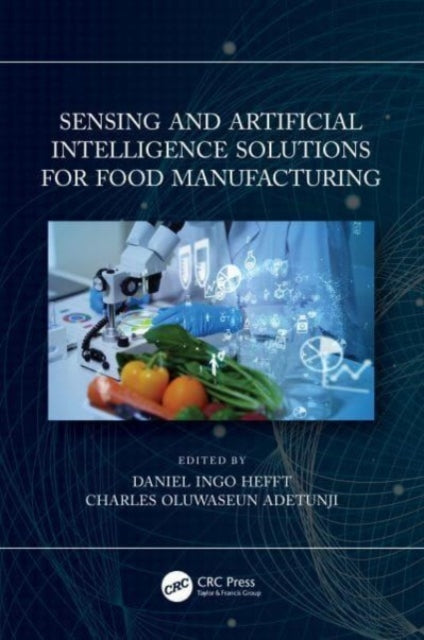
Artificial intelligence and sensor technologies are key principles of Industry 4.0, which can improve food safety, labeling, and traceability. Case studies/specific examples show the benefit of such technologies compared to current approaches. Issues around food safety, labeling, and traceability are discussed, and how sensing and AI can help to resolve them. The current state of food manufacturing is outlined, and future perspectives are delivered. A practical handbook and introduction to food engineers, technologists, and process engineers on the benefits and challenges around modern manufacturing systems following Industry 4.0 approaches is also provided.
Format: Hardback
Length: 174 pages
Publication date: 31 March 2023
Publisher: Taylor & Francis Ltd
Artificial intelligence (AI) and sensor technologies have revolutionized the food industry, offering new opportunities for improved efficiency, food safety, and traceability. In this comprehensive guide, we will explore the key principles of AI and sensor technologies and their applications in the food industry. We will also discuss case studies/specific examples that demonstrate the benefits of these technologies compared to current approaches.
Food safety is a critical concern in the food industry, and sensing and AI can play a vital role in addressing these issues. By leveraging advanced sensors and machine learning algorithms, food manufacturers can detect and prevent foodborne illnesses, ensuring the safety of consumers. For example, AI-powered sensors can monitor food temperature and humidity levels, detect spoilage, and even identify potential allergens.
Labeling and traceability are also important aspects of food manufacturing, and sensing and AI can help to improve these processes. With the ability to track food products from farm to fork, manufacturers can ensure that consumers have access to accurate information about the ingredients and origins of their food. AI-powered labeling systems can also automate the process of labeling and tracking, reducing the risk of errors and improving efficiency.
However, there are also challenges associated with the use of sensing and AI in the food industry. One of the main concerns is the potential for these technologies to increase the risk of food fraud and adulteration. With the ability to manipulate data and create false records, criminals can use sensing and AI to create counterfeit food products and pass them off as legitimate.
To address these challenges, it is important for food manufacturers to implement robust security measures and regulations. Additionally, manufacturers should work closely with technology providers to ensure that their systems are secure and reliable.
The current state of food manufacturing is evolving rapidly, with the emergence of Industry 4.0 approaches. Industry 4.0 refers to the use of advanced technologies, such as IoT, artificial intelligence, and machine learning, to improve the efficiency and productivity of manufacturing systems. In the food industry, Industry 4.0 can be used to automate processes, improve supply chain management, and reduce waste.
One of the key benefits of Industry 4.0 in the food industry is the ability to create a more sustainable and environmentally friendly manufacturing process. By leveraging advanced sensors and machine learning algorithms, manufacturers can optimize their processes to reduce energy consumption, water usage, and waste production. This can help to reduce the environmental impact of food manufacturing and improve the sustainability of the food industry as a whole.
However, there are also challenges associated with Industry 4.0 in the food industry. One of the main concerns is the need for skilled workers to implement and maintain these systems. With the rapid pace of technological change, manufacturers must invest in training and development programs to ensure that their workforce has the skills and knowledge needed to thrive in the Industry 4.0 environment.
In conclusion, artificial intelligence and sensor technologies have the potential to revolutionize the food industry, offering new opportunities for improved efficiency, food safety, and traceability. While there are challenges associated with the use of these technologies, they can be addressed through robust security measures and regulations. With the emergence of Industry 4.0 approaches, the food industry has the opportunity to create a more sustainable and environmentally friendly manufacturing process. However, it is important for manufacturers to invest in training and development programs to ensure that their workforce has the skills and knowledge needed to thrive in this new environment.
Weight: 426g
Dimension: 160 x 242 x 17 (mm)
ISBN-13: 9781032075808
UK and International shipping information
UK and International shipping information
UK Delivery and returns information:
- Delivery within 2 - 3 days when ordering in the UK.
- Shipping fee for UK customers from £2.39. Fully tracked shipping service available.
- Returns policy: Return within 30 days of receipt for full refund.
International deliveries:
Shulph Ink now ships to Australia, Belgium, Canada, France, Germany, Ireland, Italy, India, Luxembourg Saudi Arabia, Singapore, Spain, Netherlands, New Zealand, United Arab Emirates, United States of America.
- Delivery times: within 5 - 10 days for international orders.
- Shipping fee: charges vary for overseas orders. Only tracked services are available for most international orders. Some countries have untracked shipping options.
- Customs charges: If ordering to addresses outside the United Kingdom, you may or may not incur additional customs and duties fees during local delivery.