Tanya Van Dalen
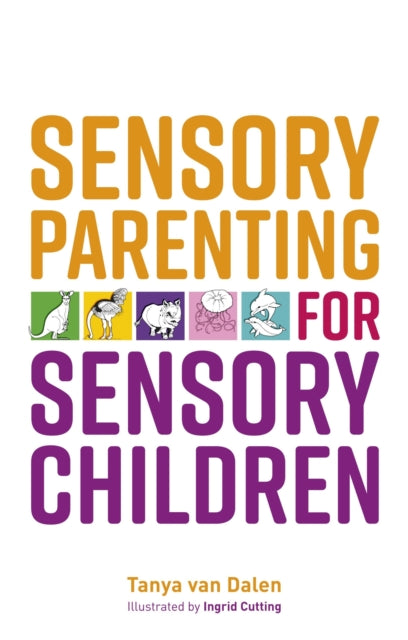
Sensory Parenting for Sensory Children
Sensory Parenting for Sensory Children
💎 Earn 69 Points (£0.69) on this item.
YOU SAVE £1.10
- Condition: Brand new
- UK Delivery times: Usually arrives within 2 - 3 working days
- UK Shipping: Fee starts at £3.89. Subject to product weight & dimension
Bulk ordering. Want 15 or more copies? Get a personalised quote and bigger discounts. Learn more about bulk orders.
Couldn't load pickup availability
- More about Sensory Parenting for Sensory Children
Managing your own response when your child dysregulates is half the battle. Recognizing your triggers and behaviors to stay calm and provide the best support is essential. This guide helps parents and carers reflect on themselves, think about how they manage sensory meltdowns, and give them simple ideas on how to manage their own emotions to help their child with sensory needs or SPD.
Format: Paperback / softback
Length: 192 pages
Publication date: 21 March 2023
Publisher: Jessica Kingsley Publishers
When your child dysregulates, half the battle is managing your own response. In the moment, you're at the mercy of many competing feelings: embarrassment, fear, panic, exhaustion. Being able to recognize your own triggers and behaviors in order to stay calm and provide the best support to your child is not a skill that comes easily.
Helping parents and carers to reflect on themselves, think about how they manage sensory meltdowns, and give them some simple ideas on how to manage their own emotions in order to help their child, this is a short and simple guide for those that parent or care for a child with sensory needs, or a sensory processing disorder (SPD). Drawing on Porges' polyvagal theory, and using easy-to-follow animal analogies, this will empower parents to build empathy for their child, and themselves.
When your child dysregulates, half the battle is managing your own response. In the moment, you're at the mercy of many competing feelings: embarrassment, fear, panic, exhaustion. Being able to recognize your own triggers and behaviors in order to stay calm and provide the best support to your child is not a skill that comes easily.
Helping parents and carers to reflect on themselves, think about how they manage sensory meltdowns, and give them some simple ideas on how to manage their own emotions in order to help their child, this is a short and simple guide for those that parent or care for a child with sensory needs, or a sensory processing disorder (SPD). Drawing on Porges' polyvagal theory, and using easy-to-follow animal analogies, this will empower parents to build empathy for their child, and themselves.
When your child dysregulates, half the battle is managing your own response. In the moment, you're at the mercy of many competing feelings: embarrassment, fear, panic, exhaustion. Being able to recognize your own triggers and behaviors in order to stay calm and provide the best support to your child is not a skill that comes easily.
Helping parents and carers to reflect on themselves, think about how they manage sensory meltdowns, and give them some simple ideas on how to manage their own emotions in order to help their child, this is a short and simple guide for those that parent or care for a child with sensory needs, or a sensory processing disorder (SPD). Drawing on Porges' polyvagal theory, and using easy-to-follow animal analogies, this will empower parents to build empathy for their child, and themselves.
When your child dysregulates, half the battle is managing your own response. In the moment, you're at the mercy of many competing feelings: embarrassment, fear, panic, exhaustion. Being able to recognize your own triggers and behaviors in order to stay calm and provide the best support to your child is not a skill that comes easily.
Helping parents and carers to reflect on themselves, think about how they manage sensory meltdowns, and give them some simple ideas on how to manage their own emotions in order to help their child, this is a short and simple guide for those that parent or care for a child with sensory needs, or a sensory processing disorder (SPD). Drawing on Porges' polyvagal theory, and using easy-to-follow animal analogies, this will empower parents to build empathy for their child, and themselves.
When your child dysregulates, half the battle is managing your own response. In the moment, you're at the mercy of many competing feelings: embarrassment, fear, panic, exhaustion. Being able to recognize your own triggers and behaviors in order to stay calm and provide the best support to your child is not a skill that comes easily.
Helping parents and carers to reflect on themselves, think about how they manage sensory meltdowns, and give them some simple ideas on how to manage their own emotions in order to help their child, this is a short and simple guide for those that parent or care for a child with sensory needs, or a sensory processing disorder (SPD). Drawing on Porges' polyvagal theory, and using easy-to-follow animal analogies, this will empower parents to build empathy for their child, and themselves.
Weight: 250g
Dimension: 138 x 215 x 13 (mm)
ISBN-13: 9781839972546
UK and International shipping information
UK and International shipping information
We deliver throughout the United Kingdom and to 128 countries and territories worldwide, including the United States, Australia, Canada, Germany, Spain and France.