Sage, Michael
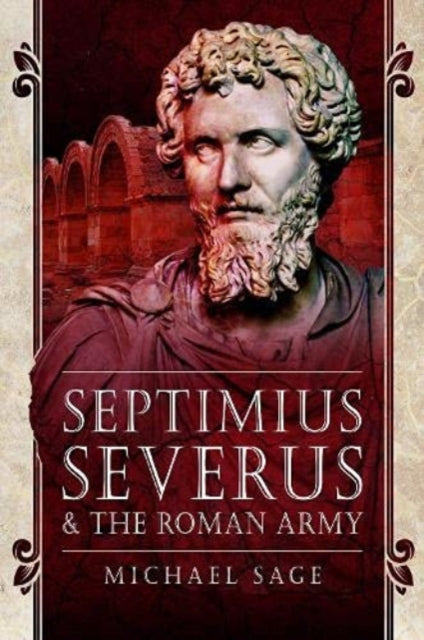
Septimius Severus and the Roman Army
Septimius Severus and the Roman Army
💎 Earn 53 Points (£0.53) on this item.
YOU SAVE £4.38
- Condition: Brand new
- UK Delivery times: Usually arrives within 2 - 3 working days
- UK Shipping: Fee starts at £2.39. Subject to product weight & dimension
Bulk ordering. Want 15 or more copies? Get a personalised quote and bigger discounts. Learn more about bulk orders.
Couldn't load pickup availability
- More about Septimius Severus and the Roman Army
The assassination of Emperor Commodus in 192 sparked a civil war, and Septimius Severus emerged as the victor. He fought numerous campaigns, extending the Empire to the east, south, and north. His military reforms of the army are the main focus of this study, and his love for his family was his greatest weakness.
Format: Paperback / softback
Length: 240 pages
Publication date: 30 November 2021
Publisher: Pen & Sword Books Ltd
The assassination of Emperor Commodus in 192 marked the beginning of a tumultuous period that would lead to a civil war. As the conflict unfolded, a remarkable figure emerged as the eventual victor: Septimius Severus. His dynasty, known as the Severans, would rule until 235, marking a significant era in Roman history.
Severus was a formidable leader who embarked on a series of campaigns to expand the Empire's borders. He fought against both internal rivals and external enemies, extending the Empire to the east, south, and north. His military prowess was evident in his reforms of the army, which helped to strengthen the Roman military and ensure its dominance in the region.
One of the most notable campaigns of Severus' reign was his war against Pescennius Niger. Niger had been appointed as the governor of Syria, but he had become disloyal to the Empire. Severus launched a campaign to overthrow Niger and restore order to the region. The war was long and grueling, but Severus ultimately emerged victorious.
Another significant event during Severus' reign was the siege of Byzantium. Byzantium was the capital of the Eastern Roman Empire and had been under siege for several years. Severus led a massive army to the city and successfully laid siege to it. After a long and bloody battle, the city was finally captured, marking a significant victory for the Roman Empire.
Severus' campaigns did not stop there. He also launched a campaign in northern Mesopotamia, which added the region as a province to the Empire. This campaign was particularly difficult, as the region was inhabited by fierce tribes and had been a stronghold of the Parthian Empire. Severus' military tactics and strategy were instrumental in his success, and he was able to establish a strong presence in the region.
In addition to his military campaigns, Severus also undertook significant reforms of the army. He implemented a system of meritocracy, which allowed soldiers to advance based on their skills and achievements rather than on their social status. He also improved the training and equipment of the army, making it more capable of dealing with the challenges of the empire.
Severus' reforms of the army had a profound impact on the events of the next seventy years until the accession of Diocletian. The army became more efficient and effective, and it was able to defend the Empire against a series of threats and invasions. This helped to ensure the stability and prosperity of the Roman Empire during a period of great change and upheaval.
However, despite his many achievements, Severus' reign was not without its flaws. One of his greatest weaknesses was his love for his family. Like Marcus Aurelius, he loved his children too much, and they failed to maintain what he had bequeathed them. This led to a decline in the Empire's power and influence, as his children were unable to govern effectively.
In conclusion, the assassination of Emperor Commodus in 192 marked the beginning of a period of great change and upheaval in Roman history. Septimius Severus emerged as the eventual victor and his dynasty, the Severans, ruled until 235. Severus was a formidable leader who embarked on a series of campaigns to expand the Empire's borders and strengthen its military. His reforms of the army had a profound impact on the events of the next seventy years until the accession of Diocletian. Despite his many achievements, Severus' reign was not without its flaws, and his love for his family ultimately led to the decline of the Empire.
Weight: 378g
Dimension: 157 x 233 x 25 (mm)
ISBN-13: 9781399003230
This item can be found in:
UK and International shipping information
UK and International shipping information
UK Delivery and returns information:
- Delivery within 2 - 3 days when ordering in the UK.
- Shipping fee for UK customers from £2.39. Fully tracked shipping service available.
- Returns policy: Return within 30 days of receipt for full refund.
International deliveries:
Shulph Ink now ships to Australia, Belgium, Canada, France, Germany, Ireland, Italy, India, Luxembourg Saudi Arabia, Singapore, Spain, Netherlands, New Zealand, United Arab Emirates, United States of America.
- Delivery times: within 5 - 10 days for international orders.
- Shipping fee: charges vary for overseas orders. Only tracked services are available for most international orders. Some countries have untracked shipping options.
- Customs charges: If ordering to addresses outside the United Kingdom, you may or may not incur additional customs and duties fees during local delivery.