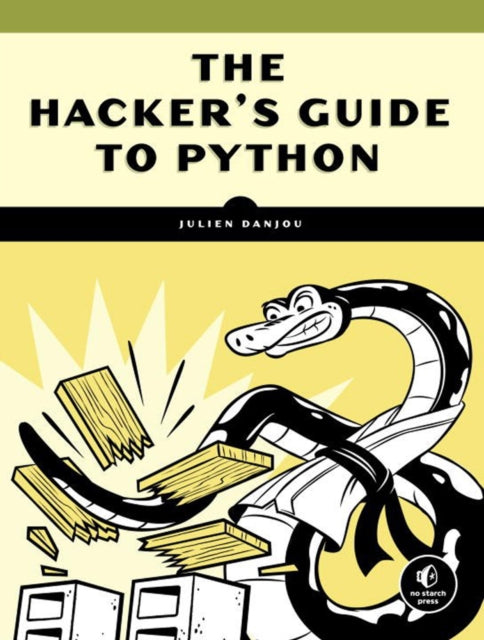
Julien Danjou
Serious Python: Black-Belt Advice on Deployment, Scalability, Testing, and More
Serious Python: Black-Belt Advice on Deployment, Scalability, Testing, and More
💎 Earn 127 Points (£1.27) on this item.
YOU SAVE £10.51
- Condition: Brand new
- UK Delivery times: Usually arrives within 2 - 3 working days
- UK Shipping: Fee starts at £3.89. Subject to product weight & dimension
Bulk ordering. Want 15 or more copies? Get a personalised quote and bigger discounts. Learn more about bulk orders.
Couldn't load pickup availability
- More about Serious Python: Black-Belt Advice on Deployment, Scalability, Testing, and More
The Hacker's Guide to Python is a comprehensive guide that provides tips and advice for optimizing Python code, selecting libraries, distributing code, and building future-proof programs.
Format: Paperback / softback
Length: 300 pages
Publication date: 27 December 2018
Publisher: No Starch Press,US
The Hacker's Guide to Python is an invaluable resource for anyone looking to enhance their Python coding skills and gain a deeper understanding of the language's inner workings. This comprehensive guide, compiled from years of Python experience, offers a wealth of general advice and specific tips designed to help developers pick the right libraries, distribute their code effectively, build future-proof programs, and optimize their programs down to the bytecode.
In the first chapter, the author delves into the importance of writing clean and efficient Python code. They emphasize the significance of using proper indentation, naming variables and functions clearly, and avoiding unnecessary complexity. The guide also provides practical tips on how to structure your code, such as using functions and classes to organize your code and using modules to encapsulate related functionality.
Chapter two focuses on optimizing Python code for performance. The author discusses various techniques, such as caching, memoization, and profiling, that can help developers improve the speed and efficiency of their programs. They also provide examples of how to use these techniques in real-world scenarios, such as building web applications and scientific computing.
Chapter three explores the Python standard library and its various modules. The author provides an in-depth overview of the library's functionality, including its data structures, algorithms, and networking capabilities. They also recommend some of the most popular and useful modules in the library, such as NumPy, Pandas, and Matplotlib.
Chapter four covers Python's object-oriented programming features, such as classes, objects, and inheritance. The author explains how to create and use classes, how to define and use objects, and how to inherit from existing classes. They also provide examples of how to use these features in real-world applications, such as building web applications and game engines.
Chapter five discusses Python's debugging and troubleshooting techniques. The author provides tips on how to identify and fix common errors, such as syntax errors, runtime errors, and memory leaks. They also discuss the use of debugging tools, such as the Python debugger (pdb) and the traceback module, to diagnose and resolve complex issues.
Chapter six covers Python's networking capabilities, such as sockets, HTTP, and XML. The author provides an in-depth overview of these features, including how to create and use sockets, how to send and receive HTTP requests and responses, and how to parse and manipulate XML data. They also provide examples of how to use these features in real-world applications, such as building web servers and web applications.
Chapter seven covers Python's web development features, such as Django, Flask, and Tornado. The author provides an in-depth overview of these frameworks, including their features, benefits, and drawbacks. They also provide examples of how to use these frameworks to build web applications, such as social networks, e-commerce platforms, and news aggregators.
Chapter eight covers Python's machine learning and artificial intelligence capabilities, such as SciPy, TensorFlow, and PyBrain. The author provides an in-depth overview of these libraries, including their features, benefits, and drawbacks. They also provide examples of how to use these libraries to build machine learning and artificial intelligence applications, such as image recognition, natural language processing, and game AI.
Chapter nine covers Python's database connectivity features, such as SQLAlchemy and MySQLdb. The author provides an in-depth overview of these libraries, including their features, benefits, and drawbacks. They also provide examples of how to use these libraries to connect to and interact with databases, such as creating and managing tables, executing queries, and handling transactions.
Chapter ten covers Python's security features, such as cryptography and authentication. The author provides an in-depth overview of these features, including how to use cryptography to protect data and how to implement authentication and authorization mechanisms in web applications. They also provide examples of how to use these features in real-world applications, such as secure communication between servers and clients.
Chapter eleven covers Python's cloud computing features, such as AWS, Azure, and Google Cloud. The author provides an in-depth overview of these platforms, including their features, benefits, and drawbacks. They also provide examples of how to use these platforms to build cloud-based applications, such as web servers, data storage, and machine learning models.
Chapter twelve covers Python's mobile development features, such as PyObjC and Kivy. The author provides an in-depth overview of these frameworks, including their features, benefits, and drawbacks. They also provide examples of how to use these frameworks to build mobile applications, such as games and productivity tools.
In conclusion, The Hacker's Guide to Python is an essential resource for anyone looking to enhance their Python coding skills and gain a deeper understanding of the language's inner workings. This comprehensive guide, compiled from years of Python experience, offers a wealth of general advice and specific tips designed to help developers pick the right to right libraries, distribute their code effectively, build future-proof programs, and optimize their programs down to the bytecode. Whether you are a beginner or an experienced Python developer, this guide will help you take your coding skills to the next level.
Weight: 544g
Dimension: 229 x 178 x 17 (mm)
ISBN-13: 9781593278786
UK and International shipping information
UK and International shipping information
We deliver throughout the United Kingdom and to 128 countries and territories worldwide, including the United States, Australia, Canada, Germany, Spain and France.