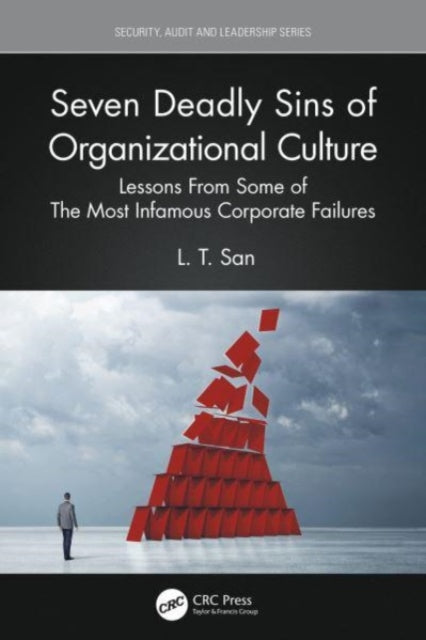
L. T. San
Seven Deadly Sins of Organizational Culture: Lessons From Some of The Most Infamous Corporate Failures
Seven Deadly Sins of Organizational Culture: Lessons From Some of The Most Infamous Corporate Failures
💎 Earn 254 Points (£2.54) on this item.
YOU SAVE £3.03
- Condition: Brand new
- UK Delivery times: Usually arrives within 2 - 3 working days
- UK Shipping: Fee starts at £2.39. Subject to product weight & dimension
Bulk ordering. Want 15 or more copies? Get a personalised quote and bigger discounts. Learn more about bulk orders.
Couldn't load pickup availability
- More about Seven Deadly Sins of Organizational Culture: Lessons From Some of The Most Infamous Corporate Failures
The book provides a method of assessing and measuring the "health" of an organization's culture, identifying areas that are not aligned with the attributes of a healthy culture, and facilitating initiatives for "correcting course" and mitigating those deviations.
Format: Paperback / softback
Length: 124 pages
Publication date: 25 October 2023
Publisher: Taylor & Francis Ltd
Here is the rephrased text:
Understanding the Key Drivers of Organizational Culture
Organizational culture plays a vital role in shaping the behavior, attitudes, and performance of employees within an organization. It encompasses the shared values, beliefs, and norms that govern how individuals interact and work together. By understanding the key drivers of organizational culture, leaders can create a positive and productive work environment that fosters innovation, collaboration, and employee engagement.
One of the key drivers of organizational culture is leadership. Leaders have the power to set the tone for the culture by modeling the behaviors they expect from their employees. When leaders demonstrate integrity, transparency, and accountability, they create a culture of trust and respect that can inspire employees to give their best. Conversely, when leaders engage in unethical practices or fail to provide clear direction, they can undermine the culture and create a sense of disillusionment among employees.
Another important driver of organizational culture is communication. Effective communication is essential for building and maintaining a healthy culture. Leaders should provide clear and consistent communication to employees about the organization's goals, values, and expectations. They should also encourage open and honest dialogue between employees and management, which can help identify and address any issues or concerns.
Additionally, organizational culture is influenced by the environment in which the organization operates. The external factors such as industry, market, and competition can have a significant impact on the culture of an organization. For example, a company in a highly competitive industry may prioritize innovation and risk-taking, while a company in a more conservative industry may prioritize stability and consistency.
To assess and measure the "health" of an organization's culture, a method that is currently not available in other books related to culture, based on my research of books with a similar topic, can be used. This method involves a comprehensive assessment of the organization's culture through the use of surveys, interviews, and observations. By gathering feedback from employees at all levels of the organization, leaders can gain a deeper understanding of the strengths and weaknesses of the culture and identify areas for improvement.
Once the "health" of an organization's culture has been assessed, leaders can determine which areas are not aligned with the attributes of a healthy culture. These deviations can be facilitated through initiatives for "correcting course" and mitigating those deviations. For example, if employees perceive a lack of trust and respect in the culture, leaders may implement training programs to improve communication and teamwork. If employees feel overwhelmed by workload or unclear about their roles and responsibilities, leaders may implement process improvements or restructuring to improve efficiency and clarity.
In conclusion, understanding the key drivers of organizational culture is essential for creating a positive and productive work environment. Leaders can influence the culture by setting a positive example, providing effective communication, and creating a supportive environment. By assessing and measuring the "health" of an organization's culture, leaders can identify areas for improvement and implement initiatives to align the culture with the attributes of a healthy culture. This can lead to increased employee engagement, innovation, and success for the organization.
Weight: 228g
Dimension: 155 x 234 x 12 (mm)
ISBN-13: 9781032265476
UK and International shipping information
UK and International shipping information
UK Delivery and returns information:
- Delivery within 2 - 3 days when ordering in the UK.
- Shipping fee for UK customers from £2.39. Fully tracked shipping service available.
- Returns policy: Return within 30 days of receipt for full refund.
International deliveries:
Shulph Ink now ships to Australia, Belgium, Canada, France, Germany, Ireland, Italy, India, Luxembourg Saudi Arabia, Singapore, Spain, Netherlands, New Zealand, United Arab Emirates, United States of America.
- Delivery times: within 5 - 10 days for international orders.
- Shipping fee: charges vary for overseas orders. Only tracked services are available for most international orders. Some countries have untracked shipping options.
- Customs charges: If ordering to addresses outside the United Kingdom, you may or may not incur additional customs and duties fees during local delivery.