Shulph Ink
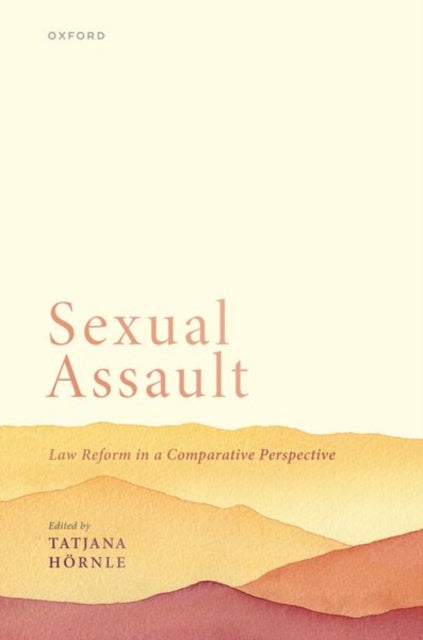
Sexual Assault: Law Reform in a Comparative Perspective
Sexual Assault: Law Reform in a Comparative Perspective
💎 Earn 767 Points (£7.67) on this item.
We can order this item for you. Delivery usually takes about 4 to 6 weeks.
This item is not held in our immediate stock. We will order it for you after checkout.
Estimated delivery: About 4 to 6 weeks
- Condition: Brand new
- UK Delivery times: Usually arrives within 2 - 3 working days
- UK Shipping: Fee starts at £3.89. Subject to product weight & dimension
Bulk ordering. Want 15 or more copies? Get a personalised quote and bigger discounts. Learn more about bulk orders.
Couldn't load pickup availability
- More about Sexual Assault: Law Reform in a Comparative Perspective
Sexual assault law has shifted from targeting rape to focusing on the victim's lack of consent. There are differences in offense descriptions across jurisdictions, but the goal is to assess whether the new criminal prohibitions reflect coherent concepts of sexual autonomy and consent.
Format: Hardback
Length: 304 pages
Publication date: 09 March 2023
Publisher: Oxford University Press
Sexual assault law has undergone significant transformations worldwide. Traditionally, criminal laws against sexual assault focused on rape as coerced sexual intercourse, defining coercion as physical violence or threats of physical violence. However, modern offense descriptions are shifting away from the focus on offenders' violence to the victims' lack of consent as the central element of criminal wrongdoing. While there are clear and notable differences in the offense descriptions across substantive criminal laws in various jurisdictions, this essay aims to provide a comparative analysis of the debates surrounding the concept and definition of sexual consent. It compares the context and content of law reform in six countries: Canada, England and Wales, Germany, Sweden, the United States (with a concentration on the American Law Institute's Model Penal Code), and Spain. Leading scholars in the field also examine the normative questions that arise once the notion of consent gains prominence. The overarching objective is to assess whether the new generation of criminal prohibitions adequately reflect coherent and compelling concepts of sexual autonomy and consent, and to identify potential best models for future law reform.
Sexual assault law has undergone significant transformations worldwide. Traditionally, criminal laws against sexual assault focused on rape as coerced sexual intercourse, defining coercion as physical violence or threats of physical violence. However, modern offense descriptions are shifting away from the focus on offenders' violence to the victims' lack of consent as the central element of criminal wrongdoing. While there are clear and notable differences in the offense descriptions across substantive criminal laws in various jurisdictions, this essay aims to provide a comparative analysis of the debates surrounding the concept and definition of sexual consent. It compares the context and content of law reform in six countries: Canada, England and Wales, Germany, Sweden, the United States (with a concentration on the American Law Institute's Model Penal Code), and Spain. Leading scholars in the field also examine the normative questions that arise once the notion of consent gains prominence. The overarching objective is to assess whether the new generation of criminal prohibitions adequately reflect coherent and compelling concepts of sexual autonomy and consent, and to identify potential best models for future law reform.
Sexual assault law has undergone significant transformations worldwide. Traditionally, criminal laws against sexual assault focused on rape as coerced sexual intercourse, defining coercion as physical violence or threats of physical violence. However, modern offense descriptions are shifting away from the focus on offenders' violence to the victims' lack of consent as the central element of criminal wrongdoing. While there are clear and notable differences in the offense descriptions across substantive criminal laws in various jurisdictions, this essay aims to provide a comparative analysis of the debates surrounding the concept and definition of sexual consent. It compares the context and content of law reform in six countries: Canada, England and Wales, Germany, Sweden, the United States (with a concentration on the American Law Institute's Model Penal Code), and Spain. Leading scholars in the field also examine the normative questions that arise once the notion of consent gains prominence. The overarching objective is to assess whether the new generation of criminal prohibitions adequately reflect coherent and compelling concepts of sexual autonomy and consent, and to identify potential best models for future law reform.
Sexual assault law has undergone significant transformations worldwide. Traditionally, criminal laws against sexual assault focused on rape as coerced sexual intercourse, defining coercion as physical violence or threats of physical violence. However, modern offense descriptions are shifting away from the focus on offenders' violence to the victims' lack of consent as the central element of criminal wrongdoing. While there are clear and notable differences in the offense descriptions across substantive criminal laws in various jurisdictions, this essay aims to provide a comparative analysis of the debates surrounding the concept and definition of sexual consent. It compares the context and content of law reform in six countries: Canada, England and Wales, Germany, Sweden, the United States (with a concentration on the American Law Institute's Model Penal Code), and Spain. Leading scholars in the field also examine the normative questions that arise once the notion of consent gains prominence. The overarching objective is to assess whether the new generation of criminal prohibitions adequately reflect coherent and compelling concepts of sexual autonomy and consent, and to identify potential best models for future law reform.
Weight: 586g
Dimension: 241 x 163 x 23 (mm)
ISBN-13: 9780198863397
UK and International shipping information
UK and International shipping information
We deliver throughout the United Kingdom and to 128 countries and territories worldwide, including the United States, Australia, Canada, Germany, Spain and France.