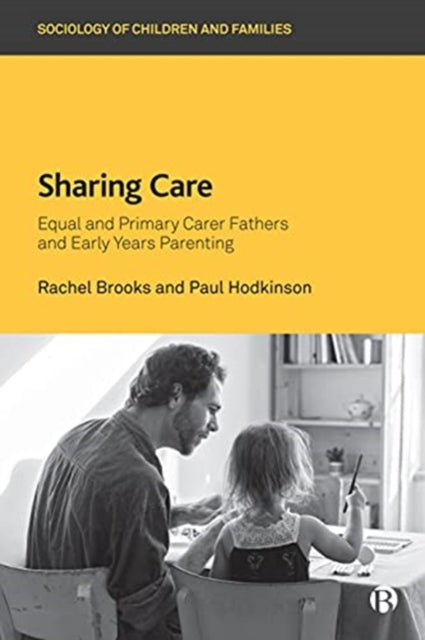
RachelBrooks,PaulHodkinson
Sharing Care: Equal and Primary Carer Fathers and Early Years Parenting
Sharing Care: Equal and Primary Carer Fathers and Early Years Parenting
💎 Earn 115 Points (£1.15) on this item.
YOU SAVE £4.87
- Condition: Brand new
- UK Delivery times: Usually arrives within 2 - 3 working days
- UK Shipping: Fee starts at £2.39. Subject to product weight & dimension
Bulk ordering. Want 15 or more copies? Get a personalised quote and bigger discounts. Learn more about bulk orders.
Couldn't load pickup availability
- More about Sharing Care: Equal and Primary Carer Fathers and Early Years Parenting
This book explores the experiences of fathers who take on equal or primary care responsibilities for young children, examining what prompts these arrangements, how fathers adjust to their caregiving roles, and the challenges they face. It offers new academic insight and practical recommendations for encouraging more fathers to become primary or equal caregivers and making things easier for those who do.
Format: Paperback / softback
Length: 230 pages
Publication date: 13 October 2021
Publisher: Bristol University Press
This timely study delves into the experiences of fathers who assume equal or primary care responsibilities for young children, drawing upon comprehensive qualitative research. The authors explore the factors that drive these arrangements, examine how fathers adapt to their caregiving roles over time, and identify the challenges they encounter along the way. The book raises important questions about what encourages more fathers to take on primary or equal caregiving responsibilities and proposes strategies to facilitate their journey. Offering fresh academic insights and practical recommendations, this book is a valuable resource for researchers, policymakers, practitioners, and students interested in parenting, families, and gender.
Introduction:
The role of fathers in child care has been evolving rapidly in recent years, with more and more fathers taking on equal or primary care responsibilities for their young children. While this shift has brought about positive changes in family dynamics and gender roles, it has also presented unique challenges and opportunities. This timely study aims to explore the experiences of fathers who take on equal or primary care responsibilities for young children, shedding light on the factors that prompt these arrangements, how fathers adjust to their caregiving roles over time, and the challenges they face along the way.
What Prompts These Arrangements?:
The authors of the study conducted extensive interviews with fathers who had taken on equal or primary care responsibilities for their young children. They sought to understand the factors that drove these arrangements and the motivations behind fathers' willingness to assume these roles. One of the key findings was that fathers were increasingly motivated by a desire to be more involved in their children's lives and to provide a more nurturing and supportive environment for their families. Fathers also recognized the importance of gender equality and wanted to contribute to breaking down traditional gender stereotypes and promoting equal opportunities for all children.
How Fathers Adjust to Their Caregiving Roles:
As fathers take on equal or primary care responsibilities, they face a range of challenges and adjustments. One of the most significant challenges is the lack of recognition and support from society and institutions. Many fathers still face barriers to accessing parental leave, flexible work arrangements, and social support systems, which can make it difficult for them to balance work and caregiving responsibilities. Additionally, fathers may struggle with feelings of inadequacy and self-doubt, particularly if they have not had previous experience caring for children.
Challenges Faced by Fathers:
Despite these challenges, fathers who take on equal or primary care responsibilities for their young children report positive outcomes for themselves and their families. Fathers who assume these roles often develop stronger bonds with their children and become more engaged in their daily lives. They also report improved mental health and well-being, as caring for children can be a source of joy and fulfillment. However, fathers also face financial challenges, as they may need to take a reduction in income or work fewer hours to accommodate their caregiving responsibilities.
What Can Be Done to Encourage More Fathers to Become Primary or Equal Caregivers?:
To encourage more fathers to become primary or equal caregivers, there are several steps that can be taken. First and foremost, society and institutions need to recognize and value the contributions of fathers in child care. This can include providing parental leave, flexible work arrangements, and social support systems that support fathers in balancing work and caregiving responsibilities. Additionally, education and awareness campaigns can be launched to promote the benefits of fatherhood and encourage men to consider taking on equal or primary care responsibilities.
Conclusion:
In conclusion, this timely study explores the experiences of fathers who take on equal or primary care responsibilities for young children. The findings highlight the factors that prompt these arrangements, the challenges faced by fathers, and the strategies that can be implemented to encourage more fathers to become primary or equal caregivers. By recognizing and valuing the contributions of fathers in child care, we can create a more equitable and supportive environment for families and promote positive outcomes for all children.
Weight: 356g
Dimension: 156 x 233 x 16 (mm)
ISBN-13: 9781529205978
This item can be found in:
UK and International shipping information
UK and International shipping information
UK Delivery and returns information:
- Delivery within 2 - 3 days when ordering in the UK.
- Shipping fee for UK customers from £2.39. Fully tracked shipping service available.
- Returns policy: Return within 30 days of receipt for full refund.
International deliveries:
Shulph Ink now ships to Australia, Belgium, Canada, France, Germany, Ireland, Italy, India, Luxembourg Saudi Arabia, Singapore, Spain, Netherlands, New Zealand, United Arab Emirates, United States of America.
- Delivery times: within 5 - 10 days for international orders.
- Shipping fee: charges vary for overseas orders. Only tracked services are available for most international orders. Some countries have untracked shipping options.
- Customs charges: If ordering to addresses outside the United Kingdom, you may or may not incur additional customs and duties fees during local delivery.