Shulph Ink
Shifts in Mapping: Maps as a Tool of Knowledge
Shifts in Mapping: Maps as a Tool of Knowledge
💎 Earn 181 Points (£1.81) on this item.
We can order this item for you. Delivery usually takes about 4 to 6 weeks.
This item is not held in our immediate stock. We will order it for you after checkout.
Estimated delivery: About 4 to 6 weeks
YOU SAVE £7.66
- Condition: Brand new
- UK Delivery times: Usually arrives within 2 - 3 working days
- UK Shipping: Fee starts at £2.39. Subject to product weight & dimension
Bulk ordering. Want 15 or more copies? Get a personalised quote and bigger discounts. Learn more about bulk orders.
Couldn't load pickup availability
- More about Shifts in Mapping: Maps as a Tool of Knowledge
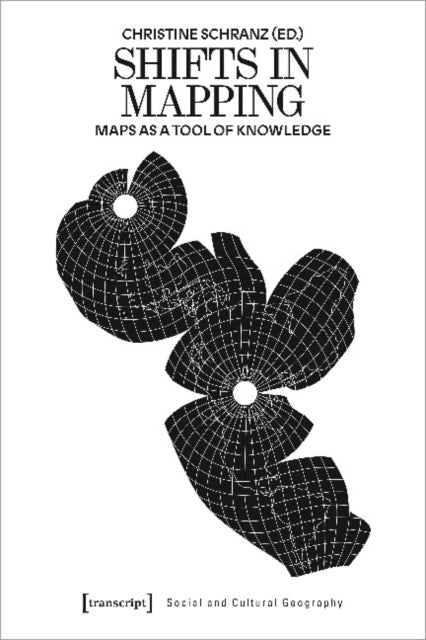
Cartography is not neutral and is driven by IT companies. It involves interpretation, imagination, privacy, authorship, and economic interests. A bottom-up perspective in map-making can change the conception of geopolitical space.
Format: Paperback / softback
Length: 294 pages
Publication date: 15 November 2021
Publisher: Transcript Verlag
The depiction of the world, territory, and geopolitical realities is a complex and multifaceted process that requires a significant degree of interpretation and imagination. It is inherently non-neutral, as it reflects the perspectives, values, and biases of the individuals and institutions involved in its creation. Cartography, as a discipline, has a rich history dating back to ancient times, when it emerged as a means of representing the world and facilitating circulation, communication, and economic exchange.
In contemporary times, information technology (IT) companies have become a dominant force in cartography, shaping our understanding of the world and revolutionizing the way we communicate, navigate, and consume globally. With the advent of digital mapping technologies, cartographers have gained unprecedented access to vast amounts of data and the ability to create interactive and visually stunning maps. However, this technological advancement has also raised important questions about privacy, authorship, and economic interests.
One of the critical roles of cartography is to provide a nuanced and accurate representation of the world. Cartographers must carefully analyze and interpret data, considering factors such as geography, demographics, political systems, and cultural practices. This requires a deep understanding of the subject matter and the ability to make informed decisions about how to represent it visually.
At the same time, cartography is also influenced by broader social and political contexts. Questions of privacy, authorship, and economic interests are highly relevant to cartography's practices, as maps can be used to track individuals, monitor economic activities, and exert control over territory. Cartographers must navigate these complex ethical dilemmas and ensure that their work is transparent, accountable, and respectful of human rights.
A bottom-up perspective and actions in map-making can have a significant impact on the conception of a geopolitical space. By engaging with communities and local stakeholders, cartographers can gain a deeper understanding of the cultural, social, and economic dynamics of a region. This can lead to maps that are more inclusive, accurate, and representative of the diverse perspectives and experiences of those who live in a particular area.
Furthermore, a bottom-up approach can challenge dominant narratives and power structures. Maps can be used to highlight marginalized voices, expose injustices, and advocate for social change. By empowering communities to participate in the map-making process, cartographers can create maps that reflect their own experiences and perspectives, rather than those imposed by external actors.
In conclusion, the depiction of the world, territory, and geopolitical realities involves a high degree of interpretation and imagination. Cartography is a dynamic and evolving field that is shaped by technological advancements, social and political contexts, and ethical considerations. By adopting a bottom-up perspective and engaging with local communities, cartographers can create maps that are more inclusive, accurate, and representative of the diverse perspectives and experiences of those who live in a particular area. This can contribute to a more informed and equitable understanding of the world and help to promote social change and justice.
Dimension: 240 x 160 (mm)
ISBN-13: 9783837660418
This item can be found in:
UK and International shipping information
UK and International shipping information
UK Delivery and returns information:
- Delivery within 2 - 3 days when ordering in the UK.
- Shipping fee for UK customers from £2.39. Fully tracked shipping service available.
- Returns policy: Return within 30 days of receipt for full refund.
International deliveries:
Shulph Ink now ships to Australia, Belgium, Canada, France, Germany, Ireland, Italy, India, Luxembourg Saudi Arabia, Singapore, Spain, Netherlands, New Zealand, United Arab Emirates, United States of America.
- Delivery times: within 5 - 10 days for international orders.
- Shipping fee: charges vary for overseas orders. Only tracked services are available for most international orders. Some countries have untracked shipping options.
- Customs charges: If ordering to addresses outside the United Kingdom, you may or may not incur additional customs and duties fees during local delivery.