Adam Rodman
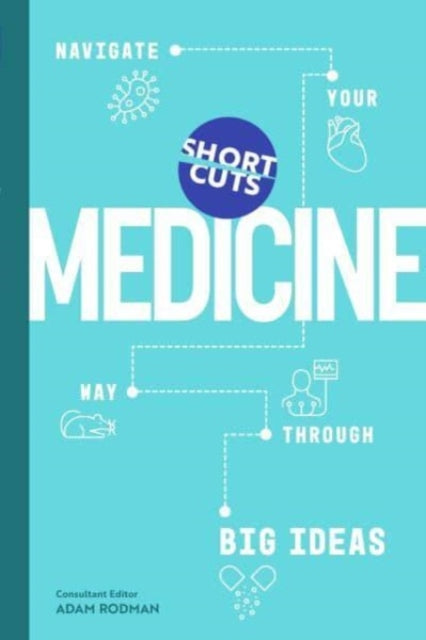
Short Cuts: Medicine: Navigate Your Way Through Big Ideas
Short Cuts: Medicine: Navigate Your Way Through Big Ideas
💎 Earn 53 Points (£0.53) on this item.
YOU SAVE £4.38
- Condition: Brand new
- UK Delivery times: Usually arrives within 2 - 3 working days
- UK Shipping: Fee starts at £2.39. Subject to product weight & dimension
Bulk ordering. Want 15 or more copies? Get a personalised quote and bigger discounts. Learn more about bulk orders.
Couldn't load pickup availability
- More about Short Cuts: Medicine: Navigate Your Way Through Big Ideas
The book "Short Cuts: Medicine" provides insights into the future of medicine by exploring ethical, practical, treatment, and prevention topics. It includes expert diagnoses, one-stop graphics, and route maps to help readers navigate the medical world.
Format: Hardback
Length: 176 pages
Publication date: 17 August 2023
Publisher: Icon Books
Is there an epidemic of pandemics?
The term "epidemic" is used to describe a widespread outbreak of a disease that affects a large number of people within a short period of time. Pandemics can be caused by a variety of factors, including viruses, bacteria, and parasites. In recent years, we have seen a number of pandemics, including the COVID-19 pandemic, which has affected millions of people worldwide.
While it is difficult to predict the future, it is possible that we may see more pandemics in the coming years. This is due to a variety of factors, including climate change, which can lead to the emergence of new diseases, and the increasing global interconnectedness of people and animals.
Climate change can have a significant impact on human health. For example, warmer temperatures can increase the prevalence of vector-borne diseases, such as malaria and dengue fever, which are transmitted by mosquitoes. Warmer temperatures can also lead to more frequent and severe heat waves, which can cause heat stroke, dehydration, and other health problems.
In addition to climate change, other factors can also contribute to the emergence of pandemics. For example, the increasing global trade and travel can facilitate the spread of diseases from one region to another. The use of antibiotics and other medications can also lead to the development of antibiotic resistance, which can make it difficult to treat infections.
Despite these challenges, there are also steps that can be taken to prevent and respond to pandemics. This includes improving public health infrastructure, promoting vaccination, and developing new treatments and vaccines.
In conclusion, while it is difficult to predict the future, it is possible that we may see more pandemics in the coming years. Climate change and other factors can have a significant impact on human health, and it is important to take steps to prevent and respond to these challenges.
Does climate change effect our health?
Climate change is a complex and multifaceted phenomenon that is having a significant impact on the health of people around the world. Here are some of the ways in which climate change is affecting our health:
Heatwaves: Heatwaves are becoming more frequent and intense due to climate change. These heatwaves can cause heat stroke, dehydration, and other heat-related illnesses. They can also lead to increased rates of respiratory infections, such as pneumonia and bronchitis.
Wildfires: Wildfires are becoming more common in many parts of the world due to climate change. These fires can release harmful pollutants into the air, which can cause respiratory problems, such as asthma and bronchitis. They can also lead to increased rates of cardiovascular disease, such as heart attacks and strokes.
Air pollution: Climate change is leading to increased levels of air pollution, which can have a significant impact on human health. Air pollution can cause respiratory problems, such as asthma and bronchitis, as well as cardiovascular problems, such as heart attacks and strokes. It can also lead to cancer and other chronic diseases.
Water pollution: Climate change is leading to increased levels of water pollution, which can have a significant impact on human health. Water pollution can cause gastrointestinal problems, such as diarrhea and vomiting, as well as respiratory problems, such as asthma and bronchitis. It can also lead to cancer and other chronic diseases.
Pest outbreaks: Climate change is leading to changes in the distribution and abundance of pests, which can have a significant impact on human health. For example, warmer temperatures can lead to the spread of diseases such as malaria and dengue fever, which are transmitted by mosquitoes.
In conclusion, climate change is having a significant impact on the health of people around the world. It is important to take steps to reduce the impact of climate change on human health, such as reducing greenhouse gas emissions, promoting clean energy, and improving air and water quality.
Will AI ever replace doctors?
Artificial intelligence (AI) is a rapidly evolving technology that has the potential to revolutionize the field of medicine. While AI has many benefits, it is unlikely to replace doctors in the near future. Here are some reasons why:
Medical expertise: Doctors have years of training and experience in diagnosing and treating medical conditions. They have a deep understanding of the human body and medical science, which allows them to make accurate diagnoses and provide effective treatments. AI, on the other hand, is still limited in its ability to understand complex medical conditions and make nuanced decisions.
Emotional support: Doctors provide emotional support to their patients, which is important for their well-being. They can listen to their concerns, provide reassurance, and offer a sense of comfort during difficult times. AI, on the other hand, is not capable of providing this type of emotional support.
Personal connection: Doctors have a personal connection with their patients, which allows them to build trust and rapport. This personal connection is important for patient satisfaction and can lead to better health outcomes. AI, on the other hand, is not capable of forming personal relationships with patients.
Ethical considerations: There are ethical considerations that need to be considered when using AI in medicine. For example, there are concerns about the privacy and security of patient data, as well as the potential for AI to make biased decisions. Doctors are responsible for ensuring that their patients' data is protected and that they make decisions that are in the best interests of their patients.
In conclusion, while AI has the potential to revolutionize the field of medicine, it is unlikely to replace doctors in the near future. Doctors have years of training and experience, as well as a personal connection with their patients, which allows them to provide the highest quality of care. However, AI can be used to assist doctors in diagnosing and treating medical conditions, and it is likely to play an increasingly important role in medicine in the years to come.
Dimension: 234 x 156 (mm)
ISBN-13: 9781785789946
UK and International shipping information
UK and International shipping information
UK Delivery and returns information:
- Delivery within 2 - 3 days when ordering in the UK.
- Shipping fee for UK customers from £2.39. Fully tracked shipping service available.
- Returns policy: Return within 30 days of receipt for full refund.
International deliveries:
Shulph Ink now ships to Australia, Belgium, Canada, France, Germany, Ireland, Italy, India, Luxembourg Saudi Arabia, Singapore, Spain, Netherlands, New Zealand, United Arab Emirates, United States of America.
- Delivery times: within 5 - 10 days for international orders.
- Shipping fee: charges vary for overseas orders. Only tracked services are available for most international orders. Some countries have untracked shipping options.
- Customs charges: If ordering to addresses outside the United Kingdom, you may or may not incur additional customs and duties fees during local delivery.