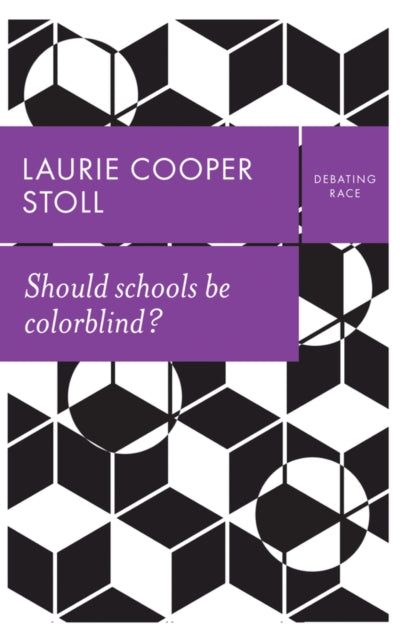
Laurie Cooper Stoll
Should schools be colorblind?
Should schools be colorblind?
YOU SAVE £1.45
- Condition: Brand new
- UK Delivery times: Usually arrives within 2 - 3 working days
- UK Shipping: Fee starts at £3.89. Subject to product weight & dimension
Bulk ordering. Want 15 or more copies? Get a personalised quote and bigger discounts. Learn more about bulk orders.
Couldn't load pickup availability
- More about Should schools be colorblind?
Being colorblind in addressing racism in schooling is not effective and can perpetuate racial inequity and white supremacy. Educators must strive to be color-conscious and actively engage in antiracism to address prejudice and discrimination.
Format: Paperback / softback
Length: 148 pages
Publication date: 28 June 2019
Publisher: Polity Press
Is being colorblind the most effective way to address overt and covert racism in schooling today? Should educators pretend that race doesn't matter?
Award-winning sociologist Laurie Cooper Stoll argues that, as long as society is stratified along racial lines, taking a colorblind approach will never end racial inequalities in schooling. Educators must strive to be color-conscious and actively engage in antiracism if they want to address prejudice and discrimination in education and the wider society. If not, they end up perpetuating racial inequity and white supremacy, whether intentionally or not.
Drawing on her research and professional development with educators as well as her experience as a publicly elected school board member, Stoll illustrates the complexities, contradictions, and consequences of colorblindness in schools and provides concrete suggestions for people coming to racial justice work in education from multiple entry points.
The idea of being colorblind in the context of addressing racism in schooling is a complex and controversial topic. On the one hand, some argue that it is a necessary step towards creating a more inclusive and equitable education system. By not emphasizing or recognizing race, educators can create a environment where all students feel valued and respected, regardless of their background.
On the other hand, critics of the colorblind approach argue that it perpetuates racial inequality and ignores the historical and systemic factors that contribute to it. They argue that by pretending that race doesn't matter, educators fail to address the biases and prejudices that students may bring to the classroom, which can lead to negative outcomes for marginalized students.
One of the main arguments against being colorblind is that it fails to recognize the impact of race on educational outcomes. Studies have shown that students of color, particularly Black and Latinx students, are often marginalized and underrepresented in high-quality schools and programs. This can lead to a cycle of poverty and limited opportunities for these students, which can have long-term consequences for their personal and professional lives.
Another argument against being colorblind is that it can create a sense of complacency and normalize racism. By not addressing race explicitly, educators may fail to recognize and challenge the biases and prejudices that students may hold, which can lead to a perpetuation of harmful stereotypes and discrimination.
In response to these concerns, some educators argue that being colorblind is not the same as ignoring race. They argue that it is important to be aware of race and its impact on education, but that it is also important to approach this topic with empathy and understanding. Educators can create a more inclusive and equitable education system by recognizing the unique experiences and challenges that students of color face and by actively working to address these challenges.
One approach to being colorblind in the context of addressing racism in schooling is to focus on creating a culture of empathy and understanding. Educators can encourage students to learn about different cultures and backgrounds and to develop a sense of empathy and compassion for others. This can help students to better understand and appreciate the diversity of their peers and to develop a sense of belonging and inclusion.
Another approach to being colorblind in the context of addressing racism in schooling is to focus on addressing the systemic factors that contribute to racial inequality. This can include implementing policies and practices that promote equity and diversity, such as increasing funding for schools in low-income communities, providing additional support and resources for students of color, and addressing the biases and prejudices that exist in the education system.
In conclusion, the issue of being colorblind in the context of addressing racism in schooling is complex and multifaceted. While some argue that it is a necessary step towards creating a more inclusive and equitable education system, others argue that it perpetuates racial inequality and ignores the historical and systemic factors that contribute to it. By being aware of the complexities and contradictions of the colorblind approach, educators can work to create a more inclusive and equitable education system that recognizes the unique experiences and challenges of students of color.
Weight: 156g
Dimension: 124 x 189 x 11 (mm)
ISBN-13: 9781509534265
UK and International shipping information
UK and International shipping information
We deliver throughout the United Kingdom and to 128 countries and territories worldwide, including the United States, Australia, Canada, Germany, Spain and France.