RolandBetancourt
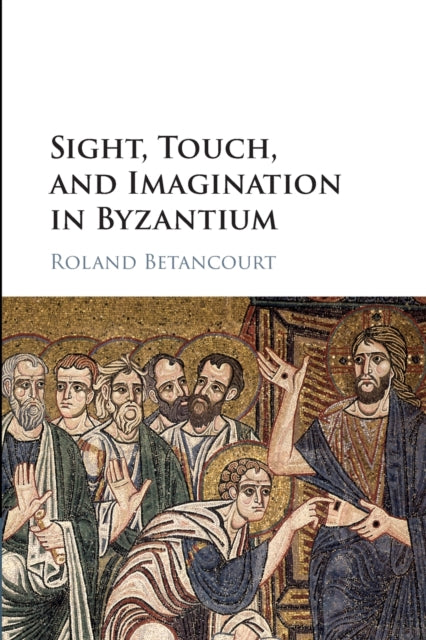
Sight, Touch, and Imagination in Byzantium
Sight, Touch, and Imagination in Byzantium
💎 Earn 188 Points (£1.88) on this item.
We can order this item for you. Delivery usually takes about 4 to 6 weeks.
This item is not held in our immediate stock. We will order it for you after checkout.
Estimated delivery: About 4 to 6 weeks
YOU SAVE £2.24
- Condition: Brand new
- UK Delivery times: Usually arrives within 2 - 3 working days
- UK Shipping: Fee starts at £3.89. Subject to product weight & dimension
Bulk ordering. Want 15 or more copies? Get a personalised quote and bigger discounts. Learn more about bulk orders.
Couldn't load pickup availability
- More about Sight, Touch, and Imagination in Byzantium
This book explores how the Byzantine world categorized and comprehended sensation and perception, revisiting scholarly assumptions about the tactility of sight and how the senses delineated and cultivated the manner in which art and rhetoric were understood as mediating the realities they wished to convey. It also examines how Byzantine religious culture could access the sacred through the image.
Format: Paperback / softback
Length: 417 pages
Publication date: 12 August 2021
Publisher: Cambridge University Press
This book delves into the intricate interplay between sight, touch, and imagination, exploring classical, late antique, and medieval theories of vision to unravel how the Byzantine world categorized and understood sensation and perception. By challenging prevailing scholarly assumptions about the tactile nature of sight in the Byzantine world, it demonstrates how the haptic language associated with vision referred to the cognitive actions of the viewer as they grasped sensory data in the mind to comprehend and produce working imaginations of objects for thought and memory. At the heart of this exploration lies the question of how the affordances and limitations of the senses shaped and cultivated the manner in which art and rhetoric were perceived as mediators of the realities they sought to convey. This profound inquiry also sheds light on how Byzantine religious culture approached the sacred, with the image serving as a coveted site for the mediated representation of the Divine.
The book begins by tracing the historical development of theories of vision in the Byzantine world, from the classical era to the late antique and medieval periods. It examines the contributions of key thinkers such as Aristotle, Plotinus, and Augustine, as well as the influence of Christian theology on visual perception. The author highlights the importance of the eye as the primary sense organ in Byzantine visual culture, and explores how the visual arts were used to convey religious and philosophical ideas.
One of the key themes of the book is the relationship between sight, touch, and imagination. The author argues that the Byzantine world saw the senses as interconnected, with sight serving as the primary means of perception and touch as a secondary sense that could enhance and interpret visual information. The haptic language associated with vision, such as "seeing with the eyes," emphasized the cognitive actions of the viewer as they grasped sensory data in the mind to comprehend and produce working imaginations of objects for thought and memory.
The book also explores the role of the image in Byzantine visual culture. It demonstrates how the image served as a site of desire for the mediated representation of the Divine. The author argues that the image was not simply a visual object, but a complex symbol that could evoke a range of emotions and sensations. The image was used to convey religious ideas, to represent the human body, and to depict the natural world, and it played a crucial role in shaping Byzantine religious culture and spirituality.
In addition to its exploration of the relationship between sight, touch, and imagination, the book also examines the limitations and constraints of the senses in the Byzantine world. It explores how the senses were perceived as tools for understanding the world, but also as sources of temptation and distraction. The author argues that the Byzantine world sought to balance the demands of the senses with the demands of the mind and the soul, and that the visual arts were used to cultivate a sense of mindfulness and meditation that could help individuals achieve a deeper understanding of the divine.
Overall, this book is a valuable contribution to the study of Byzantine culture and visual perception. It offers a fresh perspective on the complex interplay between sight, touch, and imagination, and sheds light on the ways in which the Byzantine world categorized and comprehended sensation and perception. The book will be of interest to scholars and students of art history, religious studies, and cultural history, as well as anyone with an interest in the history and culture of the Byzantine world.
Weight: 602g
Dimension: 152 x 228 x 28 (mm)
ISBN-13: 9781108440899
UK and International shipping information
UK and International shipping information
We deliver throughout the United Kingdom and to 128 countries and territories worldwide, including the United States, Australia, Canada, Germany, Spain and France.