Shulph Ink
Single Cell ‘Omics of Neuronal Cells
Single Cell ‘Omics of Neuronal Cells
💎 Earn 578 Points (£5.78) on this item.
We can order this item for you. Delivery usually takes about 4 to 6 weeks.
This item is not held in our immediate stock. We will order it for you after checkout.
Estimated delivery: About 4 to 6 weeks
YOU SAVE £24.36
- Condition: Brand new
- UK Delivery times: Usually arrives within 2 - 3 working days
- UK Shipping: Fee starts at £2.39. Subject to product weight & dimension
Bulk ordering. Want 15 or more copies? Get a personalised quote and bigger discounts. Learn more about bulk orders.
Couldn't load pickup availability
- More about Single Cell ‘Omics of Neuronal Cells
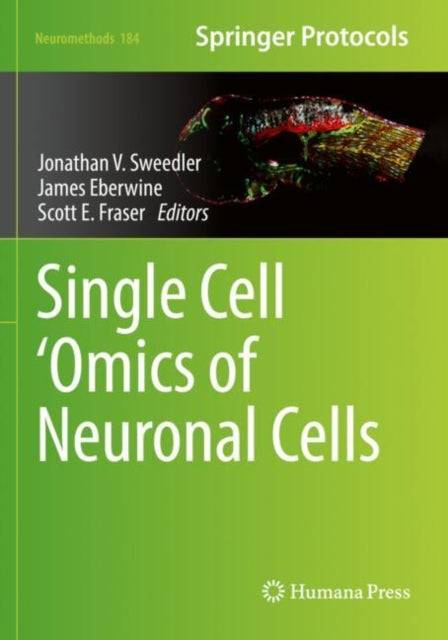
Single Cell ‘Omics of Neuronal Cells is a comprehensive guide to the latest techniques used in single cell ‘omics, covering quantifying the transcriptome, isolating cells for proteomics measurements, and protein characterization. It offers in-depth overviews and detailed protocols for successful results in the laboratory.
Format: Paperback / softback
Length: 294 pages
Publication date: 12 August 2023
Publisher: Springer-Verlag New York Inc.
Single Cell ‘Omics of Neuronal Cells is a comprehensive volume that explores the latest techniques used in the diverse fields of single cell ‘omics. It covers topics such as quantifying the single cell transcriptome, isolation of cells in nanoliter volumes for single cell proteomics measurements by nano-LC-MS/MS, and single cell protein characterization by immunoblotting. The book highlights a wide range of methodologies, from high-yield chemical amplification to mass spectrometry and nanotechnology, for the analysis of the chemical constituents of cells. In the Neuromethods series style, chapters include both in-depth overviews and detailed protocols that provide the key advice from specialists you need to get successful results in your laboratory.
One of the key challenges in single cell ‘omics is the isolation of cells in nanoliter volumes for single cell proteomics measurements by nano-LC-MS/MS. This requires the use of specialized microfluidic devices and techniques to ensure that the cells are not damaged or disrupted during the isolation process. The book provides detailed protocols for these techniques, including microfluidic devices, microfluidic chips, and microfluidic pumps.
Another challenge in single cell ‘omics is the characterization of single cell proteins. This requires the use of immunoblotting, which is a technique that allows for the detection and quantification of proteins in individual cells. The book provides detailed protocols for immunoblotting, including sample preparation, antibody selection, and imaging.
In addition to these challenges, single cell ‘omics also offers many opportunities for research. For example, it can be used to study the development of the nervous system, the function of neurons, and the response to drugs and other stimuli. It can also be used to develop new therapies for neurological disorders.
Single Cell ‘Omics of Neuronal Cells is a valuable resource for experienced and novice researchers interested in learning more about this field and its future developments. It provides detailed protocols for the isolation of cells in nanoliter volumes for single cell proteomics measurements by nano-LC-MS/MS, the characterization of single cell proteins by immunoblotting, and the many opportunities for research that single cell ‘omics offers.
The book is divided into four sections: Introduction, Single Cell Transcriptomics, Single Cell Proteomics, and Single Cell Protein Characterization. The Introduction section provides an overview of the field of single cell ‘omics and its applications. The Single Cell Transcriptomics section covers the techniques used to quantify the single cell transcriptome, including RNA-seq, microarray, and single cell RNA-seq. The Single Cell Proteomics section covers the techniques used to isolate cells in nanoliter volumes for single cell proteomics measurements by nano-LC-MS/MS, including microfluidic devices, microfluidic chips, and microfluidic pumps. The Single Cell Protein Characterization section covers the techniques used to characterize single cell proteins by immunoblotting, including sample preparation, antibody selection, and imaging.
Each section includes detailed protocols for the techniques covered. The protocols are written in a clear and concise manner, and they include step-by-step instructions and illustrations. The book also includes a glossary of terms and a list of references for further reading.
One of the strengths of Single Cell ‘Omics of Neuronal Cells is its emphasis on practicality. The book provides detailed protocols that can be used in the laboratory, and it includes tips and tricks that can help researchers get successful results. The book also includes case studies that demonstrate the applications of single cell ‘omics in real-world research.
However, there are also some limitations to Single Cell ‘Omics of Neuronal Cells. One of the limitations is the cost of the equipment and reagents required for single cell ‘omics. The cost of these materials can be prohibitive for some researchers, particularly those in developing countries.
Another limitation is the complexity of the techniques used in single cell ‘omics. The techniques require a high level of technical expertise, and they can be difficult to learn and implement. This can make it difficult for researchers to get started in the field.
Despite these limitations, Single Cell ‘Omics of Neuronal Cells is a valuable resource for experienced and novice researchers interested in learning more about this field and its future developments. It provides detailed protocols for the isolation of cells in nanoliter volumes for single cell proteomics measurements by nano-LC-MS/MS, the characterization of single cell proteins by immunoblotting, and the many opportunities for research that single cell ‘omics offers.
In conclusion, Single Cell ‘Omics of Neuronal Cells is a comprehensive volume that explores the latest techniques used in the diverse fields of single cell ‘omics. It covers topics such as quantifying the single cell transcriptome, isolation of cells in nanoliter volumes for single cell proteomics measurements by nano-LC-MS/MS, and single cell protein characterization by immunoblotting. The book highlights a wide range of methodologies, from high-yield chemical amplification to mass spectrometry and nanotechnology, for the analysis of the chemical constituents of cells. In the Neuromethods series style, chapters include both in-depth overviews and detailed protocols that provide the key advice from specialists you need to get successful results in your laboratory. While there are some limitations to Single Cell ‘Omics of Neuronal Cells, it is a valuable resource for experienced and novice researchers interested in learning more about this field and its future developments.
Dimension: 254 x 178 (mm)
ISBN-13: 9781071625279
Edition number: 1st ed. 2022
This item can be found in:
UK and International shipping information
UK and International shipping information
UK Delivery and returns information:
- Delivery within 2 - 3 days when ordering in the UK.
- Shipping fee for UK customers from £2.39. Fully tracked shipping service available.
- Returns policy: Return within 30 days of receipt for full refund.
International deliveries:
Shulph Ink now ships to Australia, Belgium, Canada, France, Germany, Ireland, Italy, India, Luxembourg Saudi Arabia, Singapore, Spain, Netherlands, New Zealand, United Arab Emirates, United States of America.
- Delivery times: within 5 - 10 days for international orders.
- Shipping fee: charges vary for overseas orders. Only tracked services are available for most international orders. Some countries have untracked shipping options.
- Customs charges: If ordering to addresses outside the United Kingdom, you may or may not incur additional customs and duties fees during local delivery.