Edward B. Rugemer
Slave Law and the Politics of Resistance in the Early Atlantic World
Slave Law and the Politics of Resistance in the Early Atlantic World
💎 Earn 147 Points (£1.47) on this item.
YOU SAVE £7.49
- Condition: Brand new
- UK Delivery times: Usually arrives within 2 - 3 working days
- UK Shipping: Fee starts at £2.39. Subject to product weight & dimension
Bulk ordering. Want 15 or more copies? Get a personalised quote and bigger discounts. Learn more about bulk orders.
Couldn't load pickup availability
- More about Slave Law and the Politics of Resistance in the Early Atlantic World
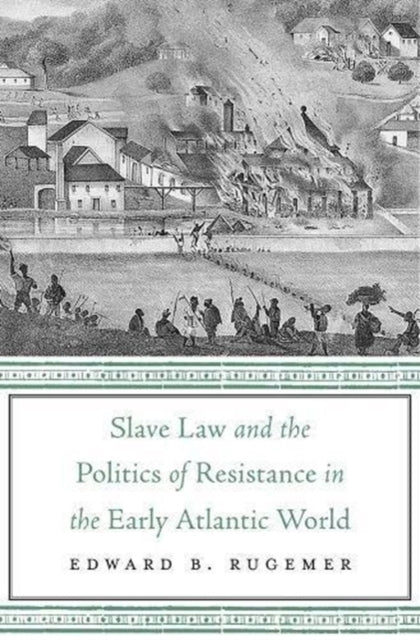
The Jerry H. Bentley Book Prize, awarded by the World History Association, was given to Edward Rugemer for his book "Slave Law and the Politics of Resistance in the Early Atlantic World." This book explores the political dynamics between slave resistance and slaveholders' power that led to the abolition of slavery in the Anglo-American Atlantic. It shows how slave resistance persisted, aided by rising abolitionist sentiment and activity, despite a draconian system of laws and enforcement. Rugemer's comparative history illuminates the evolution and ultimate collapse of slave societies in the Atlantic World.
Format: Hardback
Length: 400 pages
Publication date: 12 November 2018
Publisher: Harvard University Press
The Jerry H. Bentley Book Prize, awarded by the World History Association, has been bestowed upon Edward Rugemer for his groundbreaking work, Slave Law and the Politics of Resistance in the Early Atlantic World. This captivating book delves into the intricate political dynamics that shaped the evolution of slave societies in the seventeenth century, particularly in Barbados, Jamaica, and South Carolina. Despite the rise of enlightened ideas of liberty and human dignity, these slave economies flourished, becoming the most prosperous in the Anglo-American Atlantic.
Slave Law and the Politics of Resistance in the Early Atlantic World sheds light on the complex interplay between slave resistance and slaveholders' power. Through meticulous research, Edward Rugemer demonstrates how this struggle ultimately led to the abolition of slavery in two distinct cases. In one instance, a law of British Parliament played a pivotal role in abolishing slavery. In contrast, in the other case, violent civil war was the catalyst for the end of slavery.
In both Jamaica and South Carolina, a rigorous system of laws and enforcement was in place to maintain control over the enslaved population. Slave masters wielded immense power, employing brutal punishments, patrols, imprisonment, and state-sponsored slave catchers to suppress resistance and quell slave revolts. This impenetrable net of power seemed insurmountable, yet slave resistance persisted, fueled by growing abolitionist sentiment and activity in the Anglo-American world.
In South Carolina, slaveholders sought to exploit newly formed federal power to deflect calls for abolition and to expand slavery in the young republic. They employed various tactics to maintain their dominance, including political maneuvering, legal challenges, and even military force. However, their efforts were met with fierce resistance from abolitionists and Caribbean rebels who acted through Parliament.
In Jamaica, the situation was somewhat different. Whites fought a losing political battle against Caribbean rebels and British abolitionists who sought to end slavery through legislative means. Despite their efforts, the slaveholders' resistance proved formidable, and slavery continued to be a dominant institution in the island nation.
Edward Rugemer's comparative history, spanning two hundred years of slave law and political resistance, provides a profound insight into the evolution and ultimate collapse of slave societies in the Atlantic World. His work sheds light on the complex factors that contributed to the decline of slavery, including economic, social, and political factors. It also highlights the resilience and determination of enslaved people and abolitionists who worked tirelessly to bring about change.
Slave Law and the Politics of Resistance in the Early Atlantic World is a seminal work that has significantly contributed to our understanding of the complex history of slavery. It is a must-read for scholars, students, and anyone interested in exploring the fraught and complex relationship between power, resistance, and the legacy of slavery. Through its insightful analysis and compelling narrative, this book offers a valuable contribution to our collective memory and understanding of this critical period in world history.
Weight: 736g
Dimension: 243 x 165 x 31 (mm)
ISBN-13: 9780674982994
This item can be found in:
UK and International shipping information
UK and International shipping information
UK Delivery and returns information:
- Delivery within 2 - 3 days when ordering in the UK.
- Shipping fee for UK customers from £2.39. Fully tracked shipping service available.
- Returns policy: Return within 30 days of receipt for full refund.
International deliveries:
Shulph Ink now ships to Australia, Belgium, Canada, France, Germany, Ireland, Italy, India, Luxembourg Saudi Arabia, Singapore, Spain, Netherlands, New Zealand, United Arab Emirates, United States of America.
- Delivery times: within 5 - 10 days for international orders.
- Shipping fee: charges vary for overseas orders. Only tracked services are available for most international orders. Some countries have untracked shipping options.
- Customs charges: If ordering to addresses outside the United Kingdom, you may or may not incur additional customs and duties fees during local delivery.