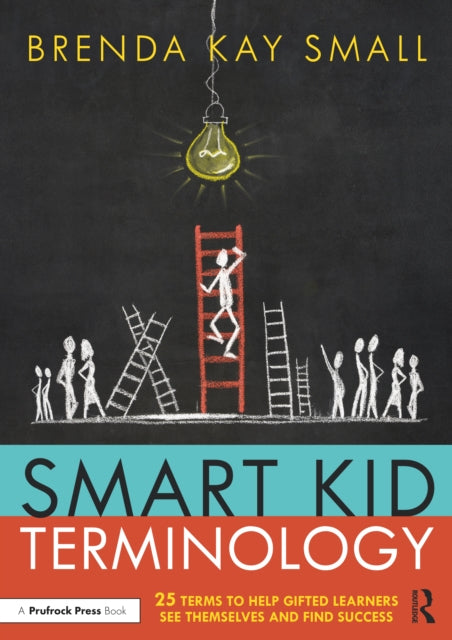
Brenda KaySmall
Smart Kid Terminology: 25 Terms to Help Gifted Learners See Themselves and Find Success
Smart Kid Terminology: 25 Terms to Help Gifted Learners See Themselves and Find Success
💎 Earn 94 Points (£0.94) on this item.
We can order this item for you. Delivery usually takes about 4 to 6 weeks.
This item is not held in our immediate stock. We will order it for you after checkout.
Estimated delivery: About 4 to 6 weeks
YOU SAVE £1.12
- Condition: Brand new
- UK Delivery times: Usually arrives within 2 - 3 working days
- UK Shipping: Fee starts at £3.89. Subject to product weight & dimension
Bulk ordering. Want 15 or more copies? Get a personalised quote and bigger discounts. Learn more about bulk orders.
Couldn't load pickup availability
- More about Smart Kid Terminology: 25 Terms to Help Gifted Learners See Themselves and Find Success
The article provides a glossary of terms describing common feelings or emotions that gifted children may experience, such as frustration, isolation, and perfectionism, and offers strategies for helping students identify and address these emotions.
Format: Paperback / softback
Length: 78 pages
Publication date: 31 March 2022
Publisher: Taylor & Francis Ltd
Here is the rephrased text:
Gifted children often exhibit a unique set of emotions and feelings that can be challenging to understand and navigate. To assist students in identifying and engaging with these experiences, educators have developed a range of terms that describe common feelings or emotions experienced by gifted individuals. These terms serve as valuable tools for teachers and parents who seek to gain a deeper understanding of the social-emotional lives of advanced learners.
One such term is " overexcitability," which refers to the heightened sensitivity and reactivity of gifted children to their surroundings. Overexcitability can manifest in various ways, such as intense emotions, quick changes in mood, and a strong desire for stimulation. For example, a gifted child may become overwhelmed by a crowded classroom or feel deeply disappointed after a setback.
Another term is "underachievement," which describes the frustration and dissatisfaction that gifted children may feel when they are not living up to their full potential. This can be particularly prevalent in areas where gifted children are expected to excel, such as academic performance or artistic creativity. Underachievement can lead to feelings of inadequacy, self-doubt, and a sense of failure.
"Perfectionism" is another term that is often associated with gifted children. Perfectionists strive for flawlessness and can become extremely self-critical if they do not meet their own high standards. This can lead to feelings of anxiety, stress, and a sense of being overwhelmed. For example, a gifted child may spend hours perfecting a school project, only to become frustrated and disappointed when they receive a lower grade than they expected.
"Social isolation" is a term that describes the difficulty gifted children may have in forming and maintaining close relationships with others. This can be due to a range of factors, such as a heightened sense of empathy, a preference for solitary activities, or a fear of rejection. Social isolation can lead to feelings of loneliness, depression, and a lack of self-worth.
"Emotional dysregulation" is a term that describes the difficulty gifted children may have in managing their emotions. This can be due to a range of factors, such as a lack of experience with emotional expression, a heightened sensitivity to emotions, or a difficulty in identifying and expressing emotions. Emotional dysregulation can lead to outbursts, tantrums, and a lack of self-control.
To help students identify and engage with their emotions, educators have developed a range of strategies and resources. One such strategy is "emotional intelligence," which involves teaching students to recognize and manage their emotions in a healthy and effective way. This can include strategies such as mindfulness, self-regulation, and social skills training.
Another strategy is "case scenarios," which involve presenting students with real-life situations that evoke emotional responses. These scenarios can be used to help students develop empathy, perspective-taking, and problem-solving skills. For example, a teacher may present a case scenario about a child who is struggling with social isolation and then ask students to brainstorm ways to help the child build relationships.
In addition to strategies for students, educators have developed resources for parents and teachers who are looking to understand the social-emotional lives of gifted children. One such resource is the "Gifted Child Quarterly," a journal that publishes articles and research on the social-emotional development of gifted children. Another resource is the "National Association for Gifted Children," a nonprofit organization that provides resources, support, and advocacy for gifted children and their families.
In conclusion, gifted children often exhibit a unique set of emotions and feelings that can be challenging to understand and navigate. By developing a range of terms that describe common feelings or emotions experienced by gifted individuals, educators have created valuable tools for helping students identify and engage with their experiences. These terms also serve as useful resources for teachers and parents who seek to gain a deeper understanding of the social-emotional lives of advanced learners. By implementing strategies such as emotional intelligence, case scenarios, and resources for parents and teachers, educators can help gifted children develop the skills they need to thrive socially and emotionally.
Weight: 262g
Dimension: 211 x 296 x 10 (mm)
ISBN-13: 9781032189277
UK and International shipping information
UK and International shipping information
We deliver throughout the United Kingdom and to 128 countries and territories worldwide, including the United States, Australia, Canada, Germany, Spain and France.