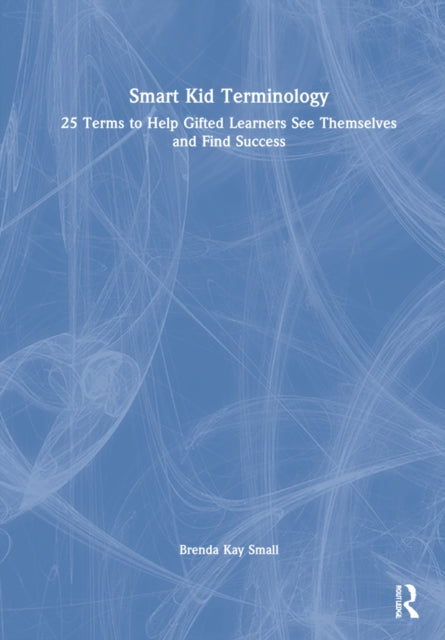
Brenda KaySmall
Smart Kid Terminology: 25 Terms to Help Gifted Learners See Themselves and Find Success
Smart Kid Terminology: 25 Terms to Help Gifted Learners See Themselves and Find Success
💎 Earn 811 Points (£8.11) on this item.
We can order this item for you. Delivery usually takes about 4 to 6 weeks.
This item is not held in our immediate stock. We will order it for you after checkout.
Estimated delivery: About 4 to 6 weeks
YOU SAVE £9.63
- Condition: Brand new
- UK Delivery times: Usually arrives within 2 - 3 working days
- UK Shipping: Fee starts at £2.39. Subject to product weight & dimension
Bulk ordering. Want 15 or more copies? Get a personalised quote and bigger discounts. Learn more about bulk orders.
Couldn't load pickup availability
- More about Smart Kid Terminology: 25 Terms to Help Gifted Learners See Themselves and Find Success
The article is a glossary of social-emotional terms for gifted children, designed to help students identify and communicate their emotions to parents and teachers.
Format: Hardback
Length: 78 pages
Publication date: 31 March 2022
Publisher: Taylor & Francis Ltd
Here is the rephrased text:
Gifted children often exhibit a unique set of emotions and feelings that can be challenging to understand and navigate. To assist students in identifying and engaging with these experiences, educators have developed a range of terms that describe common feelings or emotions experienced by gifted individuals. These terms serve as valuable tools for teachers and parents who seek to gain a deeper understanding of the social-emotional lives of advanced learners.
One such term is " overexcitability," which refers to the heightened sensitivity and reactivity of gifted children to their surroundings. Overexcitability can manifest in various ways, such as intense emotions, quick changes in mood, and a strong desire for stimulation. For example, a gifted child may become overwhelmed by a crowded classroom or feel deeply affected by a touching story or artwork.
Another term is "understanding," which describes the gifted child's ability to comprehend complex concepts and ideas at a deeper level than their peers. This can lead to feelings of isolation or loneliness, as the child may struggle to find others who share their level of intellectual curiosity. For instance, a gifted child may become frustrated with traditional classroom instruction that moves at a slow pace, feeling as if they are not being challenged enough.
"Perfectionism" is another term that is often associated with gifted children. Perfectionists strive for flawlessness and can become extremely self-critical if they do not meet their own high standards. This can lead to feelings of anxiety, depression, and a sense of inadequacy. For example, a gifted child may spend hours working on a school project, only to become discouraged when they receive a low grade, feeling as if they have failed.
"Introversion" is a term that describes the personality trait of gifted children who tend to be more introspective and reserved than their peers. Introverts may struggle with social situations and may prefer to spend time alone or in small groups. For example, a gifted child may feel uncomfortable in large social gatherings and may prefer to engage in solitary activities such as reading or writing.
"Sensitivity" is a term that describes the heightened awareness and sensitivity of gifted children to their surroundings. Sensitivity can manifest in various ways, such as a strong sense of empathy, a keen ability to detect emotions in others, and a sensitivity to noise, light, and touch. For example, a gifted child may become overwhelmed by loud noises or bright lights and may need to take breaks to recharge.
"Intuition" is a term that describes the gifted child's ability to perceive and understand information without relying on traditional cognitive processes. Intuition can manifest in various ways, such as a strong sense of intuition, a keen ability to predict future events, and a deep understanding of the human psyche. For example, a gifted child may have a strong sense of intuition about the needs of others and may be able to provide support and comfort to those in need.
"Emotional dysregulation" is a term that describes the difficulty gifted children have in managing their emotions. Emotional dysregulation can manifest in various ways, such as outbursts of anger, frequent crying or tantrums, and a lack of self-control. For example, a gifted child may become overwhelmed by a challenging academic task and may lash out in anger or frustration.
"Social isolation" is a term that describes the tendency self-imposed or imposed by others, the gifted child's tendency to withdraw from social situations. Social isolation can manifest in various ways, such as a lack of interest in social activities, a preference for solitary hobbies, and a difficulty forming and maintaining relationships. For example, a gifted child may feel uncomfortable in social situations and may prefer to spend time alone or in small groups.
"Overthinking" is a term that describes the gifted child's tendency to overanalyze and overthink their thoughts and feelings. Overthinking can manifest in various ways, such as a constant stream of inner monologue, a difficulty shutting off their mind, and a tendency to second-guess themselves. For example, a gifted child may become overwhelmed by a complex problem and may spend hours analyzing and evaluating different solutions, never reaching a conclusion.
"Perfectionism" is a term that describes the gifted child's tendency to strive for flawlessness and to set high standards for themselves. Perfectionists can become extremely self-critical if they do not meet their own high standards, which can lead to feelings of anxiety, depression, and a sense of inadequacy. For example, a gifted child may spend hours working on a school project, only to become discouraged when they receive a low grade, feeling as if they have failed.
"Introversion" is a term that describes the personality trait of gifted children who tend to be more introspective and reserved than their peers. Introverts may struggle with social situations and may prefer to spend time alone or in small groups. For example, a gifted child may feel uncomfortable in large social gatherings and may prefer to engage in solitary activities such as reading or writing.
"Sensitivity" is a term that describes the heightened awareness and sensitivity of gifted children to their surroundings. Sensitivity can manifest in various ways, such as a strong sense of empathy, a keen ability to detect emotions in others, and a sensitivity to noise, light, and touch. For example, a gifted child may become overwhelmed by loud noises or bright lights and may need to take breaks to recharge.
"Intuition" is a term that describes the gifted child's ability to perceive and understand information without relying on traditional cognitive processes. Intuition can manifest in various ways, such as a strong sense of intuition, a keen ability to predict future events, and a deep understanding of the human psyche
"Emotional dysregulation" is a term that describes the difficulty gifted children have in managing their emotions. Emotional dysregulation can manifest in various ways, such as outbursts of anger, frequent crying or tantrums, and a lack of self-control. For example, a gifted child may become overwhelmed by a challenging academic task and may lash out in anger or frustration.
"Social isolation" is a term that describes the self-imposed or imposed by others, the gifted child's tendency to withdraw from social situations. Social isolation can manifest in various ways, such as a lack of interest in social activities, a preference for solitary hobbies, and a difficulty forming and maintaining relationships. For example, a gifted child may feel uncomfortable in social situations and may prefer to spend time alone or in small groups.
"Overthinking" is a term that describes the gifted child's tendency to overanalyze and overthink their thoughts and feelings. Overthinking can manifest in various ways, such as a constant stream of inner monologue, a difficulty shutting off their mind, and a tendency to second-guess themselves. For example, a gifted child may become overwhelmed by a complex problem and may spend hours analyzing and evaluating different solutions, never reaching a conclusion.
In conclusion, the terms describing common feelings or emotions that gifted children may experience are valuable tools for educators, parents, and educators who seek to understand and support the social-emotional development of advanced learners. By recognizing and addressing these emotions and feelings, educators can create a supportive and nurturing environment that promotes the well-being and academic success of gifted children.
Dimension: 297 x 210 (mm)
ISBN-13: 9781032189437
This item can be found in:
UK and International shipping information
UK and International shipping information
UK Delivery and returns information:
- Delivery within 2 - 3 days when ordering in the UK.
- Shipping fee for UK customers from £2.39. Fully tracked shipping service available.
- Returns policy: Return within 30 days of receipt for full refund.
International deliveries:
Shulph Ink now ships to Australia, Belgium, Canada, France, Germany, Ireland, Italy, India, Luxembourg Saudi Arabia, Singapore, Spain, Netherlands, New Zealand, United Arab Emirates, United States of America.
- Delivery times: within 5 - 10 days for international orders.
- Shipping fee: charges vary for overseas orders. Only tracked services are available for most international orders. Some countries have untracked shipping options.
- Customs charges: If ordering to addresses outside the United Kingdom, you may or may not incur additional customs and duties fees during local delivery.