Shulph Ink
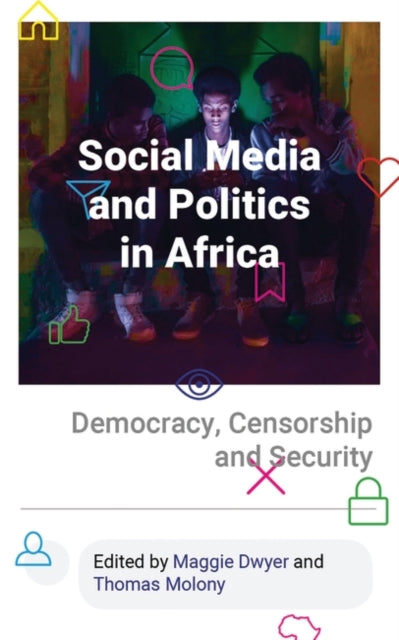
Social Media and Politics in Africa: Democracy, Censorship and Security
Social Media and Politics in Africa: Democracy, Censorship and Security
💎 Earn 418 Points (£4.18) on this item.
YOU SAVE £1.36
- Condition: Brand new
- UK Delivery times: Usually arrives within 2 - 3 working days
- UK Shipping: Fee starts at £2.39. Subject to product weight & dimension
Bulk ordering. Want 15 or more copies? Get a personalised quote and bigger discounts. Learn more about bulk orders.
Couldn't load pickup availability
- More about Social Media and Politics in Africa: Democracy, Censorship and Security
Smartphones and social media have transformed Africa, allowing people to share ideas, organize, and participate in politics. However, some African states have sought to clamp down on the technology, introducing restrictive laws or shutting down networks. This collection explores how social media use is reshaping political engagement in Africa, highlighting the profound effects of cyber-activism, cyber-crime, state policing, and surveillance on political participation.
\n Format: Hardback
\n Length: 320 pages
\n Publication date: 15 July 2019
\n Publisher: Bloomsbury Publishing PLC
\n
The smartphone and social media have brought about a remarkable transformation in Africa, enabling people across the continent to engage in political activities like never before. Both activists and governments have embraced social media as a powerful tool for political mobilization, leveraging its potential to connect and organize communities. However, this newfound accessibility has also sparked concerns among some African states, who have sought to restrict or shut down social media networks altogether.
In this comprehensive collection, researchers from various disciplines explore the impact of rapidly growing social media use on political engagement in Africa. Drawing on over a dozen new empirical case studies, ranging from Kenya to Somalia, South Africa to Tanzania, the book provides a detailed examination of how social media is reshaping political participation on the continent. While social media has often been celebrated as a liberating force, the book reveals that it has often served to reinforce existing power dynamics rather than challenge them.
The collection features experts from diverse fields, including political science, sociology, and technology, who offer insights into the historical, political, and social contexts in which social media platforms are utilized. By examining the profound effects of cyber-activism, cyber-crime, state policing, and surveillance on political participation, the book provides a holistic understanding of the complex interplay between social media and politics in Africa.
One of the key findings of the book is that social media has played a significant role in amplifying the voices of marginalized communities and promoting social change. It has enabled individuals to share their experiences, raise awareness about important issues, and mobilize support for their causes. However, the book also highlights the challenges faced by these communities, such as cyberbullying, misinformation, and state repression.
The impact of social media on political participation extends beyond individual activism and community organizing. It has also had a profound effect on the dynamics of national and international politics. Social media platforms have become a powerful tool for political campaigns, allowing politicians to reach a wider audience and engage with constituents in real-time. However, they have also been used to spread misinformation, manipulate public opinion, and undermine democratic processes.
The book also explores the role of social media in shaping public discourse and political discourse. It examines how social media platforms have become a space for the expression of diverse opinions and ideas, but also how they can perpetuate stereotypes, misinformation, and hate speech. The book argues that it is important for governments and social media platforms to work together to promote responsible and inclusive use of social media, while also protecting the rights and freedoms of individuals.
In conclusion, the smartphone and social media have transformed Africa, enabling people to engage in political activities like never before. While social media has brought about significant benefits, it has also posed challenges and risks. This comprehensive collection provides a valuable insight into the impact of social media on political engagement in Africa, highlighting the opportunities and challenges faced by individuals, communities, and governments alike. By examining the historical, political, and social context in which these media platforms are used, the book reveals the profound effects of cyber-activism, cyber-crime, state policing, and surveillance on political participation. As social media continues to evolve and shape the political landscape in Africa, it is essential to understand its implications and work towards a future where social media can be used as a force for positive change.
\n Weight: 454g\n
Dimension: 140 x 224 x 25 (mm)\n
ISBN-13: 9781786994981\n \n
This item can be found in:
UK and International shipping information
UK and International shipping information
UK Delivery and returns information:
- Delivery within 2 - 3 days when ordering in the UK.
- Shipping fee for UK customers from £2.39. Fully tracked shipping service available.
- Returns policy: Return within 30 days of receipt for full refund.
International deliveries:
Shulph Ink now ships to Australia, Belgium, Canada, France, Germany, Ireland, Italy, India, Luxembourg Saudi Arabia, Singapore, Spain, Netherlands, New Zealand, United Arab Emirates, United States of America.
- Delivery times: within 5 - 10 days for international orders.
- Shipping fee: charges vary for overseas orders. Only tracked services are available for most international orders. Some countries have untracked shipping options.
- Customs charges: If ordering to addresses outside the United Kingdom, you may or may not incur additional customs and duties fees during local delivery.