Shulph Ink
Social Order and Authority in Disney and Pixar Films
Social Order and Authority in Disney and Pixar Films
💎 Earn 451 Points (£4.51) on this item.
We can order this item for you. Delivery usually takes about 4 to 6 weeks.
This item is not held in our immediate stock. We will order it for you after checkout.
Estimated delivery: About 4 to 6 weeks
- Condition: Brand new
- UK Delivery times: Usually arrives within 2 - 3 working days
- UK Shipping: Fee starts at £2.39. Subject to product weight & dimension
Bulk ordering. Want 15 or more copies? Get a personalised quote and bigger discounts. Learn more about bulk orders.
Couldn't load pickup availability
- More about Social Order and Authority in Disney and Pixar Films
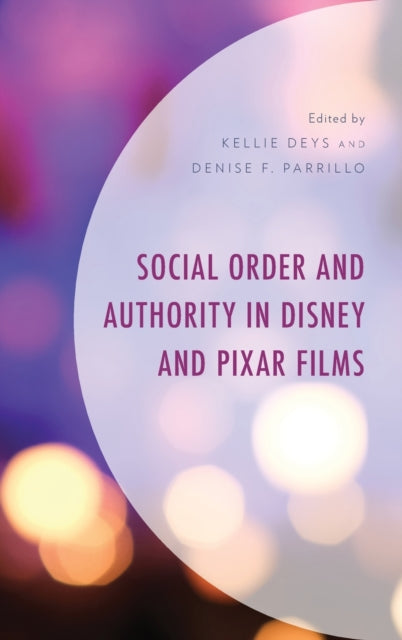
Disney and Pixar films have a significant impact on society, addressing power dynamics, surveillance, racial segregation, othering, and ableism. This collection investigates the unspoken and unintended meanings of these films, applying theoretical approaches such as ecofeminism, critiques of exceptionalism, and gender, queer, and disability studies to uncover underlying ideologies.
Format: Hardback
Length: 234 pages
Publication date: 04 November 2021
Publisher: Lexington Books
Disney and Pixar films have a significant impact on the ongoing discussion surrounding power dynamics and their portrayal in storytelling. These films explore various themes related to authority, social order, and the challenges to traditional structures. While some argue that they challenge or perpetuate these structures, their considerable influence warrants careful examination. This collection aims to contextualize Disney's films within broader conversations about power relations, highlighting their vast reach and impact.
The depictions of surveillance, racial segregation, othering, and ableism in these films represent real-world issues that affect individuals and their experiences. However, storytellers often simplify or mischaracterize these complex matters, which can lead to misunderstandings. Contributors to this collection delve into these unspoken and sometimes unintended meanings, employing various theoretical approaches such as ecofeminism, critiques of exceptionalism, and gender, queer, and disability studies. By applying these lenses, authors uncover underlying ideologies and shed light on how Disney's output both reflects and contributes to contemporary cultural conditions.
One of the key themes explored in these films is the concept of power and its distribution. Disney and Pixar films often depict characters who struggle with powerlessness, either due to their social status, physical abilities, or personal circumstances. These characters often find themselves in situations where they are subjected to the control or influence of others, and their journey to overcome this powerlessness is a central aspect of the story. For example, in "The Little Mermaid," Ariel, a young mermaid, is captivated by the world above the sea and desires to become human. However, she is subjected to the control of her father, King Triton, who refuses to grant her this wish. Through her determination and the help of her friends, Ariel ultimately overcomes her powerlessness and achieves her goal.
Another theme that is prevalent in Disney and Pixar films is the concept of authority and its abuse. These films often depict characters who hold positions of power and use their authority for personal gain or to harm others. For instance, in "Snow White and the Seven Dwarfs," the Evil Queen uses her power to manipulate Snow White and steal her throne. Similarly, in "The Lion King," Scar, the younger brother of the king, uses his power to manipulate the animals of the Pride Lands and lead them into a war against Simba. These characters highlight the dangers of unchecked authority and the need for accountability and responsibility in those who hold power.
Furthermore, Disney and Pixar films explore the impact of social order on individuals and society as a whole. These films often depict characters who challenge or subvert traditional social norms and expectations. For example, in "The Little Mermaid," Ariel defies her father's expectations by pursuing a human relationship with Prince Eric. Similarly, in "Frozen," Elsa, the princess of Arendelle, challenges the traditional notion of a princess by using her magical powers to protect her kingdom rather than seeking a romantic relationship. These characters highlight the importance of individuality, self-expression, and breaking free from societal expectations.
However, it is important to note that not all Disney and Pixar films address these themes in a positive or progressive manner. Some films perpetuate harmful stereotypes and biases, such as the portrayal of women as damsels in distress or the representation of certain ethnic or racial groups as villains. These films can reinforce negative attitudes and beliefs, which can have a detrimental impact on individuals and society as a whole.
In conclusion, Disney and Pixar films have a significant impact on the ongoing conversation surrounding power dynamics and their portrayal in storytelling. These films explore various themes related to authority, social order, and the challenges to traditional structures. While some argue that they challenge or perpetuate these structures, their considerable influence warrants careful examination. By applying the lenses of various theoretical approaches, including ecofeminism, critiques of exceptionalism, and gender, queer, and disability studies, contributors uncover underlying ideologies and shed light on how Disney's output both reflects and contributes to contemporary cultural conditions. It is important for storytellers to be mindful of the impact their films have on audiences and to strive for positive and progressive portrayals of power dynamics and social order.
Weight: 558g
Dimension: 228 x 160 x 21 (mm)
ISBN-13: 9781793622105
UK and International shipping information
UK and International shipping information
UK Delivery and returns information:
- Delivery within 2 - 3 days when ordering in the UK.
- Shipping fee for UK customers from £2.39. Fully tracked shipping service available.
- Returns policy: Return within 30 days of receipt for full refund.
International deliveries:
Shulph Ink now ships to Australia, Belgium, Canada, France, Germany, Ireland, Italy, India, Luxembourg Saudi Arabia, Singapore, Spain, Netherlands, New Zealand, United Arab Emirates, United States of America.
- Delivery times: within 5 - 10 days for international orders.
- Shipping fee: charges vary for overseas orders. Only tracked services are available for most international orders. Some countries have untracked shipping options.
- Customs charges: If ordering to addresses outside the United Kingdom, you may or may not incur additional customs and duties fees during local delivery.