Shulph Ink
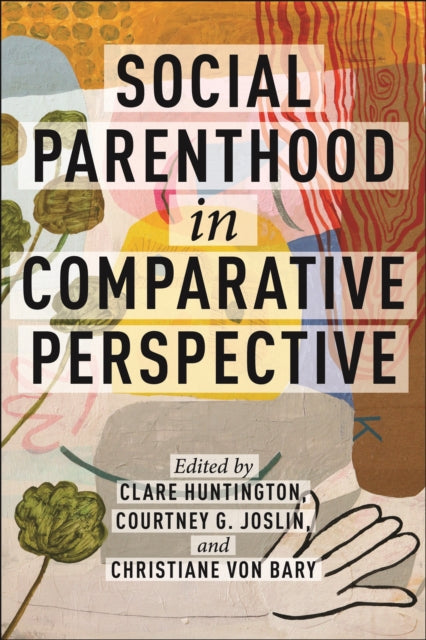
Social Parenthood in Comparative Perspective
Social Parenthood in Comparative Perspective
💎 Earn 174 Points (£1.74) on this item.
YOU SAVE £4.19
- Condition: Brand new
- UK Delivery times: Usually arrives within 2 - 3 working days
- UK Shipping: Fee starts at £2.39. Subject to product weight & dimension
Bulk ordering. Want 15 or more copies? Get a personalised quote and bigger discounts. Learn more about bulk orders.
Couldn't load pickup availability
- More about Social Parenthood in Comparative Perspective
Investigates social parents – people who function as parents but who may not be recognized as such in the eyes of the law.
The book "Social Parenthood in Comparative Perspective" explores how the law recognizes social parenthood, comparing legal responses in nine countries. It establishes the importance of a relationship between a child and a social parent and the harms of not protecting it. The legal contributors describe existing laws, critique their efficacy, and offer new insights. The volume concludes by discussing issues such as legal rights and responsibilities, treatment of all social parents, and the limit on the number of parents a child can have.
Format: Hardback
Length: 272 pages
Publication date: 18 July 2023
Publisher: New York University Press
What makes a person a parent? Around the world, same-sex couples are raising children; parents are separating and re-partnering, creating blended families; and children are living with grandparents, family friends, and other caregivers. In these situations, there is often an adult who acts like a parent but is unconnected to the child through biogenetics, marriage, or adoption—the common paths for establishing legal parenthood. In many countries, this person is called a "social parent." Psychologically, and especially from a child's point of view, a social parent is a parent. But the legal status of a social parent is hotly debated.
Social Parenthood in Comparative Perspective considers how the law does—and how it should—recognize social parenthood. The book begins with a psychological account of social parenthood, establishing the importance of a relationship between a child and a social parent and the harms of not protecting this relationship. It then turns to social scientists to identify and explore some circumstances when a child may have a social parent. And to compare legal responses to social parenthood, the book draws on the expertise of legal scholars in nine countries in North America and Europe. The legal contributors describe the existing laws governing social parents, critique their efficacy, and offer new insights. Though almost all of the countries analyzed have adapted to the new reality of family life by recognizing social parents in some manner, the nature and extent of the recognition vary widely. The volume concludes by discussing some of the issues flowing from the decision to recognize social parents, including whether s.
The legal status of social parents is a complex and multifaceted issue that has been the subject of much debate and discussion in recent years. In many countries, same-sex couples and other non-traditional families are raising children, and there is often an adult who plays a parental role in the child's life but is not recognized as a legal parent by the state. This person is commonly referred to as a "social parent." While social parents may have a significant impact on the lives of their children, their legal status can be uncertain and controversial. One of the key issues surrounding social parenthood is the question of whether it should be recognized as a form of legal parenthood. Some argue that social parents should be granted the same rights and responsibilities as legal parents, including the right. This would include the right to make medical decisions for the child, to access education and healthcare, and to have legal custody of the child in the event of separation or divorce. Others argue that social parents should not be granted the same rights and responsibilities as legal parents, citing the potential harm that could be caused to the child if the relationship between the social parent and the child breaks down. For example, if the social parent is not recognized as a legal parent, the child may not be able to inherit from the social parent or receive social security benefits. Additionally, there are concerns about the potential for abuse and exploitation of children by social parents. Some argue that social parents may be more likely to abuse or neglect their children than legal parents, as they may not have the same legal protections and resources available to them. There are also concerns about the impact of social parenthood on the traditional family structure. Some argue that social parenthood undermines the traditional family unit, as it creates a new category of parents who are not recognized as legal parents by the state. This can create confusion and uncertainty for children, as they may not know who their legal parents are or who has the right to make decisions for them. In response to these concerns, many countries have adopted different approaches to recognizing social parenthood. Some countries have recognized social parenthood. This includes granting social parents certain rights and responsibilities, such as the right to make medical decisions for the child and to access education and healthcare. In some cases, social parents may also be granted legal custody of the child in the event of separation or divorce. In other countries, social parenthood is not recognized as a form of legal parenthood. This includes denying social parents certain rights and responsibilities, such as the right to make medical decisions for the child and to access education and healthcare. In some cases, social parents may also be denied legal custody of the child in the event of separation or divorce. Overall, the legal status of social parents is a complex and multifaceted issue that requires careful consideration and analysis. While social parents may have a significant impact on the lives of their children, their legal status can be uncertain and controversial. It is important to recognize that every child is unique and that every family unit is different, and that there is no one-size-fits-all approach to addressing the issue of social parenthood. It is important to work towards
In conclusion, the legal status of social parents is a complex and multifaceted issue that requires careful consideration and analysis. While social parents may have a significant impact on the lives of their children, their legal status can be uncertain and controversial. It is important to recognize that every child is unique and that every family unit is different, and that there is no one-size-fits-all approach to addressing the issue of social parenthood. It is important to work towards.
Weight: 596g
Dimension: 161 x 237 x 25 (mm)
ISBN-13: 9781479814114
This item can be found in:
UK and International shipping information
UK and International shipping information
UK Delivery and returns information:
- Delivery within 2 - 3 days when ordering in the UK.
- Shipping fee for UK customers from £2.39. Fully tracked shipping service available.
- Returns policy: Return within 30 days of receipt for full refund.
International deliveries:
Shulph Ink now ships to Australia, Belgium, Canada, France, Germany, Ireland, Italy, India, Luxembourg Saudi Arabia, Singapore, Spain, Netherlands, New Zealand, United Arab Emirates, United States of America.
- Delivery times: within 5 - 10 days for international orders.
- Shipping fee: charges vary for overseas orders. Only tracked services are available for most international orders. Some countries have untracked shipping options.
- Customs charges: If ordering to addresses outside the United Kingdom, you may or may not incur additional customs and duties fees during local delivery.