Shulph Ink
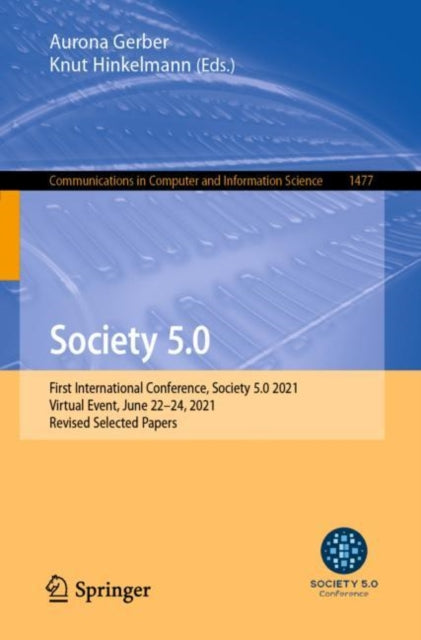
Society 5.0: First International Conference, Society 5.0 2021, Virtual Event, June 22-24, 2021, Revised Selected Papers
Society 5.0: First International Conference, Society 5.0 2021, Virtual Event, June 22-24, 2021, Revised Selected Papers
💎 Earn 227 Points (£2.27) on this item.
We can order this item for you. Delivery usually takes about 4 to 6 weeks.
This item is not held in our immediate stock. We will order it for you after checkout.
Estimated delivery: About 4 to 6 weeks
YOU SAVE £9.57
- Condition: Brand new
- UK Delivery times: Usually arrives within 2 - 3 working days
- UK Shipping: Fee starts at £2.39. Subject to product weight & dimension
Bulk ordering. Want 15 or more copies? Get a personalised quote and bigger discounts. Learn more about bulk orders.
Couldn't load pickup availability
- More about Society 5.0: First International Conference, Society 5.0 2021, Virtual Event, June 22-24, 2021, Revised Selected Papers
This book presents revised and selected papers from the First International Conference on Society 5.0, discussing the application of fourth industrial revolution innovations in healthcare, mobility, infrastructure, politics, government, economy, and industry.
Format: Paperback / softback
Length: 189 pages
Publication date: 24 September 2021
Publisher: Springer Nature Switzerland AG
The book is a compilation of revised and selected papers from the inaugural International Conference on Society 5.0, Society 5.0 2021, which was held virtually in June 2021. This comprehensive volume features 12 full papers and 3 short papers, all of which have undergone rigorous review and selection from a pool of 54 qualified submissions. The papers in this collection delve into various aspects of the application of the Fourth Industrial Revolution innovations, including the Internet of Things, Big Data, Artificial Intelligence, and the Sharing Economy, in healthcare, mobility, infrastructure, politics, government, economy, and industry.
The conference aimed to bring together experts, researchers, and practitioners from around the world to explore the transformative potential of Society 5.0 and discuss the challenges and opportunities that arise in this rapidly evolving digital era. The selected papers cover a wide range of topics, reflecting the interdisciplinary nature of the Society 5.0 concept.
One of the key themes explored in the papers is the impact of Society 5.0 innovations on healthcare. The authors discuss how these technologies can improve patient outcomes, enhance medical research, and facilitate remote healthcare delivery. They also address the ethical and privacy concerns associated with the use of Big Data and Artificial Intelligence in healthcare and explore the potential for these technologies to address healthcare disparities and improve access to healthcare services.
Another important area of focus is the application of Society 5.0 innovations in mobility. The papers discuss how these technologies can improve transportation efficiency, reduce traffic congestion, and promote sustainable transportation practices. They also explore the role of autonomous vehicles and the sharing economy in shaping the future of transportation and the potential impact on employment and urban planning.
Infrastructure is another sector that is significantly impacted by Society 5.0 innovations. The papers discuss how these technologies can improve the efficiency of infrastructure systems, such as power grids, water supply networks, and transportation networks. They also explore the role of smart cities and the Internet of Things in creating more sustainable and resilient infrastructure.
Politics, government, and the role of citizens in Society 5.0 are also explored in the papers. The authors discuss how these technologies can enhance democratic processes, promote transparency and accountability, and address social and economic inequality. They also address the challenges of regulating and governing the rapidly evolving digital landscape and the need for interdisciplinary collaboration to address these challenges.
The economy and industry are also explored in the papers, with a focus on the impact of Society 5.0 innovations on job creation, economic growth, and innovation. The authors discuss how these technologies can disrupt traditional business models, create new opportunities for entrepreneurship, and drive economic development. They also address the challenges of managing the transition to a digital economy and the need for policies and regulations that promote innovation and sustainable growth.
In conclusion, the book serves as a valuable resource for researchers, policymakers, and practitioners interested in understanding the implications of Society 5.0 and the application of Fourth Industrial Revolution innovations in various sectors. The papers in this collection provide insights into the potential benefits and challenges of these technologies and offer valuable recommendations for policymakers and practitioners seeking to harness the power of Society 5.0 for the benefit of society.
The book is a compilation of revised and selected papers from the inaugural International Conference on Society 5.0, Society 5.0 2021, which was held virtually in June 2021. This comprehensive volume features 12 full papers and 3 short papers, all of which have undergone rigorous review and selection from a pool of 54 qualified submissions. The papers in this collection delve into various aspects of the application of the Fourth Industrial Revolution innovations, including the Internet of Things, Big Data, Artificial Intelligence, and the Sharing Economy, in healthcare, mobility, infrastructure, politics, government, economy, and industry.
The conference aimed to bring together experts, researchers, and practitioners from around the world to explore the transformative potential of Society 5.0 and discuss the challenges and opportunities that arise in this rapidly evolving digital era. The selected papers cover a wide range of topics, reflecting the interdisciplinary nature of the Society 5.0 concept.
One of the key themes explored in the papers is the impact of Society 5.0 innovations on healthcare. The authors discuss how these technologies can improve patient outcomes, enhance medical research, and facilitate remote healthcare delivery. They also address the ethical and privacy concerns associated with the use of Big Data and Artificial Intelligence in healthcare and explore the potential for these technologies to address healthcare disparities and improve access to healthcare services.
Another important area of focus is the application of Society 5.0 innovations in mobility. The papers discuss how these technologies can improve transportation efficiency, reduce traffic congestion, and promote sustainable transportation practices. They also explore the role of autonomous vehicles and the sharing economy in shaping the future of transportation and the potential impact on employment and urban planning.
Infrastructure is another sector that is significantly impacted by Society 5.0 innovations. The papers discuss how these technologies can improve the efficiency of infrastructure systems, such as power grids, water supply networks, and transportation networks. They also explore the role of smart cities and the Internet of Things in creating more sustainable and resilient infrastructure.
Politics, government, and the role of citizens in Society 5.0 are also explored in the papers. The authors discuss how these technologies can enhance democratic processes, promote transparency and accountability, and address social and economic inequality. They also address the challenges of regulating and governing the rapidly evolving digital landscape and the need for interdisciplinary collaboration to address these challenges.
The economy and industry are also explored in the papers, with a focus on the impact of Society 5.0 innovations on job creation, economic growth, and innovation. The authors discuss how these technologies can disrupt traditional business models, create new opportunities for entrepreneurship, and drive economic development. They also address the challenges of managing the transition to a digital economy and the need for policies and regulations that promote innovation and sustainable growth.
In conclusion, the book serves as a valuable resource for researchers, policymakers, and practitioners interested in understanding the implications of Society 5.0 and the application of Fourth Industrial Revolution innovations in various sectors. The papers in this collection provide insights into the potential benefits and challenges of these technologies and offer valuable recommendations for policymakers and practitioners seeking to harness the power of Society 5.0 for the benefit of society.
Weight: 320g
Dimension: 235 x 155 (mm)
ISBN-13: 9783030867607
Edition number: 1st ed. 2021
This item can be found in:
UK and International shipping information
UK and International shipping information
UK Delivery and returns information:
- Delivery within 2 - 3 days when ordering in the UK.
- Shipping fee for UK customers from £2.39. Fully tracked shipping service available.
- Returns policy: Return within 30 days of receipt for full refund.
International deliveries:
Shulph Ink now ships to Australia, Belgium, Canada, France, Germany, Ireland, Italy, India, Luxembourg Saudi Arabia, Singapore, Spain, Netherlands, New Zealand, United Arab Emirates, United States of America.
- Delivery times: within 5 - 10 days for international orders.
- Shipping fee: charges vary for overseas orders. Only tracked services are available for most international orders. Some countries have untracked shipping options.
- Customs charges: If ordering to addresses outside the United Kingdom, you may or may not incur additional customs and duties fees during local delivery.