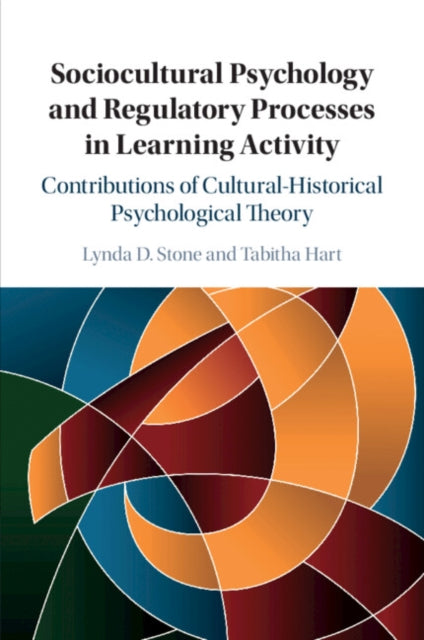
Lynda D.Stone,TabithaHart
Sociocultural Psychology and Regulatory Processes in Learning Activity: Contributions of Cultural-Historical Psychological Theory
Sociocultural Psychology and Regulatory Processes in Learning Activity: Contributions of Cultural-Historical Psychological Theory
💎 Earn 99 Points (£0.99) on this item.
We can order this item for you. Delivery usually takes about 4 to 6 weeks.
This item is not held in our immediate stock. We will order it for you after checkout.
Estimated delivery: About 4 to 6 weeks
YOU SAVE £1.18
- Condition: Brand new
- UK Delivery times: Usually arrives within 2 - 3 working days
- UK Shipping: Fee starts at £2.39. Subject to product weight & dimension
Bulk ordering. Want 15 or more copies? Get a personalised quote and bigger discounts. Learn more about bulk orders.
Couldn't load pickup availability
- More about Sociocultural Psychology and Regulatory Processes in Learning Activity: Contributions of Cultural-Historical Psychological Theory
This book provides a unique set of four analytical lenses for understanding self-regulation, co-regulation, and other-regulation as a system of regulatory processes, focusing on individuals as relational, agential, and contextually situated. It emphasizes the dynamic perspective of a social context and the importance of regulatory processes in a functional system for learning.
Format: Paperback / softback
Length: 145 pages
Publication date: 27 July 2023
Publisher: Cambridge University Press
This book, written by educational researchers and professionals who work with children and adolescents both in and out of school, delves into the intricate realm of self-regulation. It goes beyond the mere ability of an individual to control their thoughts and feelings, especially in a learning environment. By employing Vygotsky's cultural-historical psychological theory, the authors offer a distinctive set of four analytical lenses that shed light on how self-regulation, co-regulation, and other-regulation operate as a comprehensive system of regulatory processes. These lenses broaden our understanding beyond individual self-regulation to encompass individuals as relational, agential, and contextually situated. As agents, teachers, and their students collaboratively construct their learning contexts, they are simultaneously influenced by these self-engineered environments. This dynamic perspective provides a holistic view of a social context, reinforcing the notion that regulatory processes are essential components of a functional system for learning.
The authors of this book draw upon Vygotsky's cultural-historical psychological theory to explore the multifaceted nature of self-regulation. They argue that self-regulation involves not just an individual's ability to control their thoughts and feelings but also their interactions with others and the broader social context. Through the use of these four analytical lenses, the authors aim to provide a deeper understanding of how self-regulation, co-regulation, and other-regulation function as a cohesive system.
The first lens focuses on individuals as relational beings, emphasizing the importance of social interactions and relationships in regulating behavior. The authors argue that self-regulation is not just about an individual's internal processes but also about their ability to engage in meaningful interactions with others and adapt to different social contexts. Teachers play a crucial role in fostering relational self-regulation by creating supportive and inclusive learning environments that promote social interaction and collaboration.
The second lens examines individuals as agential, highlighting their agency and ability to make decisions and take actions. The authors argue that self-regulation is not just about following external rules but also about exercising agency and making choices that align with one's goals and values. Teachers can support agential self-regulation by providing opportunities for students to make choices, take risks, and engage in problem-solving activities that promote their growth and development.
The third lens examines individuals as contextually situated, recognizing the influence of the environment and cultural factors on self-regulation. The authors argue that self-regulation is not just about individual abilities but also about the interactions between individuals and their social and cultural contexts. Teachers can promote contextual self-regulation by creating learning environments that are responsive to the diverse needs and backgrounds of their students.
The fourth lens examines individuals as agents of change, emphasizing their role in shaping and transforming their own and others' behavior. The authors argue that self-regulation is not just about managing behavior but also about promoting positive change and social transformation. Teachers can support agentic self-regulation by encouraging students to take ownership of their learning, engage in social action, and contribute to their communities.
In conclusion, this book offers a valuable perspective on self-regulation by highlighting its relational, agential, contextual, and agentic aspects. By employing Vygotsky's cultural-historical psychological theory, the authors provide a unique set of analytical lenses that shed light on how self-regulation functions as a system of regulatory processes. Teachers can use these lenses to enhance their understanding of self-regulation and develop effective strategies to support their students' growth and development.
ISBN-13: 9781107512238
UK and International shipping information
UK and International shipping information
UK Delivery and returns information:
- Delivery within 2 - 3 days when ordering in the UK.
- Shipping fee for UK customers from £2.39. Fully tracked shipping service available.
- Returns policy: Return within 30 days of receipt for full refund.
International deliveries:
Shulph Ink now ships to Australia, Belgium, Canada, France, Germany, Ireland, Italy, India, Luxembourg Saudi Arabia, Singapore, Spain, Netherlands, New Zealand, United Arab Emirates, United States of America.
- Delivery times: within 5 - 10 days for international orders.
- Shipping fee: charges vary for overseas orders. Only tracked services are available for most international orders. Some countries have untracked shipping options.
- Customs charges: If ordering to addresses outside the United Kingdom, you may or may not incur additional customs and duties fees during local delivery.