Paul Christopher Price
Sociology of Waiting: How Americans Wait
Sociology of Waiting: How Americans Wait
💎 Earn 169 Points (£1.69) on this item.
We can order this item for you. Delivery usually takes about 4 to 6 weeks.
This item is not held in our immediate stock. We will order it for you after checkout.
Estimated delivery: About 4 to 6 weeks
- Condition: Brand new
- UK Delivery times: Usually arrives within 2 - 3 working days
- UK Shipping: Fee starts at £2.39. Subject to product weight & dimension
Bulk ordering. Want 15 or more copies? Get a personalised quote and bigger discounts. Learn more about bulk orders.
Couldn't load pickup availability
- More about Sociology of Waiting: How Americans Wait
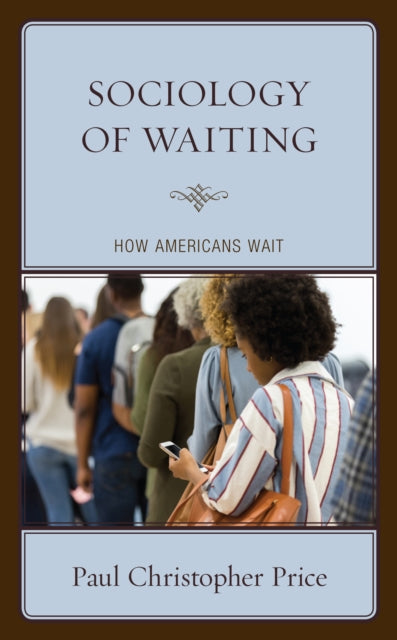
Paul Christopher Price's sociology of waiting explores how people wait and analyzes their activities during waiting periods. Waiting is universal and plays a significant role in U.S. and other societies, providing order and understanding. Strategies and structures for delays have been developed to manage waiting, and understanding why we wait helps us recognize the benefits of waiting. Waiting is a timeless aspect of everyday life, and reducing wait-time has become a significant business.
Format: Paperback / softback
Length: 246 pages
Publication date: 15 March 2023
Publisher: Lexington Books
Sociology of Waiting: An Exploration of Human Behavior in Patience
Paul Christopher Price's groundbreaking work, "Sociology of Waiting," delves into the intricate dynamics of human behavior during periods of anticipation. Through a comprehensive analysis, Price explores the various aspects of waiting and its profound impact on individuals and society.
Waiting is a universal phenomenon that permeates all aspects of human life. It is a key feature of U.S. and other societies, where crowds cannot rush into concert venues and supermarket clerks cannot check-out customers simultaneously. Price argues that waiting is not merely a passive activity but rather a complex process that involves order, understanding, and the ability to pause.
In his book, Price highlights the strategies and structures that individuals develop to cope with waiting. These strategies range from simple distractions to more complex systems of organization. For example, waiting in line at a grocery store can be a frustrating experience, but it can also be an opportunity to engage in small talk with other customers. Similarly, waiting for a bus can be a time to read a book or listen to music.
Waiting also provides valuable lessons. By observing the behavior of others, we can learn from their mistakes and successes. For example, watching cars weave through traffic and receive citations by police can teach us the importance of following traffic laws. Similarly, waiting for a doctor's appointment can help us to manage our time and resources more effectively.
However, waiting can also be a source of frustration and anxiety. Long waits can lead to feelings of helplessness and despair, and can even have negative health consequences. Price argues that reducing wait-time has become a major priority in many industries, and that there are several strategies that can be used to achieve this goal.
One of the most effective strategies for reducing wait-time is to implement technology. For example, online booking systems can allow customers to schedule appointments at their convenience, and self-service kiosks can reduce the need for human interaction. Additionally, companies can use data analytics to identify bottlenecks in their processes and make improvements.
Another strategy for reducing wait-time is to improve communication. Companies can provide clear and concise instructions to customers, and can provide updates on the status of their orders. Additionally, companies can use social media to engage with customers and provide feedback.
However, reducing wait-time can also have negative consequences. For example, if companies are too focused on reducing wait-time, they may sacrifice quality. Additionally, if customers are not given enough information about their orders, they may be dissatisfied with the service.
In conclusion, the sociology of waiting is a fascinating and important field of study. Price's work provides a comprehensive analysis of the various aspects of waiting and its impact on individuals and society. By implementing strategies and structures to reduce wait-time, we can create a more efficient and effective society. However, it is important to remember that reducing wait-time can also have negative consequences, and that we must balance the need for efficiency with the need for quality.
Dimension: 229 x 152 (mm)
ISBN-13: 9781793640710
This item can be found in:
UK and International shipping information
UK and International shipping information
UK Delivery and returns information:
- Delivery within 2 - 3 days when ordering in the UK.
- Shipping fee for UK customers from £2.39. Fully tracked shipping service available.
- Returns policy: Return within 30 days of receipt for full refund.
International deliveries:
Shulph Ink now ships to Australia, Belgium, Canada, France, Germany, Ireland, Italy, India, Luxembourg Saudi Arabia, Singapore, Spain, Netherlands, New Zealand, United Arab Emirates, United States of America.
- Delivery times: within 5 - 10 days for international orders.
- Shipping fee: charges vary for overseas orders. Only tracked services are available for most international orders. Some countries have untracked shipping options.
- Customs charges: If ordering to addresses outside the United Kingdom, you may or may not incur additional customs and duties fees during local delivery.