Shulph Ink
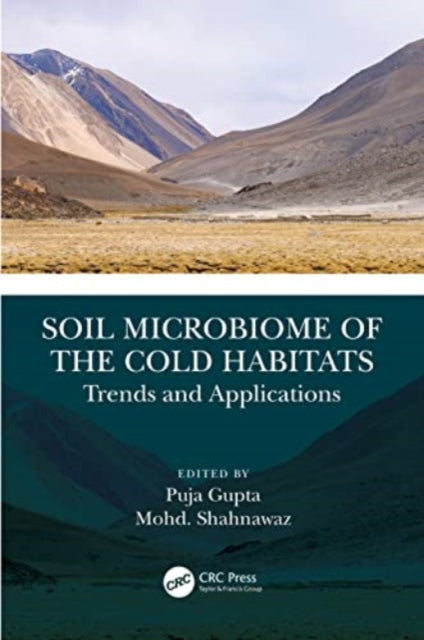
Soil Microbiome of the Cold Habitats: Trends and Applications
Soil Microbiome of the Cold Habitats: Trends and Applications
💎 Earn 689 Points (£6.89) on this item.
We can order this item for you. Delivery usually takes about 4 to 6 weeks.
This item is not held in our immediate stock. We will order it for you after checkout.
Estimated delivery: About 4 to 6 weeks
YOU SAVE £8.18
- Condition: Brand new
- UK Delivery times: Usually arrives within 2 - 3 working days
- UK Shipping: Fee starts at £3.89. Subject to product weight & dimension
Bulk ordering. Want 15 or more copies? Get a personalised quote and bigger discounts. Learn more about bulk orders.
Couldn't load pickup availability
- More about Soil Microbiome of the Cold Habitats: Trends and Applications
The book "Cold Adaptation in Microbes: Biology, Biotechnology, and Applications" is a comprehensive resource that explores the biology, biotechnology, and applications of cold-adapted microbes in terrestrial habitats. It covers studies on diverse biotic communities and abiotic components of soil, with a particular focus on cold environments.
Format: Hardback
Length: 242 pages
Publication date: 28 September 2023
Publisher: Taylor & Francis Ltd
Here is the rephrased text:
Cold habitats are unique environments that present a range of challenges for living organisms. From the harsh temperatures to the limited resources, these environments require specialized adaptations to survive. One area of research that has gained significant attention in recent years is the study of cold-adapted microbes. These microorganisms have evolved unique mechanisms to thrive in cold conditions, and their research has the potential to unlock valuable insights into the biology of extremophiles and the development of new technologies.
Cold habitats cover a wide range of environments, from the polar regions to high-altitude mountain ranges. These habitats are characterized by low temperatures, limited sunlight, and harsh environmental conditions. As a result, the organisms that inhabit these environments have developed specialized adaptations to survive. One of the most important adaptations is the ability to produce biotechnologically and industrially important biomolecules.
Cold-adapted microbes have the ability to produce a wide range of biomolecules, including enzymes, antibiotics, and pigments. These biomolecules have significant applications in various industries, such as food and beverage production, medicine, and agriculture. For example, enzymes produced by cold-adapted microbes are used in the production of biofuels, while antibiotics are used to treat infections caused by bacteria that are resistant to conventional antibiotics.
In addition to their industrial applications, cold-adapted microbes have the potential to be used in environmental remediation. For example, some bacteria have the ability to degrade plastics, which are a major source of pollution in many ecosystems. By studying the mechanisms of plastic degradation by cold-adapted microbes, researchers can develop new technologies to remove plastic waste from the environment.
Another area of research that has gained significant attention in recent years is the study of microbial biofilms. Microbial biofilms are communities of bacteria that form a thin layer on surfaces, such as rocks, soil, and water. These biofilms have the ability to degrade organic matter and protect the surface from erosion. However, the degradation of microplastics in cold habitats is a challenge that has yet to be fully addressed.
Microplastics are small particles of plastic that are produced by industrial activities and end up in the environment. These particles can be harmful to wildlife and humans, as they can accumulate in the food chain and cause toxicity. However, the degradation of microplastics in cold habitats is particularly challenging due to the low temperatures and limited sunlight.
Research has shown that microbial biofilms can play a role in the degradation of microplastics in cold habitats. Microbial biofilms have the ability to attach to microplastics and degrade them through a process called biodegradation. This process involves the breakdown of the plastic material by bacteria and other microorganisms.
However, the efficiency of microbial biofilms in the degradation of microplastics in cold habitats is still under investigation. Factors such as the composition of the microbial community, the temperature, and the availability of resources can all affect the degradation process.
In conclusion, cold-adapted microbes have the potential to provide valuable insights into the biology of extremophiles and the development of new technologies. They have the ability to produce biotechnologically and industrially important biomolecules, and their research has the potential to be used in environmental remediation. Microbial biofilms can also play a role in the degradation of microplastics in cold habitats, but further research is needed to fully understand the mechanisms of this process.
Weight: 650g
Dimension: 229 x 152 (mm)
ISBN-13: 9781032406305
UK and International shipping information
UK and International shipping information
We deliver throughout the United Kingdom and to 128 countries and territories worldwide, including the United States, Australia, Canada, Germany, Spain and France.