Shulph Ink
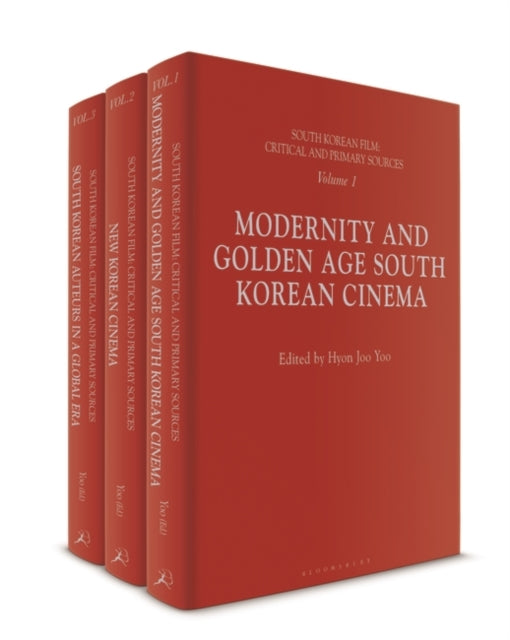
South Korean Film: Critical and Primary Sources
South Korean Film: Critical and Primary Sources
We can order this item for you. Delivery usually takes about 4 to 6 weeks.
This item is not held in our immediate stock. We will order it for you after checkout.
Estimated delivery: About 4 to 6 weeks
- Condition: Brand new
- UK Delivery times: Usually arrives within 2 - 3 working days
- UK Shipping: Fee starts at £3.89. Subject to product weight & dimension
Bulk ordering. Want 15 or more copies? Get a personalised quote and bigger discounts. Learn more about bulk orders.
Couldn't load pickup availability
- More about South Korean Film: Critical and Primary Sources
The three-volume reference collection explores the development of South Korean national cinema, highlighting auteur-ship, genre, spectatorship, gender, and nation, with visual styles and forms reflecting these themes. It is a valuable resource for researchers studying South Korean film.
Format: Mixed media product
Publication date: 09 September 2021
Publisher: Bloomsbury Publishing Plc
South Korean national cinema has undergone three distinct phases, each characterized by epochal characteristics that shape its representation of key thematic concerns such as auteur-ship, genre, spectatorship, gender, and nation. This comprehensive three-volume reference collection highlights the significance of these themes in shaping the visual styles and forms of South Korean cinema. The first volume focuses on the central themes of gender and nation, examining how they are expressed through stylistic and representational strategies. The second volume explores the impact of auteur-ship on South Korean cinema, highlighting the role of individual directors in shaping the genre and style of the films. The third volume delves into the spectator's experience, examining the ways in which South Korean cinema engages and interacts with its audience. Together, these volumes provide a rich and detailed exploration of South Korean national cinema, making it an essential resource for researchers and scholars in the field.
Volume 1: Gender and Nation in South Korean National Cinema
South Korean national cinema has been shaped by a range of epochal characteristics that have influenced its representation of key thematic concerns. One of the most significant themes in South Korean cinema is gender, which has been explored in depth in Volume 1 of this reference collection. The volume examines the ways in which gender is portrayed in South Korean films, from the early days of the industry to the present. It highlights the ways in which gender roles and stereotypes are challenged, subverted, and redefined, and how these changes have impacted the broader social and cultural landscape of South Korea.
One of the key themes in Volume 1 is the portrayal of women in South Korean cinema. Women have been historically marginalized in South Korean society, and this has been reflected in the portrayal of women in films. However, in recent years, there has been a significant shift in the representation of women in South Korean cinema, with more women being given leading roles and more diverse roles being portrayed. This has led to a greater recognition of the contributions of women to South Korean society and has helped to challenge traditional gender roles and stereotypes.
Another important theme in Volume 1 is the portrayal of men in South Korean cinema. Men have also been historically marginalized in South Korean society, and this has been reflected in the portrayal of men in films. However, in recent years, there has been a significant shift in the representation of men in South Korean cinema, with more men being given leading roles and more diverse roles being portrayed. This has led to a greater recognition of the contributions of men to South Korean society and has helped to challenge traditional gender roles and stereotypes.
In addition to the portrayal of gender, Volume 1 also explores the impact of gender on South Korean society. It examines the ways in which gender has influenced social and cultural norms, and how these norms have been challenged and redefined in South Korean cinema. It also explores the ways in which gender has been used as a tool of political and social control in South Korea, and how this has impacted the lives of individuals and communities.
Volume 2: Auteur-ship in South Korean National Cinema
Auteur-ship is a key theme in South Korean national cinema, and Volume 2 of this reference collection explores the impact of individual directors on the genre and style of South Korean films. The volume examines the careers of several prominent directors, including Park Chan-wook, Bong Joon-ho, and Lee Chang-dong, and explores the ways in which their unique styles and approaches have shaped the genre and style of South Korean cinema.
One of the key themes in Volume 2 is the influence of Park Chan-wook on South Korean cinema. Park Chan-wook is known for his dark and violent films, which have been praised for their innovative storytelling and visual style. His films have explored a range of themes, including revenge, guilt, and the nature of human nature. Park Chan-wook's films have also been influential in the development of the Korean Wave, which has brought South Korean films to a global audience.
Another important theme in Volume 2 is the influence of Bong Joon-ho on South Korean cinema. Bong Joon-ho is known for his dark and satirical films, which have been praised for their innovative storytelling and visual style. His films have explored a range of themes, including social inequality, corruption, and the nature of human nature. Bong Joon-ho's films have also been influential in the development of the Korean Wave, which has brought South Korean films to a global audience.
In addition to the influence of individual directors, Volume 2 also explores the impact of the Korean Wave on South Korean cinema. The Korean Wave has brought South Korean films to a global audience, and has led to a greater recognition of the quality of South Korean cinema. It has also led to a greater investment in the South Korean film industry, with more money being spent on production and marketing.
Volume 3: Spectatorship in South Korean National Cinema
Spectatorship is a key theme in South Korean national cinema, and Volume 3 of this reference collection explores the ways in which South Korean films engage and interact with their audience. The volume examines the ways in which South Korean films use narrative, visual, and aural techniques to create a sense of immersion and engagement with the audience. It also examines the ways in which South Korean films have been influenced by the social and cultural context in which they are produced.
One of the key themes in Volume 3 is the use of narrative in South Korean cinema. South Korean films often use narrative to explore complex social and cultural issues, and to create a sense of empathy and understanding with the audience. This can be seen in films such as "Parasite" (2019), which explores the relationship between class and wealth in South Korea, and "Memories of Murder" (2003), which explores the investigation of a serial murder case in South Korea.
Another important theme in Volume 3 is the use of visual and aural techniques in South Korean cinema. South Korean films often use visual and aural techniques to create a sense of immersion and engagement with the audience. This can be seen in films such as "Oldboy" (2003), which uses a unique visual style to create a sense of tension and suspense, and "The Host" (2006), which uses a unique aural style to create a sense of fear and anxiety.
In addition to the use of narrative and visual and aural techniques, Volume 3 also explores the ways in which South Korean films have been influenced by the social and cultural context in which they are produced. This can be seen in films such as "The Day After" (2017), which explores the aftermath of a nuclear attack on South Korea, and "The Wailing" (2016), which explores the supernatural and the supernatural in South Korea.
Conclusion
South Korean national cinema has undergone three distinct phases, each characterized by epochal characteristics that have shaped its representation of key thematic concerns. Volume 1 of this reference collection focuses on the central themes of gender and nation, examining the ways in which these themes are portrayed in South Korean films. Volume 2 explores the impact of auteur-ship on South Korean cinema, highlighting the unique styles and approaches of several prominent directors. Volume 3 explores the spectator's experience, examining the ways in which South Korean films engage and interact with their audience. Together, these volumes provide a rich and detailed exploration of South Korean national cinema, making it an essential resource for researchers and scholars in the field.
Weight: 2420g
Dimension: 171 x 241 x 91 (mm)
ISBN-13: 9781501322617
UK and International shipping information
UK and International shipping information
We deliver throughout the United Kingdom and to 128 countries and territories worldwide, including the United States, Australia, Canada, Germany, Spain and France.