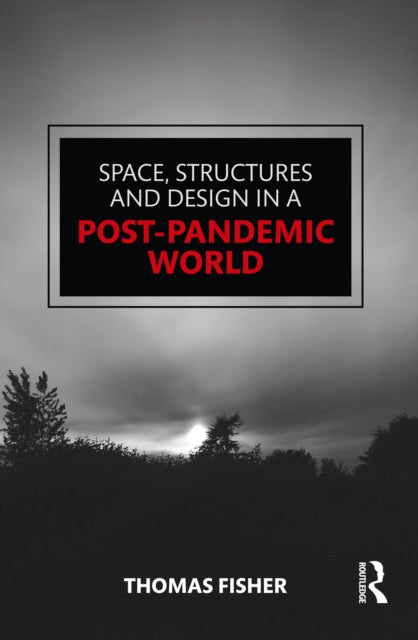
Thomas Fisher
Space, Structures and Design in a Post-Pandemic World
Space, Structures and Design in a Post-Pandemic World
💎 Earn 179 Points (£1.79) on this item.
We can order this item for you. Delivery usually takes about 4 to 6 weeks.
This item is not held in our immediate stock. We will order it for you after checkout.
Estimated delivery: About 4 to 6 weeks
YOU SAVE £2.13
- Condition: Brand new
- UK Delivery times: Usually arrives within 2 - 3 working days
- UK Shipping: Fee starts at £3.89. Subject to product weight & dimension
Bulk ordering. Want 15 or more copies? Get a personalised quote and bigger discounts. Learn more about bulk orders.
Couldn't load pickup availability
- More about Space, Structures and Design in a Post-Pandemic World
The book "The Pandemic 101: The Long-Term Effects of Pandemics on the Built Environment" explores the impacts of pandemics on the use of land, interior space, energy, and resources, and discusses their implications for design, wealth, work, and professional practice.
Format: Paperback / softback
Length: 260 pages
Publication date: 28 April 2022
Publisher: Taylor & Francis Ltd
The long-term impacts of pandemics on the built environment are a complex and multifaceted topic that requires careful examination. This essay will explore the various ways in which pandemics have affected the use of land, interior space, energy, and resources, and the implications of these changes for design, wealth, work, and professional practice.
One of the most immediate effects of pandemics on the built environment is the reduction in human activity and the associated decrease in demand for land, interior space, energy, and resources. This has led to a decrease in construction activity, a decrease in the demand for real estate, and a decrease in the use of energy and materials. For example, office buildings and retail spaces have been vacant or underutilized, as many businesses have shifted to remote work or closed down entirely. This has resulted in a decrease in the value of real estate and a decrease in the demand for construction services.
However, pandemics have also led to a new-found abundance of land, interior space, energy, and resources. This has been driven by the need for social distancing and the reduction in human activity, which has led to a decrease in the demand for urban spaces and a shift towards rural and suburban areas. For example, many people have moved to rural areas or suburban areas in search of more space and a sense of community. This has led to a decrease in the demand for urban infrastructure and a shift towards more sustainable and resilient forms of development.
Another impact of pandemics on the built environment is the increased use of technology and digitalization. As many businesses have shifted to remote work, they have relied on technology to communicate, collaborate, and operate. This has led to an increase in the use of digital tools and technologies, such as video conferencing, cloud computing, and artificial intelligence. This has also led to a decrease in the need for physical infrastructure, such as office buildings and retail spaces, as many businesses can operate effectively without them.
The increased use of technology and digitalization has also led to a shift in the way that we design and build buildings. As we become more aware of the impact of our buildings on the environment, we are increasingly designing buildings that are more sustainable, energy-efficient, and resilient. This has led to the development of new technologies and materials, such as green roofs, passive solar design, and sustainable building materials.
In conclusion, pandemics have had a significant impact on the built environment, both in terms of the reduction in human activity and the new-found abundance of land, interior space, energy, and resources. These changes have implications for design, wealth, work, and professional practice. As we move forward, it is important to consider the long-term impacts of pandemics on the built environment and to work towards a more sustainable and resilient future.
Weight: 480g
Dimension: 229 x 152 (mm)
ISBN-13: 9781032055817
UK and International shipping information
UK and International shipping information
We deliver throughout the United Kingdom and to 128 countries and territories worldwide, including the United States, Australia, Canada, Germany, Spain and France.