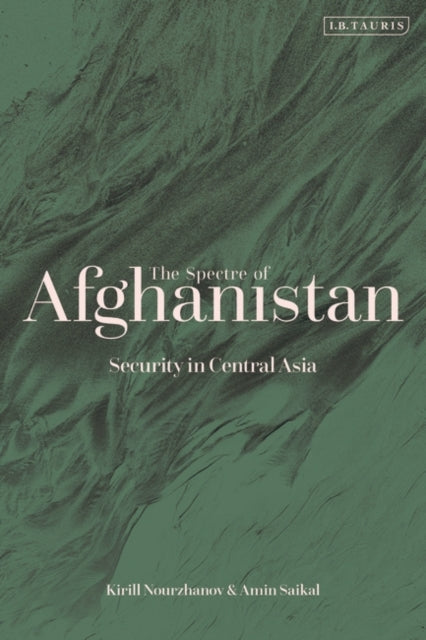
AminSaikal,Dr KirillNourzhanov
Spectre of Afghanistan: Security in Central Asia
Spectre of Afghanistan: Security in Central Asia
💎 Earn 107 Points (£1.07) on this item.
We can order this item for you. Delivery usually takes about 4 to 6 weeks.
This item is not held in our immediate stock. We will order it for you after checkout.
Estimated delivery: About 4 to 6 weeks
YOU SAVE £4.53
- Condition: Brand new
- UK Delivery times: Usually arrives within 2 - 3 working days
- UK Shipping: Fee starts at £2.39. Subject to product weight & dimension
Bulk ordering. Want 15 or more copies? Get a personalised quote and bigger discounts. Learn more about bulk orders.
Couldn't load pickup availability
- More about Spectre of Afghanistan: Security in Central Asia
This book explores the past and present instability of Afghanistan and its impact on its neighbors and global powers. It assesses the defensive policies of Central Asian states and the positions and policy responses of Russia, China, and the United States in stabilizing Afghanistan. It highlights the convergence of interests between these powers and their divergence of geopolitical objectives in the region.
Format: Paperback / softback
Length: 248 pages
Publication date: 11 February 2021
Publisher: Bloomsbury Publishing PLC
This comprehensive book delves into the complex tapestry of Afghanistan's past and present instability, shedding light on its impact on the country's neighbors and global powers like Russia, China, and the United States. With its extensive cross-border connections, including ethnic, linguistic, sectarian, and cultural ties, any developments in Afghanistan reverberate across regional and global security landscapes. This study specifically examines the defensive policies adopted by Central Asian states in the face of potential escalations in the Afghan situation or the Taliban's growing influence. Additionally, it explores the positions and policy responses of three influential regional actors: Russia, China, and the United States. By assessing the convergence and divergence of their interests in stabilizing Afghanistan, the book provides valuable insights into the intricate dynamics shaping the country's future.
Introduction:
Afghanistan, a landlocked country nestled in Central Asia, has been plagued by instability for decades. The country's history is marked by civil wars, foreign invasions, and the rise and fall of various political factions. The current state of Afghanistan is characterized by ongoing conflict, with the Taliban controlling large parts of the country and posing a significant threat to regional and global security.
Past and Present Instability:
The book explores the historical roots of Afghanistan's instability, tracing back to the Soviet invasion in 1979. The invasion led to the installation of a communist government, which was met with resistance from various ethnic groups, including the Pashtuns, Hazaras, and Tajiks. This resistance eventually led to the emergence of the Taliban, a militant group that sought to establish an Islamic state in Afghanistan.
The Taliban's rise to power in the late 1990s caused widespread devastation and suffering in Afghanistan. The group imposed strict religious laws and regulations, restricting women's rights and freedoms, and engaging in violent atrocities against civilians. The international community, including the United States and its allies, responded by launching a military intervention in 2001 to overthrow the Taliban regime.
However, the intervention proved to be short-lived, and the Taliban regrouped and regained control of much of Afghanistan. The subsequent years saw a continued cycle of violence and instability, with the Taliban launching numerous attacks on government institutions, foreign troops, and civilians. The country's economy has also suffered, with poverty and unemployment rates reaching record levels.
Neighboring Countries' Perspective:
The book also examines the perspective of Afghanistan's neighboring countries, particularly Pakistan, Iran, and India. These countries have significant stakes in the stability of Afghanistan, as the country's instability can have ripple effects across the region.
Pakistan has been a key player in the Afghan conflict, providing support to the Taliban and other militant groups. The country's involvement in the conflict has been criticized by the international community, as it has contributed to the country's instability and has also been a source of terrorism.
Iran has also played a role in the Afghan conflict, providing support to the government of Afghanistan and opposing the Taliban. However, the country's involvement has also been criticized by the international community, as it has contributed to the country's regional tensions.
India has also been involved in the Afghan conflict, providing humanitarian aid and support to the government of Afghanistan. The country's involvement has been driven by its strategic interests in the region, particularly in countering Pakistan's influence and promoting stability in the region.
Global Powers' Perspective:
The book also considers the perspective of global powers like Russia, China, and the United States. These powers have significant interests in the stability of Afghanistan, as the country's stability can have implications for their own regional and global security.
Russia has been a key player in the Afghan conflict, providing support to the government of Afghanistan and opposing the Taliban. The country's involvement has been driven by its strategic interests in the region, particularly in countering Pakistan's influence and promoting stability in the region.
China has also been involved in the Afghan conflict, providing support to the government of Afghanistan and opposing the Taliban. The country's involvement has been driven by its strategic interests in the region, particularly in accessing natural resources and promoting economic development.
The United States has been a key player in the Afghan conflict, providing support to the government of Afghanistan and opposing the Taliban. The country's involvement has been driven by its strategic interests in the region, particularly in countering terrorism and promoting stability in the region.
Defensive Policies of Central Asian States:
The book also examines the defensive policies of Central Asian states in the event of the Afghan situation deteriorating further or the Taliban-led insurgency substantially widening their influence.
Central Asia is a region that is characterized by its geopolitical importance and its proximity to Afghanistan. The countries in the region, including Kazakhstan, Kyrgyzstan, Tajikistan, and Uzbekistan, have significant stakes in the stability of Afghanistan, as the country's instability can have ripple effects across the region.
The countries in the region have adopted a range of defensive policies to address the potential threats posed by the Afghan situation. These policies include:
- Enhancing border security: The countries in the region have enhanced their border security measures to prevent the infiltration of Taliban fighters and other extremist groups. This includes the construction of border walls, the deployment of border patrols, and the improvement of surveillance systems.
- Countering terrorism: The countries in the region have also focused on countering terrorism, particularly the threat posed by the Islamic State (ISIS). This includes the deployment of military forces to combat ISIS and the cooperation with international organizations to prevent the spread of extremist ideology.
- Promoting regional cooperation: The countries in the region have also promoted regional cooperation to address the challenges posed by the Afghan situation. This includes the establishment of regional security organizations, such as the Shanghai Cooperation Organization (SCO) and the Central Asian Regional Economic Cooperation (CAREC)
- Building economic resilience: The countries in the region have also focused on building economic resilience to address the economic challenges posed by the Afghan situation. This includes the promotion of investment in infrastructure, agriculture, and tourism
Positions and Policy Responses of Influential Actors:
The book also considers the positions and policy responses of three influential actors in the region: Russia, China, and the United States.
Russia has been a key player in the Afghan conflict, providing support to the government of Afghanistan and opposing the Taliban. The country's involvement has been driven by its strategic interests in the region, particularly in countering Pakistan's influence and promoting stability in the region.
China has also been involved in the Afghan conflict, providing support to the government of Afghanistan and opposing the Taliban. The country's involvement has been driven by its strategic interests in the region, particularly in accessing natural resources and promoting economic development.
The United States has been a key player in the Afghan conflict, providing support to the government of Afghanistan and opposing the Taliban. The country's involvement has been driven by its strategic interests in the region, particularly in countering terrorism and promoting stability in the region.
Conclusion:
In conclusion, Afghanistan's past and present instability have significant implications for the country's neighbors and global powers. The book explores the complex tapestry of Afghanistan's history, its current state of instability, and the defensive policies adopted by Central Asian states to address the potential threats posed by the Afghan situation. The book also considers the positions and policy responses of three influential actors in the region: Russia, China, and the United States. By assessing the convergence and divergence of their interests in stabilizing Afghanistan, the book provides valuable insights into the intricate dynamics shaping the country's future.
Weight: 392g
Dimension: 234 x 156 x 18 (mm)
ISBN-13: 9780755637065
UK and International shipping information
UK and International shipping information
UK Delivery and returns information:
- Delivery within 2 - 3 days when ordering in the UK.
- Shipping fee for UK customers from £2.39. Fully tracked shipping service available.
- Returns policy: Return within 30 days of receipt for full refund.
International deliveries:
Shulph Ink now ships to Australia, Belgium, Canada, France, Germany, Ireland, Italy, India, Luxembourg Saudi Arabia, Singapore, Spain, Netherlands, New Zealand, United Arab Emirates, United States of America.
- Delivery times: within 5 - 10 days for international orders.
- Shipping fee: charges vary for overseas orders. Only tracked services are available for most international orders. Some countries have untracked shipping options.
- Customs charges: If ordering to addresses outside the United Kingdom, you may or may not incur additional customs and duties fees during local delivery.