Shulph Ink
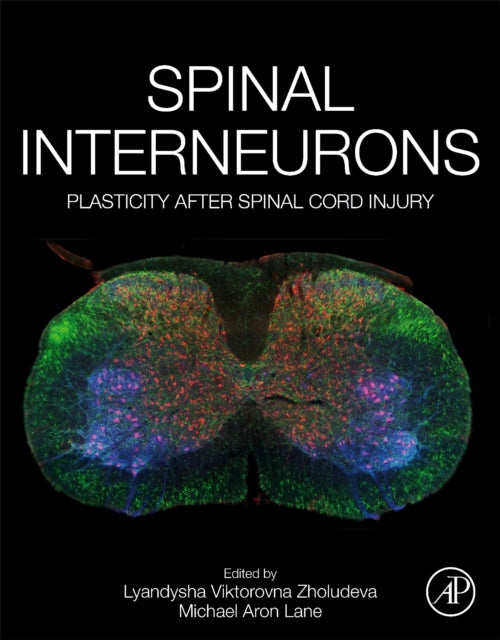
Spinal Interneurons: Plasticity after Spinal Cord Injury
Spinal Interneurons: Plasticity after Spinal Cord Injury
💎 Earn 539 Points (£5.39) on this item.
YOU SAVE £10.03
- Condition: Brand new
- UK Delivery times: Usually arrives within 2 - 3 working days
- UK Shipping: Fee starts at £2.39. Subject to product weight & dimension
Bulk ordering. Want 15 or more copies? Get a personalised quote and bigger discounts. Learn more about bulk orders.
Couldn't load pickup availability
- More about Spinal Interneurons: Plasticity after Spinal Cord Injury
The spinal cord is composed of four types of neurons: motor neurons, pre-ganglionic neurons, ascending projection neurons, and spinal interneurons. Interneurons are capable of sprouting and rewiring entire neural circuits, contributing to some restoration of disrupted neural communication after injury. Spinal Interneurons provides a focused overview of how scientists classify interneurons, the techniques used to identify subsets of interneurons, their roles in specific neural circuits, and the scientific evidence for their neuroplasticity. Understanding the capacity for neuroplasticity and identity of specific spinal interneurons that are optimal for recovery may help determine cellular candidates for developing therapies.
Format: Paperback / softback
Length: 474 pages
Publication date: 01 September 2022
Publisher: Elsevier Science Publishing Co Inc
The spinal cord is a complex network of neurons that play a vital role in controlling our body's movements, sensations, and functions. It is comprised of four main types of neurons: motor neurons, pre-ganglionic neurons, ascending projection neurons, and spinal interneurons.
Motor neurons are responsible for transmitting signals from the brain to the muscles, enabling us to perform physical actions. Pre-ganglionic neurons, on the other hand, receive signals from the brain and send them to the spinal cord, where they are further processed by ascending projection neurons. Ascending projection neurons then send signals to specific regions of the body, such as the limbs or the face.
Spinal interneurons, however, are the most fascinating of all the neurons in the spinal cord. They are neurons that process information within local circuits and have an incredible ability for neuroplasticity, whether due to persistent activity, neural injury, or in response to disease.
By definition, spinal interneurons have their axons restricted to the same structure as the soma (in this case, the spinal cord). However, these neurons are capable of sprouting and rewiring entire neural circuits, contributing to some restoration of disrupted neural communication after injury to the spinal cord. This process is known as "bypassing" the lesion site.
Spinal interneurons provide a focused overview of how scientists classify interneurons in general, the techniques used to identify subsets of interneurons, their roles in specific neural circuits, and the scientific evidence for their neuroplasticity. Understanding the capacity for neuroplasticity and the identity of specific spinal interneurons that are optimal for recovery may help determine cellular candidates for developing therapies.
Spinal Interneurons is a comprehensive reference book exclusively concentrating on spinal interneurons, the techniques and experiments employed to identify and study these cells as part of normal and compromised neural circuits. It highlights the therapeutic potential of these cells by presenting the relevant pre-clinical and clinical work to date.
The book is written for neuroscientists, clinicians, and trainees who are interested in learning more about spinal interneurons and their role in neurological disorders. It provides a detailed overview of the latest research in this field, as well as practical insights into the development and use of treatments for neurological conditions.
People in industry will also benefit from this book, which compiles the latest in therapeutic strategies for targeting spinal interneurons. It discusses the considerations there are for the development and use of treatments, as well as how such treatments can be translated to the clinic. The book also provides an overview of the latest technologies and tools that are being used to study spinal interneurons and their role in neurological disorders.
In conclusion, Spinal Interneurons is a valuable resource for anyone interested in learning more about spinal interneurons and their role in neurological disorders. It provides a comprehensive overview of the latest research in this field, as well as practical insights into the development and use of treatments. Whether you are a neuroscientist, clinician, or trainee, this book will help you better understand the potential of spinal interneurons for restoring disrupted neural communication and developing new therapies for neurological conditions.
Weight: 450g
Dimension: 234 x 156 (mm)
ISBN-13: 9780128192603
This item can be found in:
UK and International shipping information
UK and International shipping information
UK Delivery and returns information:
- Delivery within 2 - 3 days when ordering in the UK.
- Shipping fee for UK customers from £2.39. Fully tracked shipping service available.
- Returns policy: Return within 30 days of receipt for full refund.
International deliveries:
Shulph Ink now ships to Australia, Belgium, Canada, France, Germany, Ireland, Italy, India, Luxembourg Saudi Arabia, Singapore, Spain, Netherlands, New Zealand, United Arab Emirates, United States of America.
- Delivery times: within 5 - 10 days for international orders.
- Shipping fee: charges vary for overseas orders. Only tracked services are available for most international orders. Some countries have untracked shipping options.
- Customs charges: If ordering to addresses outside the United Kingdom, you may or may not incur additional customs and duties fees during local delivery.