Jonathan L.Zecher
Spiritual Direction as a Medical Art in Early Christian Monasticism
Spiritual Direction as a Medical Art in Early Christian Monasticism
💎 Earn 597 Points (£5.97) on this item.
We can order this item for you. Delivery usually takes about 4 to 6 weeks.
This item is not held in our immediate stock. We will order it for you after checkout.
Estimated delivery: About 4 to 6 weeks
- Condition: Brand new
- UK Delivery times: Usually arrives within 2 - 3 working days
- UK Shipping: Fee starts at £3.89. Subject to product weight & dimension
Bulk ordering. Want 15 or more copies? Get a personalised quote and bigger discounts. Learn more about bulk orders.
Couldn't load pickup availability
- More about Spiritual Direction as a Medical Art in Early Christian Monasticism
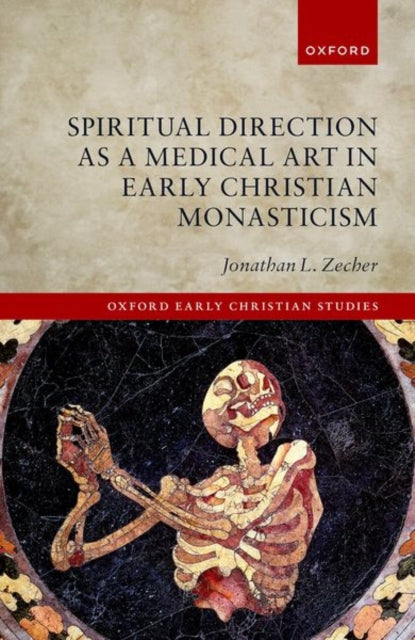
This study explores how early Christian writers applied the logic and practices of Galenic medicine to develop their own practices of spiritual direction. Evagrius reads dream images as diagnostic indicators of the soul's state, John Cassian crafts a nosology of the soul using lists of passions, Basil of Caesarea pits the spiritual director against the physician in a competition over diagnostic expertise, and John Climacus crafts pathologies of passions through demonic family trees. These different appropriations of medical logic and metaphors had decisive consequences for generations of Christian subjects who would learn to see themselves as sick or well, patients or healers, within monastic communities.
Format: Hardback
Length: 400 pages
Publication date: 06 October 2022
Publisher: Oxford University Press
In the early monastic communities, both women and men brought certain expectations into their relationships of obedience and advice. These expectations were shaped by their religious beliefs and the teachings of the Church. Women, for instance, were often expected to be submissive and obedient to their male superiors, while men were expected to provide guidance and leadership.
The women and men living in early monastic communities sought to achieve several goals through confession and discipline. Firstly, they aimed to purify their souls and seek forgiveness for their sins. They believed that confessing their faults to a spiritual leader could help them overcome their weaknesses and grow in holiness.
Secondly, they sought to develop a deeper understanding of their faith and its teachings. Through confession and discipline, they hoped to gain a deeper knowledge of God, the Holy Spirit, and the Bible. They also sought to apply these teachings to their daily lives and become more Christ-like in their behavior.
Thirdly, they sought to strengthen their relationships with other members of the monastic community. Confession and discipline provided an opportunity for individuals to share their struggles and receive support and encouragement from their fellow monks. This helped to create a sense of community and unity within the monastic order.
Finally, they sought to achieve spiritual growth and enlightenment. Through confession and discipline, they hoped to cultivate a deeper sense of mindfulness, compassion, and self-control. They believed that these qualities could help them overcome the challenges of life and achieve a closer relationship with God.
In order to explore these questions, this study shows how several early Christian writers applied the logic, knowledge, and practices of Galenic medicine to develop their own practices of spiritual direction. Evagrius, for instance, read dream images as diagnostic indicators of the soul's state. He believed that dreams could reveal the underlying causes of spiritual problems and provide insights into the soul's health.
John Cassian crafted a nosology of the soul using lists of passions while diagnosing the causes of wet dreams. He believed that passions were the root cause of many spiritual problems and that understanding their nature could help individuals overcome them.
Basil of Caesarea pits the spiritual director against the physician in a competition over diagnostic expertise. He believed that the spiritual director had a unique role to play in helping individuals overcome their spiritual problems and that the physician's toolkit could be useful in this process.
John Climacus crafts pathologies of passions through demonic family trees, while equipping his spiritual director with a physician's toolkit and imagining the monastic space as a vast clinic. He believed that passions were not only physical but also spiritual and that understanding their origins could help individuals overcome them.
These different appropriations of medical logic and metaphors not only show us the thought-world of late antique monasticism, but they would also have decisive consequences for generations of Christian subjects who would learn to see themselves as sick or well, patients or healers, within monastic communities. The practices of spiritual direction developed by these early Christian writers helped to shape the way of thinking about the soul and its relationship with God for centuries to come. They provided a framework for individuals to seek spiritual guidance and healing and helped to create a sense of community and unity within the monastic order.
Weight: 725g
Dimension: 240 x 160 x 25 (mm)
ISBN-13: 9780198854135
UK and International shipping information
UK and International shipping information
We deliver throughout the United Kingdom and to 128 countries and territories worldwide, including the United States, Australia, Canada, Germany, Spain and France.