Shulph Ink
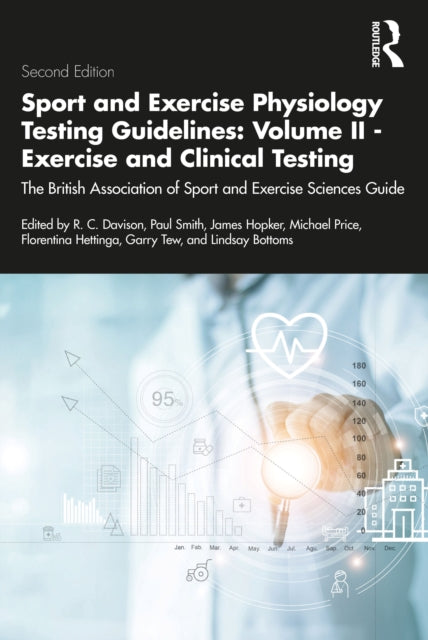
Sport and Exercise Physiology Testing Guidelines: Volume II - Exercise and Clinical Testing: The British Association of Sport and Exercise Sciences Guide
Sport and Exercise Physiology Testing Guidelines: Volume II - Exercise and Clinical Testing: The British Association of Sport and Exercise Sciences Guide
💎 Earn 278 Points (£2.78) on this item.
YOU SAVE £3.31
- Condition: Brand new
- UK Delivery times: Usually arrives within 2 - 3 working days
- UK Shipping: Fee starts at £2.39. Subject to product weight & dimension
Bulk ordering. Want 15 or more copies? Get a personalised quote and bigger discounts. Learn more about bulk orders.
Couldn't load pickup availability
- More about Sport and Exercise Physiology Testing Guidelines: Volume II - Exercise and Clinical Testing: The British Association of Sport and Exercise Sciences Guide
The new edition of the Clinical Sport Testing Handbook provides students and researchers with comprehensive, vital, and robust guidelines for clinical sport testing. It includes an increased coverage of special populations and brings together internationally recognized and BASES accredited experts for each section.
Format: Paperback / softback
Length: 324 pages
Publication date: 14 March 2022
Publisher: Taylor & Francis Ltd
The second edition of the "Handbook of Clinical Sport Testing" is a comprehensive and essential resource for students and researchers in the field of clinical sport testing. This invaluable guide offers a wealth of knowledge and guidelines that are vital for conducting effective and rigorous clinical sport testing.
In this updated edition, the authors have expanded their coverage to include special populations, recognizing the growing importance of this area in the field. The handbook brings together a team of internationally renowned and BASES accredited experts who are experts in their respective fields, ensuring that the information presented is accurate, up-to-date, and reliable.
The handbook is organized into six comprehensive sections, covering a wide range of topics related to clinical sport testing. Each section is authored by a team of experts, providing in-depth insights and practical advice on the latest techniques and methodologies.
Section 1: Introduction to Clinical Sport Testing provides an overview of the field, including its history, applications, and ethical considerations. It also introduces the basic principles and theories of sport testing, which form the foundation for the subsequent sections.
Section 2: Physical Testing in Clinical Sport Settings covers the various physical tests that can be used to assess athletic performance, including strength, power, speed, agility, flexibility, and endurance. The authors provide detailed instructions on how to administer and interpret these tests, as well as considerations for special populations.
Section 3: Psychological Testing in Clinical Sport Settings explores the use of psychological tests to assess athletes' mental and emotional state. The authors discuss the different types of psychological tests available, including personality assessments, stress tests, and cognitive tests, and how they can be used to identify potential performance-related issues.
Section 4: Nutritional Testing in Clinical Sport Settings focuses on the assessment of athletes' nutritional status and the impact of nutrition on athletic performance. The authors discuss the various methods of nutritional testing, including blood analysis, urine analysis, and anthropometric measurements, and how they can be used to develop personalized nutrition plans for athletes.
Section 5: Medical Testing in Clinical Sport Settings covers the various medical tests that can be used to assess athletes' health and safety. The authors discuss the importance of pre-participation medical evaluations, injury screening, and monitoring, and how they can be used to prevent and manage sports-related injuries.
Section 6: Special Populations in Clinical Sport Testing focuses on the assessment and testing of athletes from diverse backgrounds, including those with disabilities, gender differences, and cultural differences. The authors provide guidance on how to adapt testing protocols and procedures to meet the unique needs of these populations.
In addition to its comprehensive coverage, the "Handbook of Clinical Sport Testing" also features numerous illustrative examples and case studies that demonstrate the practical application of the principles and techniques discussed. These examples help to reinforce the theoretical concepts and provide real-world insights into the field.
Whether you are a student, researcher, or practitioner in the field of clinical sport testing, the second edition of the "Handbook of Clinical Sport Testing" is an essential resource that will help you to improve your knowledge, skills, and expertise. Its comprehensive coverage, expert authorship, and practical approach make it an invaluable tool for anyone who wants to stay at the forefront of this rapidly evolving field.
The second edition of the "Handbook of Clinical Sport Testing" is a comprehensive and essential resource for students and researchers in the field of clinical sport testing. This invaluable guide offers a wealth of knowledge and guidelines that are vital for conducting effective and rigorous clinical sport testing.
In this updated edition, the authors have expanded their coverage to include special populations, recognizing the growing importance of this area in the field. The handbook
The handbook brings together a team of internationally renowned and BASES accredited experts who are experts in their respective fields, ensuring that the information presented is accurate, up-to-date, and reliable.
The handbook is organized into six comprehensive sections, covering a wide range of topics related to clinical sport testing. Each section is authored by a team of experts, providing in-depth insights and practical advice on the latest techniques and methodologies.
Section 1: Introduction to Clinical Sport Testing provides an overview of the field, including its history, applications, and ethical considerations. It also introduces the basic principles and theories of sport testing, which form the foundation for the subsequent sections.
Section 2: Physical Testing in Clinical Sport Settings covers the various physical tests that can be used to assess athletic performance, including strength, power, speed, agility, flexibility, and endurance. The authors provide detailed instructions on how to administer and interpret these tests, as well as considerations for special populations.
Section 3: Psychological Testing in Clinical Sport Settings explores the use of psychological tests to assess athletes' mental and emotional state. The authors discuss the different types of psychological tests available, including personality assessments, stress tests, and cognitive tests, and how they can be used to identify potential performance-related issues.
Section 4: Nutritional Testing in Clinical Sport Settings focuses on the assessment of athletes' nutritional status and the impact of nutrition on athletic performance. The authors discuss the various methods of nutritional testing, including blood analysis, urine analysis, and anthropometric measurements, and how they can be used to develop personalized nutrition plans for athletes.
Section 5: Medical Testing in Clinical Sport Settings covers the various medical tests that can be used to assess athletes' health and safety. The authors discuss the importance of pre-participation medical evaluations, injury screening, and monitoring, and how they can be used to prevent and manage sports-related injuries.
Section 6: Special Populations in Clinical Sport Testing focuses on the assessment and testing of athletes from diverse backgrounds, including those with disabilities, gender differences, and cultural differences. The authors provide guidance on how to adapt testing protocols and procedures to meet the unique needs of these populations.
In addition to its comprehensive coverage, the "Handbook of Clinical Sport Testing" also features numerous illustrative examples and case studies that demonstrate the practical application of the principles and techniques discussed. These examples help to reinforce the theoretical concepts and provide real-world insights into the field.
Whether you are a student, researcher, or practitioner in the field of clinical sport testing, the second edition of the "Handbook of Clinical Sport Testing" is an essential resource that will help you to improve your knowledge, skills, and expertise. Its comprehensive coverage, expert authorship, and practical approach make it an invaluable tool for anyone who wants to stay at the forefront of this rapidly evolving field.
Weight: 572g
Dimension: 154 x 235 x 27 (mm)
ISBN-13: 9780367489847
Edition number: 2 ed
This item can be found in:
UK and International shipping information
UK and International shipping information
UK Delivery and returns information:
- Delivery within 2 - 3 days when ordering in the UK.
- Shipping fee for UK customers from £2.39. Fully tracked shipping service available.
- Returns policy: Return within 30 days of receipt for full refund.
International deliveries:
Shulph Ink now ships to Australia, Belgium, Canada, France, Germany, Ireland, Italy, India, Luxembourg Saudi Arabia, Singapore, Spain, Netherlands, New Zealand, United Arab Emirates, United States of America.
- Delivery times: within 5 - 10 days for international orders.
- Shipping fee: charges vary for overseas orders. Only tracked services are available for most international orders. Some countries have untracked shipping options.
- Customs charges: If ordering to addresses outside the United Kingdom, you may or may not incur additional customs and duties fees during local delivery.