Shulph Ink
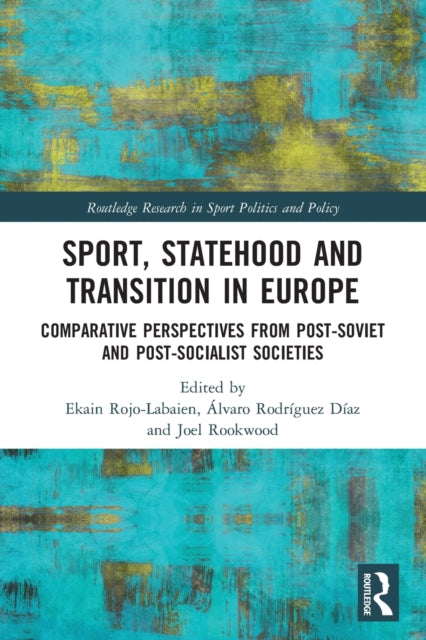
Sport, Statehood and Transition in Europe: Comparative perspectives from post-Soviet and post-socialist societies
Sport, Statehood and Transition in Europe: Comparative perspectives from post-Soviet and post-socialist societies
💎 Earn 221 Points (£2.21) on this item.
We can order this item for you. Delivery usually takes about 4 to 6 weeks.
This item is not held in our immediate stock. We will order it for you after checkout.
Estimated delivery: About 4 to 6 weeks
YOU SAVE £2.63
- Condition: Brand new
- UK Delivery times: Usually arrives within 2 - 3 working days
- UK Shipping: Fee starts at £2.39. Subject to product weight & dimension
Bulk ordering. Want 15 or more copies? Get a personalised quote and bigger discounts. Learn more about bulk orders.
Couldn't load pickup availability
- More about Sport, Statehood and Transition in Europe: Comparative perspectives from post-Soviet and post-socialist societies
This book explores the political significance of sport and its importance for nation-state building and political and economic transition across thirteen post-Soviet and post-socialist countries, primarily located in Eastern Europe. It uses sport as a symbolic lens to examine the transition of Eastern European countries to the Western capitalist system, covering key themes such as nationalism, governance, power relations, political ideology, separatism, commercialization, and economic development.
Format: Paperback / softback
Length: 288 pages
Publication date: 13 December 2021
Publisher: Taylor & Francis Ltd
This comprehensive book delves into the profound political significance of sport and its pivotal role in nation-building and political and economic transition across thirteen post-Soviet and post-socialist countries, primarily situated in Eastern Europe. Through a critical case-study approach, the book leverages historical and comparative frameworks to examine the transition of Eastern European countries to the Western capitalist system. Spanning a vast geographical area, from Poland to the Caucuses and Turkmenistan, it explores a range of key themes, including nationalism, governance, power relations, political ideology, separatism, commercialization, and economic development. Moreover, the book sheds light on the symbolic value of mega-events in shaping these transitions. Sport, Statehood, and Transition in Europe is a must-read for anyone with a keen interest in sport policy, the politics of sport, or political science.
Introduction:
Sport has long played a significant role in shaping political identities and ideologies throughout history. In the post-Soviet and post-socialist context, the political significance of sport has become increasingly apparent, as countries in Eastern Europe strive to navigate the complex transition from communism to capitalism. This book aims to examine the political significance of sport and its importance for nation-state building and political and economic transition across thirteen post-Soviet and post-socialist countries, primarily located in Eastern Europe.
Methodology:
To achieve this objective, the book adopts a critical case-study approach. Building on historical and comparative frameworks, the book uses sport as a symbolic lens through which to examine the transition of Eastern European countries to the Western capitalist system. The selection of thirteen post-Soviet and post-socialist countries is based on their geographical diversity, political complexity, and historical significance in the region. Each country is analyzed in depth, with a focus on key themes such as nationalism, governance, power relations, political ideology, separatism, commercialization, and economic development.
Findings:
The book's findings reveal that sport has played a multifaceted role in shaping the political landscape of Eastern Europe. On the one hand, sport has been used as a tool for promoting nationalism and national identity. In many post-Soviet and post-socialist countries, sports events have been used to showcase national pride and promote a sense of belonging among citizens. For example, the Eurovision Song Contest, which is held annually in Europe, has become a symbol of national unity and pride for many countries in the region.
On the other hand, sport has also been used as a tool for promoting political stability and governance. In countries such as Poland and the Czech Republic, sports organizations have been instrumental in promoting democratic values and institutions. For instance, the Polish Football Association has been a vocal advocate for democracy and human rights, and has played a key role in shaping the country's political landscape.
However, sport has also been a source of tension and conflict in Eastern Europe. In countries such as Russia and Ukraine, sports events have been used as a platform for political propaganda and agitation. For example, the 2014 Winter Olympics in Sochi, Russia, was heavily politicized, with the Russian government using the event to promote its national identity and political agenda.
Conclusion:
In conclusion, this book has demonstrated that sport has played a complex and multifaceted role in shaping the political landscape of Eastern Europe. While sport has been used as a tool for promoting nationalism and national identity, it has also been used as a tool for promoting political stability and governance. However, sport has also been a source of tension and conflict in the region. As Eastern European countries continue to navigate the transition to capitalism, it is important to recognize the role that sport plays in shaping their political future. By examining the political significance of sport, this book provides valuable insights into the complex dynamics of post-Soviet and post-socialist societies.
Weight: 448g
Dimension: 157 x 233 x 27 (mm)
ISBN-13: 9780367500436
This item can be found in:
UK and International shipping information
UK and International shipping information
UK Delivery and returns information:
- Delivery within 2 - 3 days when ordering in the UK.
- Shipping fee for UK customers from £2.39. Fully tracked shipping service available.
- Returns policy: Return within 30 days of receipt for full refund.
International deliveries:
Shulph Ink now ships to Australia, Belgium, Canada, France, Germany, Ireland, Italy, India, Luxembourg Saudi Arabia, Singapore, Spain, Netherlands, New Zealand, United Arab Emirates, United States of America.
- Delivery times: within 5 - 10 days for international orders.
- Shipping fee: charges vary for overseas orders. Only tracked services are available for most international orders. Some countries have untracked shipping options.
- Customs charges: If ordering to addresses outside the United Kingdom, you may or may not incur additional customs and duties fees during local delivery.