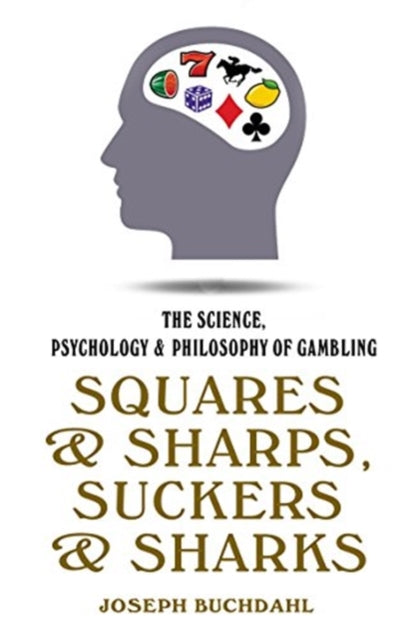
Joseph Buchdahl
Squares & Sharps, Suckers & Sharks: The Science, Psychology & Philosophy of Gambling
Squares & Sharps, Suckers & Sharks: The Science, Psychology & Philosophy of Gambling
💎 Earn 106 Points (£1.06) on this item.
YOU SAVE £8.75
- Condition: Brand new
- UK Delivery times: Usually arrives within 2 - 3 working days
- UK Shipping: Fee starts at £2.39. Subject to product weight & dimension
Bulk ordering. Want 15 or more copies? Get a personalised quote and bigger discounts. Learn more about bulk orders.
Couldn't load pickup availability
- More about Squares & Sharps, Suckers & Sharks: The Science, Psychology & Philosophy of Gambling
Gambling is a form of entertainment that offers a means of gaining authority over the unknown, granting us a sense of control over uncertainty. This book explores the reasons why gambling is so rewarding, examining the science of probability and uncertainty, why it is often condemned, the difference between expectation and utility, the irrationality of human beings, evolutionary perspectives, luck and skill, market efficiency and the wisdom of crowds, why winners take all, cheating, and why the process matters more than the outcome.
Format: Paperback / softback
Length: 352 pages
Publication date: 20 May 2021
Publisher: Oldcastle Books Ltd
Gambling has been a part of human culture for centuries, with various explanations for its allure. While money, entertainment, and escape are often cited as reasons for gambling, there is a deeper underlying purpose: a craving for control.
Gambling provides a way to gain authority over the unknown, offering a sense of control in an unpredictable world. This illusion of control is powerful, even though gambling, including betting and investing, is essentially random. For many gamblers, the rewards are profound, despite the odds being against them.
This book aims to explore the reasons behind the popularity of gambling. It examines various aspects, including:
The science of probability and uncertainty: Understanding the mathematical principles that govern gambling is essential to understanding why people gamble. Probability theory helps us understand the odds of different outcomes and the likelihood of winning or losing.
Why gambling is often condemned: Gambling has been criticized for its negative effects on society, including addiction, financial problems, and crime. However, it is important to recognize that gambling is not inherently bad, but rather the behavior of individuals who engage in it.
The difference between expectation and utility: Expectation is the amount of money a gambler expects to win or lose, while utility is the value a gambler places on the outcome. Understanding the difference between these two concepts is crucial in determining why people gamble.
The irrationality of human beings: Gambling is often driven by irrational beliefs and emotions, such as the belief that a lucky streak will continue or that a particular strategy will lead to a win. This irrationality can lead to risky behavior and financial problems.
Evolutionary perspectives on gambling: Evolutionary psychologists argue that gambling is a natural behavior that evolved as a way for humans to manage risk and uncertainty. Gambling may have been an important survival skill in our ancestors' lives, helping them to avoid predators and find food.
Luck and skill: While some argue that gambling is purely a game of chance, others believe that skill can play a significant role in determining the outcome. Skillful gamblers can use strategies and knowledge to improve their chances of winning.
Market efficiency and the wisdom of crowds: The efficiency of financial markets is often cited as evidence that gambling is irrational. However, the wisdom of crowds theory suggests that collective intelligence can lead to better decision-making than individual intelligence.
Why winners take all: In many forms of gambling, the winner takes all. This can create a sense of competition and excitement, but it can also lead to financial problems for those who lose.
Cheating: Cheating is a common problem in gambling, and it can undermine the integrity of the game. Cheaters may use illegal methods to gain an advantage, such as card counting or rigging the dice.
Why the process matters more than the outcome: Gambling is often seen as a way to win money, but it is important to recognize that the process itself can be rewarding. The thrill of placing a bet, the excitement of watching the outcome, and the social interaction of gambling can be enjoyable in and of themselves.
In conclusion, gambling has been a part of human culture for centuries, with various explanations for its allure. While money, entertainment, and escape are often cited as reasons for gambling, there is a deeper underlying purpose: a craving for control. Gambling provides a way to gain authority
authority over the unknown, offering a sense of control in an unpredictable world. This illusion of control is powerful, even though gambling, including betting and investing, is essentially random. For many gamblers, the rewards are profound, despite the odds being against them.
This book aims to explore the reasons behind the popularity of gambling. It examines various aspects, including:
The science of probability and uncertainty: Understanding the mathematical principles that govern gambling is essential to understanding why people gamble. Probability theory helps us understand the odds of different outcomes and the likelihood of winning or losing.
Why gambling is often condemned: Gambling has been criticized for its negative effects on society, including addiction, financial problems, and crime. However, it is important to recognize that gambling is not inherently bad, but rather the behavior of individuals who engage in it.
The difference between expectation and utility: Expectation is the amount of money a gambler expects to win or lose, while utility is the value a gambler places on the outcome. Understanding the difference between these two concepts is crucial in determining why people gamble.
The irrationality of human beings: Gambling is often driven by irrational beliefs and emotions, such as the belief that a lucky streak will continue or that a particular strategy will lead to a win. This irrationality can lead to risky behavior and financial problems.
Evolutionary perspectives on gambling: Evolutionary psychologists argue that gambling is a natural behavior that evolved as a way for humans to manage risk and uncertainty. Gambling may have been an important survival skill in our ancestors' lives, helping them to avoid predators and find food.
Luck and skill: While some argue that gambling is purely a game of chance, others believe that skill can play a significant role in determining the outcome. Skillful gamblers can use strategies and knowledge to improve their chances of winning.
Market efficiency and the wisdom of crowds: The efficiency of financial markets is often cited as evidence that gambling is irrational. However, the wisdom of crowds theory suggests that collective intelligence can lead to better decision-making than individual intelligence.
Why winners take all: In many forms of gambling, the winner takes all. This can create a sense of competition and excitement, but it can also lead to financial problems for those who lose.
Cheating: Cheating is a common problem in gambling, and it can undermine the integrity of the game. Cheaters may use illegal methods to gain an advantage, such as card counting or rigging the dice.
Why the process matters more than the outcome: Gambling is often seen as a way to win money, but it is important to recognize that the process itself can be rewarding. The thrill of placing a bet, the excitement of watching the outcome, and the social interaction of gambling can be enjoyable in and of themselves.
Weight: 460g
Dimension: 154 x 237 x 30 (mm)
ISBN-13: 9780857304841
This item can be found in:
UK and International shipping information
UK and International shipping information
UK Delivery and returns information:
- Delivery within 2 - 3 days when ordering in the UK.
- Shipping fee for UK customers from £2.39. Fully tracked shipping service available.
- Returns policy: Return within 30 days of receipt for full refund.
International deliveries:
Shulph Ink now ships to Australia, Belgium, Canada, France, Germany, Ireland, Italy, India, Luxembourg Saudi Arabia, Singapore, Spain, Netherlands, New Zealand, United Arab Emirates, United States of America.
- Delivery times: within 5 - 10 days for international orders.
- Shipping fee: charges vary for overseas orders. Only tracked services are available for most international orders. Some countries have untracked shipping options.
- Customs charges: If ordering to addresses outside the United Kingdom, you may or may not incur additional customs and duties fees during local delivery.