Mark Kruger
St. Louis Commune of 1877: Communism in the Heartland
St. Louis Commune of 1877: Communism in the Heartland
💎 Earn 94 Points (£0.94) on this item.
We can order this item for you. Delivery usually takes about 4 to 6 weeks.
This item is not held in our immediate stock. We will order it for you after checkout.
Estimated delivery: About 4 to 6 weeks
YOU SAVE £4.00
- Condition: Brand new
- UK Delivery times: Usually arrives within 2 - 3 working days
- UK Shipping: Fee starts at £2.39. Subject to product weight & dimension
Bulk ordering. Want 15 or more copies? Get a personalised quote and bigger discounts. Learn more about bulk orders.
Couldn't load pickup availability
- More about St. Louis Commune of 1877: Communism in the Heartland
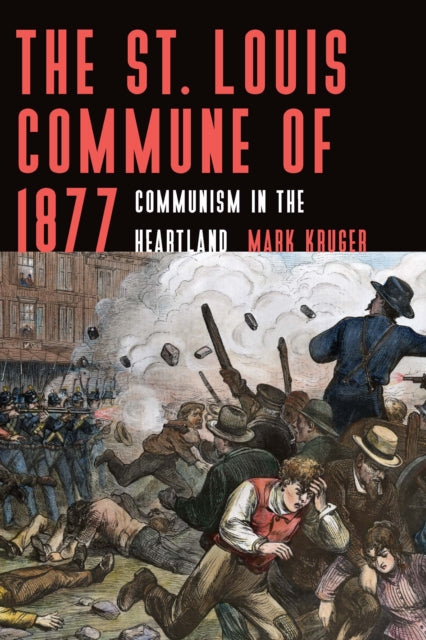
Corporate America and the political class formed an alliance that ended during the Great Railroad Strike of 1877, leading to bribery and exploitation. The St. Louis Commune of 1877 was the first instance of a general strike in U.S. history, where workers took control of a major American city and ruled by a communist party.
Format: Paperback / softback
Length: 330 pages
Publication date: 01 October 2021
Publisher: University of Nebraska Press
The United States witnessed the rise of large corporations following the conclusion of the Civil War, driven by a relentless pursuit of power and profits. Corruption permeated American society as these corporations expanded their influence nationwide, leaving a trail of bribery and exploitation in their wake. This alliance between corporate America and the political elite reached a pivotal moment during the Great Railroad Strike of 1877. During this strike, workers from various industries, including railroads, mining, canals, and manufacturing, organized a general strike against monopoly capitalism. This unprecedented action brought the country to a standstill, highlighting the growing power and determination of the labor movement.
In the aftermath of the Civil War, the United States experienced the emergence of large corporations driven by a relentless pursuit of power and profits. Corruption permeated American society as these corporations expanded their influence nationwide, leaving a trail of bribery and exploitation in their wake. This alliance between corporate America and the political elite reached a pivotal moment during the Great Railroad Strike of 1877. During this strike, workers from various industries, including railroads, mining, canals, and manufacturing, organized a general strike against monopoly capitalism. This unprecedented action brought the country to a standstill, highlighting the growing power and determination of the labor movement.
The St. Louis Commune of 1877 is a significant chapter in the history of labor movements and socialist ideologies. Mark Kruger's book, "The St. Louis Commune of 1877," delves into the roots of the Commune, focusing on the 1848 German revolution, the Paris Commune, and the First International. The St. Louis Commune was not only the first instance of a general strike in U.S. history but also the first time workers took control of a major American city and the first time a city was ruled by a communist party.
The Commune's emergence was a result of a combination of factors, including economic depression, labor unrest, and the growing influence of socialist and communist ideologies. The workers of St. Louis, who were predominantly German immigrants, were subjected to long hours, low wages, and poor working conditions. They demanded better pay, shorter working hours, and the right to form labor unions.
The strike began in May 1877 and quickly spread to other industries in St. Louis and beyond. The workers demanded the establishment of a workers' government, which would control the city's industries and redistribute wealth to the working class. The strike was met with fierce resistance from the government and the corporate elite, who saw the Commune as a threat to their power and profits.
The Commune's rule was characterized by a combination of radicalism and pragmatism. The workers established a socialist government, which implemented a series of social reforms, including free education, healthcare, and housing for the poor. They also redistributed land and property to the working class and abolished private ownership of industry.
However, the Commune's rule was not without its challenges. The government was plagued by internal conflicts and power struggles, and the economy suffered due to the lack of private investment and entrepreneurship. The Commune also faced external pressures from the United States government, which sent troops.
The Commune's collapse in November 1877 marked the end of a brief but historic period of workers' control in St. Louis. The government was overthrown by a military force, and the workers were forced to return to their previous conditions. The legacy of the St. Louis Commune, however, remains a powerful symbol of the potential for workers to take control of their own destiny and challenge the power of the corporate elite.
In conclusion, the rise. The United States witnessed the rise of large corporations following the conclusion of the Civil War, driven by a relentless pursuit of power and profits. Corruption permeated American society as these corporations expanded their influence nationwide, leaving a trail of bribery and exploitation in their wake. This alliance between corporate America and the political elite reached a pivotal moment during the Great Railroad Strike of 1877. During this strike, workers from various industries, including railroads, mining, canals, and manufacturing, organized a general strike against monopoly capitalism. This unprecedented action brought the country to a standstill, highlighting the growing power and determination of the labor movement. The St. Louis Commune of 1877 is a significant chapter in the history of labor movements and socialist ideologies. Mark Kruger's book, "The St. Louis Commune of 1877," delves into the roots of the Commune, focusing on the 1848 German revolution, the Paris Commune, and the First International. The St. Louis Commune was not only the first instance of a general strike in U.S. history but also the first time workers took control of a major American city and the first time a city was ruled by a communist party. The Commune's emergence was a result of a combination of factors, including economic depression, labor unrest, and the growing influence of socialist and communist ideologies. The workers of St. Louis, who were predominantly German immigrants, were subjected to long hours, low wages, and poor working conditions. They demanded better pay, shorter working hours, and the right to form labor unions. The strike began in May 1877 and quickly spread to other industries in St. Louis and beyond. The workers demanded the establishment of a workers' government, which would control the city's industries and redistribute wealth to the working class. The strike was met with fierce resistance from the government and the corporate elite, who saw the Commune as a threat to their power and profits. The Commune's rule was characterized by a combination of radicalism and pragmatism. The workers established a socialist government, which implemented a series of social reforms.
Weight: 512g
Dimension: 151 x 228 x 24 (mm)
ISBN-13: 9781496228130
This item can be found in:
UK and International shipping information
UK and International shipping information
UK Delivery and returns information:
- Delivery within 2 - 3 days when ordering in the UK.
- Shipping fee for UK customers from £2.39. Fully tracked shipping service available.
- Returns policy: Return within 30 days of receipt for full refund.
International deliveries:
Shulph Ink now ships to Australia, Belgium, Canada, France, Germany, Ireland, Italy, India, Luxembourg Saudi Arabia, Singapore, Spain, Netherlands, New Zealand, United Arab Emirates, United States of America.
- Delivery times: within 5 - 10 days for international orders.
- Shipping fee: charges vary for overseas orders. Only tracked services are available for most international orders. Some countries have untracked shipping options.
- Customs charges: If ordering to addresses outside the United Kingdom, you may or may not incur additional customs and duties fees during local delivery.