Rebecca Reich
State of Madness: Psychiatry, Literature, and Dissent After Stalin
State of Madness: Psychiatry, Literature, and Dissent After Stalin
💎 Earn 110 Points (£1.10) on this item.
We can order this item for you. Delivery usually takes about 4 to 6 weeks.
This item is not held in our immediate stock. We will order it for you after checkout.
Estimated delivery: About 4 to 6 weeks
YOU SAVE £2.88
- Condition: Brand new
- UK Delivery times: Usually arrives within 2 - 3 working days
- UK Shipping: Fee starts at £2.39. Subject to product weight & dimension
Bulk ordering. Want 15 or more copies? Get a personalised quote and bigger discounts. Learn more about bulk orders.
Couldn't load pickup availability
- More about State of Madness: Psychiatry, Literature, and Dissent After Stalin
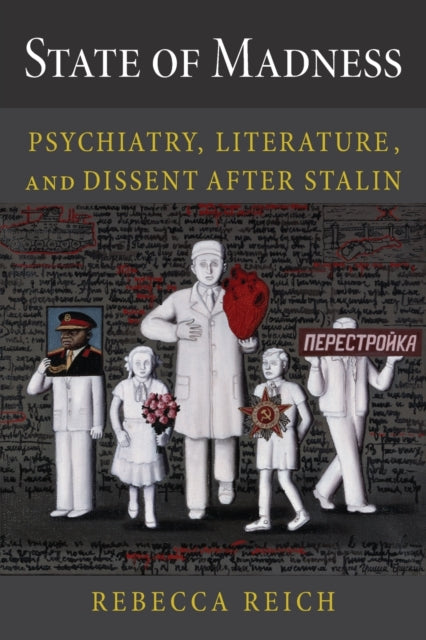
The book "State of Madness" explores the intersection of psychiatric and literary discourses in the Soviet Union after Joseph Stalin's death, highlighting how state psychiatrists used narratives of mental illness to pathologize dissenting politics and art. Dissidents responded by challenging psychiatry's authority and exposing the state's claims to rationality and modernity as self-serving fictions. The study situates literature's encounter with psychiatry at the center of a wider struggle over authority and power.
Format: Paperback / softback
Length: 300 pages
Publication date: 01 August 2022
Publisher: Cornell University Press
The interpretation of what madness meant in Soviet society was a subject of intense debate. In the years following Joseph Stalin's death, the intersection of psychiatric and literary discourses took center stage, sparking a politically charged clash. State psychiatrists employed a set of narratives to pathologize dissenting politics and art, viewing mental illness as a tool to suppress dissent. However, dissidents like Aleksandr Volpin, Vladimir Bukovskii, and Semen Gluzman responded by highlighting a troubling connection between these narratives and their own life experiences. They argued that the state had created an idealized view of reality that closely resembled a pathological work of art. In their unauthorized poetry and prose, writers such as Joseph Brodsky, Andrei Siniavskii, and Venedikt Erofeev delved into psychiatric discourse, exploring the boundaries between creativity and insanity. Together, these dissidents positioned themselves as psychiatrists to a sick society, challenging psychiatry's authority to label them or their writings as insane. By exposing the state's claims to rationality and modernity as a self-serving fiction, dissidents exposed the hollowness of the regime's assertions. They likened themselves to the child who breaks the spell of collective delusion in Hans Christian Andersen's story, "The Emperor's New Clothes." In a society where conformity was prized and the naked truth was suppressed, it was the truth-teller who faced pathologization. This interdisciplinary study, placing literature's encounter with psychiatry at the center of a broader struggle over authority and power, will appeal to literary specialists, historians of culture, science, and medicine, as well as scholars and students interested in the Soviet Union and its enduring impact on Russia today.
Weight: 450g
Dimension: 152 x 229 x 21 (mm)
ISBN-13: 9781501764615
UK and International shipping information
UK and International shipping information
UK Delivery and returns information:
- Delivery within 2 - 3 days when ordering in the UK.
- Shipping fee for UK customers from £2.39. Fully tracked shipping service available.
- Returns policy: Return within 30 days of receipt for full refund.
International deliveries:
Shulph Ink now ships to Australia, Belgium, Canada, France, Germany, Ireland, Italy, India, Luxembourg Saudi Arabia, Singapore, Spain, Netherlands, New Zealand, United Arab Emirates, United States of America.
- Delivery times: within 5 - 10 days for international orders.
- Shipping fee: charges vary for overseas orders. Only tracked services are available for most international orders. Some countries have untracked shipping options.
- Customs charges: If ordering to addresses outside the United Kingdom, you may or may not incur additional customs and duties fees during local delivery.