Kinohi Nishikawa
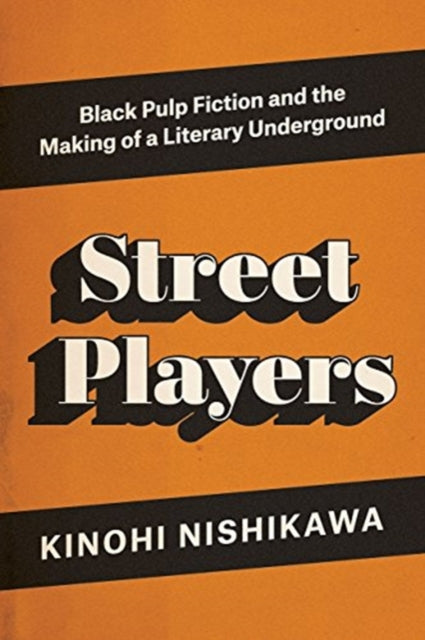
Street Players: Black Pulp Fiction and the Making of a Literary Underground
Street Players: Black Pulp Fiction and the Making of a Literary Underground
💎 Earn 114 Points (£1.14) on this item.
YOU SAVE £1.15
- Condition: Brand new
- UK Delivery times: Usually arrives within 2 - 3 working days
- UK Shipping: Fee starts at £2.39. Subject to product weight & dimension
Bulk ordering. Want 15 or more copies? Get a personalised quote and bigger discounts. Learn more about bulk orders.
Couldn't load pickup availability
- More about Street Players: Black Pulp Fiction and the Making of a Literary Underground
Holloway House was the uncontested center of the black pulp fiction universe for over four decades, specializing in cheap paperbacks with page-turning narratives featuring black protagonists in crime stories, conspiracy thrillers, prison novels, and Westerns. Kinohi Nishikawa argues that black pulp fiction was built on white readers' fears of the feminization of society and the appeal of black masculinity as a way to counter it. From 1973 onward, Holloway House moved away from publishing sleaze for a white audience to publishing solely for black readers.
Format: Paperback / softback
Length: 288 pages
Publication date: 11 January 2019
Publisher: The University of Chicago Press
For over four decades, the Los Angeles publisher Holloway House has held an uncontested position as the epicenter of the black pulp fiction universe. From the late 1960s until its closure in 2008, Holloway House specialized in producing affordable paperback novels that featured compelling narratives with black protagonists in crime stories, conspiracy thrillers, prison novels, and Westerns. This unique genre, distinguished from mainstream American pulp, was characterized by a steadfast reverence for black masculinity. From the iconic works of Iceberg Slims' Pimp to Donald Goines' Never Die Alone, the common thread that bound these books together was a unwavering celebration of black male identity.
In his book, Street Players, Kinohi Nishikawa delves into the origins, reception, and cultural impact of black pulp fiction. He argues that this genre emerged as a response to white readers' anxieties about the feminization of society, and the appeal of black masculinity as a means to counteract this trend. Essentially, black pulp fiction served as the original form of blaxploitation, a marketing strategy aimed at catering to the reactionary fantasies of a white audience. While chauvinism and misogyny remained troubling aspects of this literature, Holloway House began to shift its focus from publishing sleaze for a white audience to exclusively targeting black readers starting in 1973.
The conventional narrative surrounding this literary phenomenon primarily revolves around its destination: the hands of black, male, working-class readers. When Holloway House closed its doors, it became synonymous with genre fiction written by black authors for black readers, a field of cultural production known as the black literary underground. However, as Street Players vividly illustrates, the creation, promotion, and preservation of this cultural authenticity required considerable effort. It was a story of exploitation, where authors, publishers, and marketers worked to shape and promote a genre that was often marginalized and underrepresented.
Despite the challenges and complexities involved, black pulp fiction played a significant role in shaping the cultural landscape of African American literature and popular culture. It provided a platform for black authors to express their perspectives and experiences, challenging the dominant narratives of the time. The genre also resonated with black readers who sought representation and validation in a society that often marginalized and devalued their identities.
In conclusion, Holloway House's legacy as the uncontested center of the black pulp fiction universe is a testament to the power of storytelling and the enduring impact of cultural representation. Through its dedication to producing affordable paperback novels that celebrated black masculinity, Holloway House played a crucial role in shaping the cultural landscape of African American literature and popular culture. While the genre faced challenges and complexities, it remained a testament to the resilience and creativity of black authors and readers who sought to create a space for themselves in a society that often sought to marginalize and oppress them.
Weight: 428g
Dimension: 154 x 230 x 19 (mm)
ISBN-13: 9780226586915
This item can be found in:
UK and International shipping information
UK and International shipping information
UK Delivery and returns information:
- Delivery within 2 - 3 days when ordering in the UK.
- Shipping fee for UK customers from £2.39. Fully tracked shipping service available.
- Returns policy: Return within 30 days of receipt for full refund.
International deliveries:
Shulph Ink now ships to Australia, Belgium, Canada, France, Germany, Ireland, Italy, India, Luxembourg Saudi Arabia, Singapore, Spain, Netherlands, New Zealand, United Arab Emirates, United States of America.
- Delivery times: within 5 - 10 days for international orders.
- Shipping fee: charges vary for overseas orders. Only tracked services are available for most international orders. Some countries have untracked shipping options.
- Customs charges: If ordering to addresses outside the United Kingdom, you may or may not incur additional customs and duties fees during local delivery.