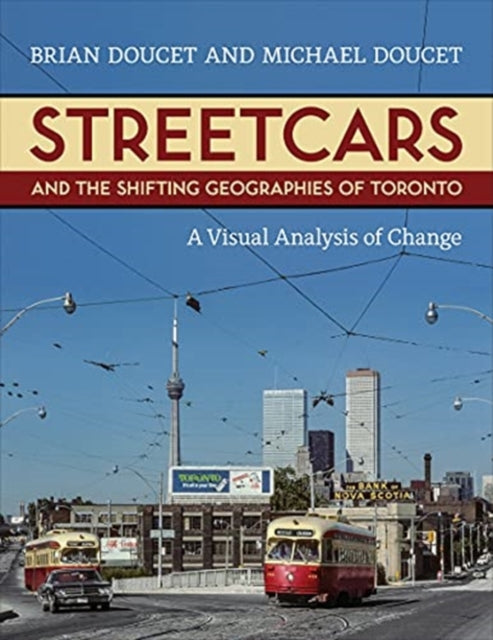
Brian Doucet,Michael Doucet
Streetcars and the Shifting Geographies of Toronto: A Visual Analysis of Change
Streetcars and the Shifting Geographies of Toronto: A Visual Analysis of Change
💎 Earn 138 Points (£1.38) on this item.
YOU SAVE £3.33
- Condition: Brand new
- UK Delivery times: Usually arrives within 2 - 3 working days
- UK Shipping: Fee starts at £2.39. Subject to product weight & dimension
Bulk ordering. Want 15 or more copies? Get a personalised quote and bigger discounts. Learn more about bulk orders.
Couldn't load pickup availability
- More about Streetcars and the Shifting Geographies of Toronto: A Visual Analysis of Change
The book "Streetcars and the Shifting Geographies of Toronto" explores the city's urban transformations through photographs taken by streetcar enthusiasts in the 1960s, revealing a Toronto before gentrification, globalization, and deindustrialization. It offers fresh insights into the city's constant state of flux through re-photography of historic and contemporary images.
Format: Paperback / softback
Length: 320 pages
Publication date: 22 April 2022
Publisher: University of Toronto Press
When examining old photographs of Toronto, it becomes evident that the city's urban, economic, and social geography has undergone a significant transformation over the generations. Historic images of Toronto's streetcar network provide a unique opportunity to explore how the city has evolved from a provincial, industrial metropolis into one of North America's largest and most diverse regions.
Streetcars and the Shifting Geographies of Toronto delves into the city's urban transformations by analyzing photographs taken by streetcar enthusiasts since the 1960s. These photographers, initially driven by an interest in capturing streetcars themselves, inadvertently documented the urban form, function, and social geographies of Toronto. Today, their images offer a unique perspective on the everyday life of the city, revealing aspects that were previously unseen. These historic photographs capture a Toronto before gentrification, globalization, and deindustrialization. Each image has been re-photographed to provide fresh insights into a city that is constantly in flux.
Beautifully illustrated, this unique book offers a comprehensive understanding of how Toronto has changed and the underlying forces that have shaped these urban shifts. The visual exploration of historic and contemporary images from various parts of the city helps to explain how the major forces shaping the city affect its form, functions, neighborhoods, and public spaces.
By examining these photographs, we gain a deeper appreciation for the city's rich history and the ongoing processes that continue to shape its future. The streetcar network, once a vital part of Toronto's transportation system, serves as a symbol of the city's past and the changes it has undergone. Through the lens of these images, we witness the evolution of urban landscapes, the growth of neighborhoods, and the transformation of public spaces.
Streetcars and the Shifting Geographies of Toronto is a valuable resource for anyone interested in understanding the city's past, present, and future. It provides a visual narrative that complements written accounts, allowing readers to engage with the city's geography in a more immersive and interactive way. Whether you are a resident of Toronto or a visitor, this book offers a glimpse into the city's dynamic and ever-changing landscape, shedding light on the forces
The city of Toronto has undergone significant changes in its urban, economic, and social geography over the years. Historic photographs of the city's streetcar network offer a unique opportunity to examine these transformations and the forces that have shaped its development.
Streetcars and the Shifting Geographies of Toronto, a book by photographer and urban planner David Lebovic, explores the city's urban transformations through an analysis of photographs taken by streetcar enthusiasts since the 1960s. These photographers were not initially interested in recording the urban form, function, or social geographies of Toronto; rather, their main goal was to photograph the streetcars themselves. However, their images inadvertently captured the everyday life in the city, revealing aspects that were previously unseen.
The book begins with an introduction that provides an overview of the history of streetcars in Toronto and the role they played in shaping the city's development. It then delves into the city's urban transformations through an analysis of photographs taken by streetcar enthusiasts. Each chapter focuses on a specific period in the city's history, such as the 1960s, 1970s, and 1980s, and explores the changes that occurred during that time.
The photographs in the book are accompanied by essays that provide context. These essays explore the social, economic, and cultural factors that shaped the city's development and the role that streetcars played in shaping these changes. They also discuss the impact of gentrification, globalization, and deindustrialization on the city's geography and the role that streetcars played in mitigating these forces.
One of the key themes of the book is the impact of technology on the city's geography. The introduction notes that the rise.
The city of Toronto has undergone significant changes in its urban, economic, and social geography over the years. Historic photographs of the city's streetcar network offer a unique opportunity to examine these transformations and the forces that have shaped its development.
Streetcars and the Shifting Geographies of Toronto, a book by photographer and urban planner David Lebovic, explores the city's urban transformations through an analysis of photographs taken by streetcar enthusiasts since the 1960s. These photographers were not initially interested in recording the urban form, function, or social geographies of Toronto; rather, their main goal was to photograph the streetcars themselves. However, their images inadvertently captured the everyday life in the city, revealing aspects that were previously unseen.
The book begins with an introduction that provides an overview of the history of streetcars in Toronto and the role they played in shaping the city's development. It then delves into the city's urban transformations through an analysis of photographs taken by streetcar enthusiasts. Each chapter focuses on a specific period.
The photographs in the book are accompanied by essays that provide. These essays explore the social, economic, and cultural factors that shaped the city's development and the role that streetcars played in shaping these changes. They also discuss the impact of gentrification, globalization, and deindustrialization on the city's geography and the role that streetcars played in mitigating these.
One of the key themes of the book is the impact of technology on the city's geography. The introduction notes that the.
The city of Toronto has undergone significant changes in its urban, economic, and social geography over the years. Historic photographs of the city's streetcar network offer a unique opportunity to examine these transformations and the forces that have shaped its development.
Streetcars and the Shifting Geographies of Toronto, a book by photographer and urban planner David Lebovic, explores the city's urban transformations through an analysis of photographs taken by streetcar enthusiasts since the 1960s. These photographers were not initially interested in recording the urban form, function, or social geographies of Toronto; rather, their main goal was to photograph the streetcars themselves. However, their images inadvertently captured the everyday life in the city, revealing aspects that were previously unseen.
The book begins with an introduction that provides an overview of the history of streetcars in Toronto and the role they played in shaping the city's development. It then delves into the city's urban transformations through an analysis of photographs taken by streetcar enthusiasts. Each chapter focuses on a specific period in the city's history, such as the 1960s, 197, and 19800s, and explores the changes that occurred during that time.
The photographs in the book are accompanied by essays that provide. These essays explore the social, economic, and cultural factors that shaped the city's development and the role that streetcars played in shaping these changes. They also discuss the impact of gentrification, globalization, and deindustrialization on the city's geography and the role that streetcars played in mitigating these.
One of the key themes of the book is the impact of technology on the city's geography. The introduction notes that the.
The city of Toronto has undergone significant changes in its urban, economic, and social geography over the years. Historic photographs of the city's streetcar network offer a unique opportunity to examine these transformations and the forces that have shaped its development.
Streetcars and the Shifting Geographies of Toronto, a book by photographer and urban planner David Lebovic, explores the city's urban transformations through an analysis of photographs taken by streetcar enthusiasts since the 1960s. These photographers were not initially interested in recording the urban form, function, or social geographies of Toronto; rather, their main goal was to photograph the streetcars themselves. However, their images inadvertently captured the everyday life in the city, revealing aspects that were previously unseen.
The book begins with an introduction that provides an overview of the history of streetcars in Toronto and the role they played in shaping the city's development. It then delves into the city's urban transformations through an analysis of photographs taken by streetcar enthusiasts. Each chapter focuses on a specific period in the city's history, such as the 1960s, 19700s, and 19800s, and explores the changes that occurred during that time.
The photographs in the book are accompanied by essays that provide. These essays explore the social, economic, and cultural factors that shaped the city's development and the role that streetcars played in shaping these changes. They also discuss the impact of gentrification, globalization, and deindustrialization on the city's geography and the role that streetcars played in mitigating these.
One of the key themes of the book is the impact of technology on the city's geography. The introduction notes that the.
The city of Toronto has undergone significant changes in its urban, economic, and social geography over the years. Historic photographs of the city's streetcar network offer a unique opportunity to examine these transformations and the forces that have shaped its development.
Streetcars and the Shifting Geographies of Toronto, a book by photographer and urban planner David Lebovic, explores the city's urban transformations through an analysis of photographs taken by streetcar enthusiasts since the 1960s. These photographers were not initially interested in recording the urban form, function, or social geographies of Toronto; rather, their main goal was to photograph the streetcars themselves. However, their images inadvertently captured the everyday life in the city, revealing aspects that were previously unseen.
The book begins with an introduction that provides an overview of the history of streetcars in Toronto and the role they played in shaping the city's development. It then delves into the city's urban transformations through an analysis of photographs taken by streetcar enthusiasts. Each chapter focuses on a specific period in the city's history, such as the 1960s, 1970s, and 1980s, and explores the changes that occurred during that time.
The photographs in the book are accompanied by essays that provide. These essays explore the social, economic, and cultural factors that shaped the city's development and the role that streetcars played in shaping these changes. They also discuss the impact of gentrification, globalization, and deindustrialization on the city's geography and the role that streetcars played in mitigating these.
One of the key themes of the book is the impact of technology on the city's geography. The introduction notes that the.
The city of Toronto has undergone significant changes in its urban, economic, and social geography over the years. Historic photographs of the city's streetcar network offer a unique opportunity to examine these transformations and the forces that have shaped its development.
Streetcars and the Shifting Geographies of Toronto, a book by photographer and urban planner David Lebovic, explores the city's urban transformations through an analysis of photographs taken by streetcar enthusiasts since the 1960s. These photographers were not initially interested in recording the urban form, function, or social geographies of Toronto; rather, their main goal was to photograph the streetcars themselves. However, their images inadvertently captured the everyday life in the city, revealing aspects that were previously unseen.
The book begins with an introduction that provides an overview of the history of streetcars in Toronto and the role they played in shaping the city's development. It then delves into the city's urban transformations through an analysis of photographs taken by streetcar enthusiasts. Each chapter focuses on a specific period in the city's history, such as the 1960s, 1970s, and 1980s, and explores the changes that occurred during that time.
The photographs in the book are accompanied by essays that provide. These essays explore the social, economic, and cultural factors that shaped the city's development and the role that streetcars played in shaping these changes. They also discuss the impact of gentrification, globalization, and deindustrialization on the city's geography and the role that streetcars played in mitigating these.
One of the key themes of the book is the impact of technology on the city's geography. The introduction notes that the.
The city of Toronto has undergone significant changes in its urban, economic, and social geography over the years. Historic photographs of the city's streetcar network offer a unique opportunity to examine these transformations and the forces that have shaped its development.
Streetcars and the Shifting Geographies of Toronto, a book by photographer and urban planner David Lebovic, explores the city's urban transformations through an analysis of photographs taken by streetcar enthusiasts since the 1960s. These photographers were not initially interested in recording the urban form, function, or social geographies of Toronto; rather, their main goal was to photograph the streetcars themselves. However, their images inadvertently captured the everyday life in the city, revealing aspects that were previously unseen.
The book begins with an introduction that provides an overview of the history of streetcars in Toronto and the role they played in shaping the city's development. It then delves into the city's urban transformations through an analysis of photographs taken by streetcar enthusiasts. Each chapter focuses on a specific period in the city's history, such as the 1960s, 1970s, and 1980s, and explores the changes that occurred during that time.
The photographs in the book are accompanied by essays that provide. These essays explore the social, economic, and cultural factors that shaped the city's development and the role that streetcars played in shaping these changes. They also discuss the impact of gentrification, globalization, and deindustrialization on the city's geography and the role that streetcars played in mitigating these.
One of the key themes of the book is the impact of technology on the city's geography. The introduction notes that the.
Weight: 1060g
Dimension: 279 x 216 x 28 (mm)
ISBN-13: 9781487500108
This item can be found in:
UK and International shipping information
UK and International shipping information
UK Delivery and returns information:
- Delivery within 2 - 3 days when ordering in the UK.
- Shipping fee for UK customers from £2.39. Fully tracked shipping service available.
- Returns policy: Return within 30 days of receipt for full refund.
International deliveries:
Shulph Ink now ships to Australia, Belgium, Canada, France, Germany, Ireland, Italy, India, Luxembourg Saudi Arabia, Singapore, Spain, Netherlands, New Zealand, United Arab Emirates, United States of America.
- Delivery times: within 5 - 10 days for international orders.
- Shipping fee: charges vary for overseas orders. Only tracked services are available for most international orders. Some countries have untracked shipping options.
- Customs charges: If ordering to addresses outside the United Kingdom, you may or may not incur additional customs and duties fees during local delivery.