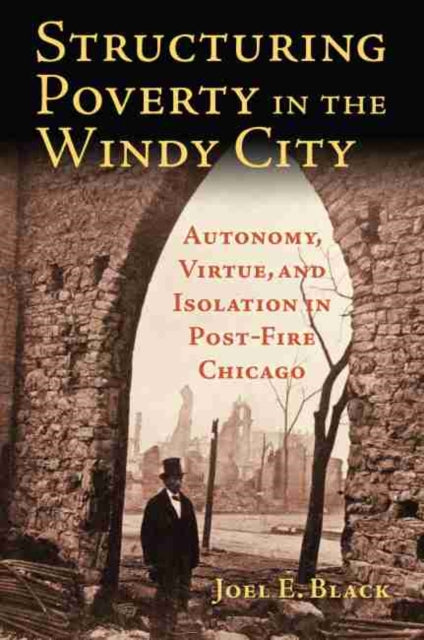
Joel E. Black
Structuring Poverty in the Windy City: Autonomy, Virtue, and Isolation in Post-Fire Chicago
Structuring Poverty in the Windy City: Autonomy, Virtue, and Isolation in Post-Fire Chicago
💎 Earn 145 Points (£1.45) on this item.
YOU SAVE £3.79
- Condition: Brand new
- UK Delivery times: Usually arrives within 2 - 3 working days
- UK Shipping: Fee starts at £3.89. Subject to product weight & dimension
Bulk ordering. Want 15 or more copies? Get a personalised quote and bigger discounts. Learn more about bulk orders.
Couldn't load pickup availability
- More about Structuring Poverty in the Windy City: Autonomy, Virtue, and Isolation in Post-Fire Chicago
The Great Chicago Fire of 1871 destroyed 2,600 acres and left tens of thousands without housing, food, fuel, or clothing. The mayor handed all relief duties to the commercial elite at the Chicago Relief and Aid Society, leading to a new form of social and quasi-governmental authority based on poverty. This authority expanded to jobless men, workingwomen, and southern African American migrants, each defined by and defining poverty. Joel E. Black's book "Structuring Poverty in the Windy City" reveals the central role of the impoverished in the creation of a legal order and the effect of social ideas on legal thinking.
Format: Paperback / softback
Length: 256 pages
Publication date: 30 May 2019
Publisher: University Press of Kansas
The Great Chicago Fire of October 1871, a devastating event that left a lasting impact on the city, resulted in the destruction of 2,600 acres and left tens of thousands of people without essential resources such as housing, food, fuel, and clothing. In the aftermath of this tragedy, the mayor of Chicago, faced with the daunting task of providing relief to the affected population, made a critical decision that would shape the city's recovery. He handed all relief duties to the commercial elite at the Chicago Relief and Aid Society. This decision, as Joel E. Black's provocative study reveals, was a pivotal one, as it ensured that the physical rebuilding of Chicago would be coupled with an equally ambitious rebuilding of the city's poor. Reformers, social scientists, and journalists set out to interpret and define the jobless, wayward, and migrating populations that emerged in the aftermath of the fire. What emerged from this effort was a new form of social and quasi-governmental authority based on poverty. This authority, as Black's book titled "Structuring Poverty in the Windy City" explores, was a web of political and legal theories and practices rooted in the conditions of the poor. It formed the basis city's social and legal landscape, shaping the lives of countless individuals and families.
Over the years, the process initiated by the Relief and Aid Society expanded outward, encompassing jobless men, workingwomen, and even southern African American migrants. Each of these groups was defined by and defined poverty, creating a complex web of social and economic structures. Black's book, by drawing on local newspapers, magazines, commissions, legal decisions, and documents from archives in Chicago, tells the stories of "tramps," sex workers, and migrants caught within the structures of poverty. He also describes the legal and social order that compelled their reform to the strictures of that same order. As Black's book highlights, it reveals the central role.
Weight: 394g
Dimension: 154 x 233 x 15 (mm)
ISBN-13: 9780700628018
UK and International shipping information
UK and International shipping information
We deliver throughout the United Kingdom and to 128 countries and territories worldwide, including the United States, Australia, Canada, Germany, Spain and France.