Shulph Ink
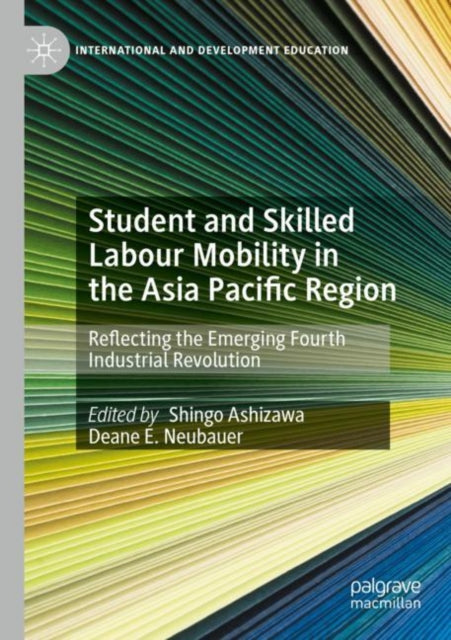
Student and Skilled Labour Mobility in the Asia Pacific Region: Reflecting the Emerging Fourth Industrial Revolution
Student and Skilled Labour Mobility in the Asia Pacific Region: Reflecting the Emerging Fourth Industrial Revolution
💎 Earn 578 Points (£5.78) on this item.
We can order this item for you. Delivery usually takes about 4 to 6 weeks.
This item is not held in our immediate stock. We will order it for you after checkout.
Estimated delivery: About 4 to 6 weeks
YOU SAVE £24.36
- Condition: Brand new
- UK Delivery times: Usually arrives within 2 - 3 working days
- UK Shipping: Fee starts at £2.39. Subject to product weight & dimension
Bulk ordering. Want 15 or more copies? Get a personalised quote and bigger discounts. Learn more about bulk orders.
Couldn't load pickup availability
- More about Student and Skilled Labour Mobility in the Asia Pacific Region: Reflecting the Emerging Fourth Industrial Revolution
Student mobility in the Asia Pacific Region is undergoing significant change due to the Fourth Industrial Revolution, with AI transforming work and creating new opportunities and challenges. This volume explores the implications of this change on higher education, including its impact on national and regional economies and global engagement.
Format: Paperback / softback
Length: 232 pages
Publication date: 02 February 2024
Publisher: Springer International Publishing AG
Student mobility has become a significant aspect of higher education in the Asia Pacific Region over the past two decades, driven by the rapid increase in the use of artificial intelligence (AI) and the "Fourth Industrial Revolution" or Work 4.0. This process is expected to have profound changes in the ways that work is performed and who does it, and this volume explores various dimensions of this process, examining various aspects of the process as they are affecting national and regional economies and producing a wide variety of engagements with the global economy as a whole.
One of the key challenges facing student mobility in the Asia Pacific Region is the need to ensure that students are able to access quality education and training that will prepare them for the job market. This requires a significant investment in education infrastructure, including schools, colleges, and universities, as well as in the training of teachers and other educational professionals. However, many countries in the region face significant challenges in terms of funding education, and this has led to a shortage of qualified teachers and other educational professionals.
Another challenge facing student mobility in the Asia Pacific Region is the need to address the issue of brain drain. Brain drain refers to the phenomenon of highly skilled individuals leaving their home countries to work in other countries, often in developed countries. This can have a negative impact on the development of the home country's economy, as it can lead to a loss of talent and expertise. To address this issue, many countries in the region are implementing policies to encourage brain drain, such as offering tax incentives, scholarships, and other forms of financial assistance to students who choose to study abroad.
Despite these challenges, student mobility in the Asia Pacific Region has many benefits. For example, it can help to promote cultural exchange and understanding between different countries, and it can also help to improve the quality of education and training available in the region. It can also help to create new opportunities for students and graduates, and it can help to promote economic growth and development in the region.
One of the ways that student mobility can be promoted in the Asia Pacific Region is through the use of scholarships and other forms of financial assistance. Many countries in the region offer scholarships to students who wish to study abroad, and these scholarships can cover a wide range of expenses, including tuition fees, living expenses, and travel expenses. However, many students in the region are unable to access these scholarships due to financial constraints.
To address this issue, many governments in the region are implementing policies to increase the availability of scholarships and other forms of financial assistance. For example, some governments are offering tax incentives to companies that provide scholarships to students, and some governments are providing scholarships to students who are studying in specific fields, such as science and technology.
Another way that student mobility can be promoted in the Asia Pacific Region is through the use of exchange programs. Exchange programs allow students to study abroad for a period of time, and they can provide them with the opportunity to learn about different cultures and languages. Exchange programs can also help to improve the quality of education and training available in the region, as students can learn from their peers and teachers in other countries.
However, there are also some challenges associated with student mobility in the Asia Pacific Region. For example, some students may face cultural barriers when studying abroad, and they may also face language barriers. These barriers can make it difficult for students to integrate into the local community and to succeed in their studies.
To address these challenges, many governments in the region are implementing policies to promote cultural exchange and language learning. For example, some governments are offering language courses to students who wish to study abroad, and some governments are providing cultural exchange programs to students who are studying in other countries.
In addition to promoting student mobility, the Asia Pacific Region is also facing a number of other challenges related to higher education. For example, the region is experiencing a rapid increase in the number of students, and this has led to a shortage of educational infrastructure and resources. This has led to a number of challenges, such as overcrowded classrooms, poor quality of education, and a lack of access to education for marginalized groups.
To address these challenges, many governments in the region are implementing policies to increase the number of educational institutions and to improve the quality of education and training available. For example, some governments are investing in the construction of new schools and colleges, and some governments are investing in the training of teachers and other educational professionals.
In conclusion, student mobility has become a significant aspect of higher education in the Asia Pacific Region over the past two decades, driven by the rapid increase in the use of artificial intelligence (AI) and the "Fourth Industrial Revolution" or Work 4.0. This process is expected to have profound changes in the ways that work is performed and who does it, and it has many benefits, such as promoting cultural exchange and understanding, improving the quality of education and training available, and creating new opportunities for students and graduates. However, there are also some challenges associated with student mobility in the region, and these challenges must be addressed in order to ensure that student mobility continues to be a positive force in the region's higher education system.
Dimension: 210 x 148 (mm)
ISBN-13: 9783031160677
Edition number: 1st ed. 2023
This item can be found in:
UK and International shipping information
UK and International shipping information
UK Delivery and returns information:
- Delivery within 2 - 3 days when ordering in the UK.
- Shipping fee for UK customers from £2.39. Fully tracked shipping service available.
- Returns policy: Return within 30 days of receipt for full refund.
International deliveries:
Shulph Ink now ships to Australia, Belgium, Canada, France, Germany, Ireland, Italy, India, Luxembourg Saudi Arabia, Singapore, Spain, Netherlands, New Zealand, United Arab Emirates, United States of America.
- Delivery times: within 5 - 10 days for international orders.
- Shipping fee: charges vary for overseas orders. Only tracked services are available for most international orders. Some countries have untracked shipping options.
- Customs charges: If ordering to addresses outside the United Kingdom, you may or may not incur additional customs and duties fees during local delivery.