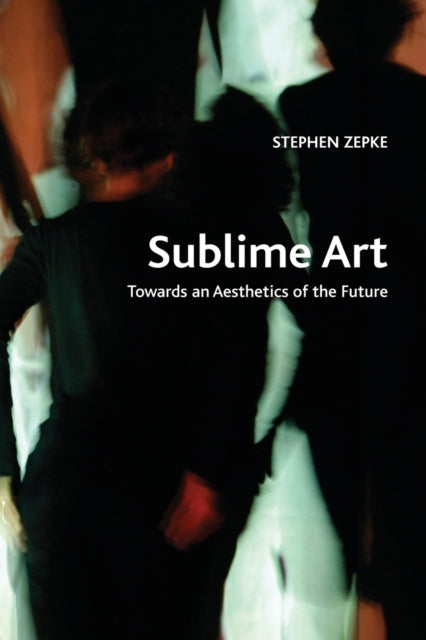
Stephen Zepke
Sublime Art: Towards an Aesthetics of the Future
Sublime Art: Towards an Aesthetics of the Future
💎 Earn 118 Points (£1.18) on this item.
YOU SAVE £7.22
- Condition: Brand new
- UK Delivery times: Usually arrives within 2 - 3 working days
- UK Shipping: Fee starts at £2.39. Subject to product weight & dimension
Bulk ordering. Want 15 or more copies? Get a personalised quote and bigger discounts. Learn more about bulk orders.
Couldn't load pickup availability
- More about Sublime Art: Towards an Aesthetics of the Future
Stephen Zepke explores the concept of sublime art in the works of Jean-Francois Lyotard, Gilles Deleuze, Felix Guattari, Jacques Derrida, Jacques Ranciere, and the recent Speculative Realism movement.
Format: Paperback / softback
Length: 176 pages
Publication date: 28 February 2019
Publisher: Edinburgh University Press
Stephen Zepke delves into the evolution of the concept of sublime art across the works of Jean-Francois Lyotard, Gilles Deleuze, Felix Guattari, Jacques Derrida, Jacques Ranciere, and the contemporary Speculative Realism movement.
Jean-Francois Lyotard, a prominent philosopher, explored the notion of the sublime in his writings, emphasizing its transformative power and its ability to challenge traditional notions of beauty and taste. He argued that the sublime was not limited to the physical world but could also be found in the realm of ideas and language.
Gilles Deleuze, another influential philosopher, took a different approach to the sublime. He saw it as a complex and multifaceted concept that could be found in a wide range of artistic and cultural practices, including literature, cinema, and philosophy itself. Deleuze argued that the sublime was not just a matter of aesthetic experience but also a political and social force that could challenge established power structures and hierarchies.
Felix Guattari, a psychoanalyst and philosopher, also contributed to the study of the sublime. He saw the sublime as a product of the human mind's ability to imagine and create new worlds, which could be both terrifying and awe-inspiring. Guattari argued that the sublime was not just a matter of individual experience but also a collective and cultural phenomenon that could shape society and politics.
Jacques Derrida, a philosopher of language and culture, explored the relationship between the sublime and power in his writings. He argued that the sublime was not just a matter of aesthetic experience but also a political and ethical force that could challenge the dominant power structures of society. Derrida saw the sublime as a potential source of resistance and transformation.
Jacques Ranciere, a philosopher of politics and culture, also explored the sublime in his writings. He saw the sublime as a product of the modern world's complex and fragmented nature, which could create a sense of disorientation and confusion. Ranciere argued that the sublime was not just a matter of individual experience but also a political and social force that could shape society and politics.
The recent Speculative Realism movement, which emerged in the late 20th century, has also contributed to the study of the sublime. This movement, which is influenced by a range of thinkers, including Deleuze, Guattari, and Ranciere, emphasizes the role of imagination and creativity in shaping our understanding of the world. Speculative Realism argues that the sublime is not just a matter of aesthetic experience but also a political and ethical force that can challenge established power structures and hierarchies.
In conclusion, the concept of the sublime has evolved over time, and it has been explored by a range of thinkers from different fields, including philosophy, literature, cinema, and politics. The sublime has been seen as a source of aesthetic pleasure, political and social resistance, and a means of shaping our understanding of the world. The recent Speculative Realism movement has further emphasized the role of imagination and creativity in shaping our understanding of the sublime.
Weight: 456g
Dimension: 232 x 182 x 10 (mm)
ISBN-13: 9781474444118
UK and International shipping information
UK and International shipping information
UK Delivery and returns information:
- Delivery within 2 - 3 days when ordering in the UK.
- Shipping fee for UK customers from £2.39. Fully tracked shipping service available.
- Returns policy: Return within 30 days of receipt for full refund.
International deliveries:
Shulph Ink now ships to Australia, Belgium, Canada, France, Germany, Ireland, Italy, India, Luxembourg Saudi Arabia, Singapore, Spain, Netherlands, New Zealand, United Arab Emirates, United States of America.
- Delivery times: within 5 - 10 days for international orders.
- Shipping fee: charges vary for overseas orders. Only tracked services are available for most international orders. Some countries have untracked shipping options.
- Customs charges: If ordering to addresses outside the United Kingdom, you may or may not incur additional customs and duties fees during local delivery.