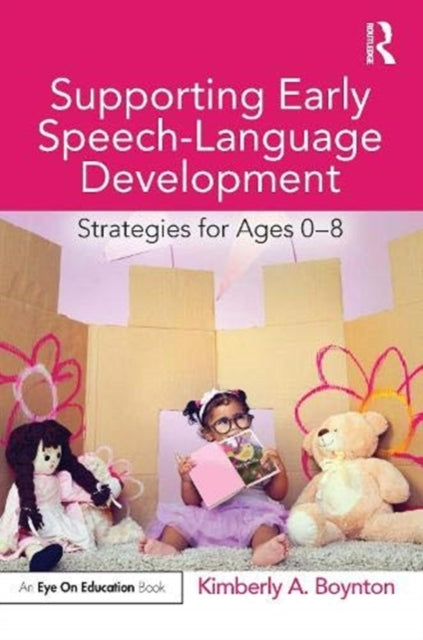
Kimberly ABoynton
Supporting Early Speech-Language Development: Strategies for Ages 0-8
Supporting Early Speech-Language Development: Strategies for Ages 0-8
💎 Earn 169 Points (£1.69) on this item.
We can order this item for you. Delivery usually takes about 4 to 6 weeks.
This item is not held in our immediate stock. We will order it for you after checkout.
Estimated delivery: About 4 to 6 weeks
YOU SAVE £2.02
- Condition: Brand new
- UK Delivery times: Usually arrives within 2 - 3 working days
- UK Shipping: Fee starts at £2.39. Subject to product weight & dimension
Bulk ordering. Want 15 or more copies? Get a personalised quote and bigger discounts. Learn more about bulk orders.
Couldn't load pickup availability
- More about Supporting Early Speech-Language Development: Strategies for Ages 0-8
This book provides guidance on building foundations for a strong communication system, distinguishing typical and disordered speech and language, and developing a deep understanding of the brain and language development connection. It features easy-to-implement strategies for working with parents and speech-language pathologists, educators, to support healthy communication and navigate any stumbling blocks in the early childhood classroom.
\n Format: Paperback / softback
\n Length: 124 pages
\n Publication date: 22 April 2021
\n Publisher: Taylor & Francis Ltd
\n
Discover the key to fostering language development in children during their crucial early years! In this comprehensive guide, you'll delve into the world of communication, exploring how to establish robust foundations for a strong language system. You'll also gain valuable insights into recognizing typical and disordered speech and language patterns, as well as comprehending the intricate relationship between the brain and language development. With practical guidance and actionable strategies, educators will discover how to collaborate effectively with parents and speech-language pathologists, creating an environment that supports healthy communication and nurtures linguistic growth. Whether you're a teacher, parent, or professional working with young children, this book is your ultimate resource for unlocking the full potential of language acquisition.
Introduction:
Language development is a crucial milestone in a child's journey, and it begins in the early years. By creating supportive language learning environments, we can help children develop the skills they need to communicate effectively and succeed in life. In this book, we will explore how to build foundations for a strong communication system, distinguish between typical and disordered speech and language, and develop a deep understanding of the brain and language development connection.
Building Foundations for a Strong Communication System:
The first step in fostering language development is to create a nurturing and supportive environment. This includes providing children with a rich vocabulary, engaging in meaningful conversations, and using appropriate language models. Parents and caregivers can play a vital role in this by reading to children, singing songs, and using simple language to communicate with them.
Educators can also contribute to building a strong communication system by incorporating language-rich activities into their curriculum. This can include storytelling, role-playing, and interactive games that encourage children to express themselves and develop their language skills.
Recognizing Typical and Disordered Speech and Language Patterns:
It is important to recognize that speech and language development can vary widely among children. While some children may develop language skills quickly, others may struggle. Recognizing typical and disordered speech and language patterns can help educators identify any potential issues and provide appropriate support.
Common speech and language disorders include articulation disorders, receptive disorders, and expressive disorders. Articulation disorders involve difficulties with producing sounds, while receptive disorders involve difficulties with understanding and processing language. Expressive disorders involve difficulties with producing and using language.
Educators can use various assessment tools to identify speech and language disorders, including standardized tests, observation, and clinical evaluation. Once a disorder is identified, educators can work with parents and speech-language pathologists to develop a treatment plan that meets the child's individual needs.
Understanding the Brain and Language Development Connection:
The brain is a complex organ that plays a critical role in language development. Research has shown that language development is influenced by a variety of factors, including genetics, environment, and experience. Understanding the brain and language development connection can help educators develop effective strategies for supporting language development.
For example, research has shown that early exposure to language can have a significant impact on language development. Children who are exposed to a variety of languages and cultures from a young age are more likely to develop strong language skills. Additionally, research has shown that exercise can improve brain function and support language development.
Educators can incorporate activities that promote brain function, such as physical activity, music, and art, into their curriculum to support language development. They can also work with parents and speech-language pathologists to develop home-based activities that promote language development, such as reading and singing.
Collaborating with Parents and Speech-Language Pathologists:
Collaborating with parents and speech-language pathologists is essential for supporting language development in children. Parents can provide valuable information about their child's language development, including any concerns they may have. Speech-language pathologists can provide specialized expertise and support to children with speech and language disorders.
Educators can work with parents and speech-language pathologists to develop a communication plan that meets the child's individual needs. This can include providing parents with resources and strategies for supporting their child's language development at home, as well as working with speech-language pathologists to develop and implement a treatment plan.
In conclusion, fostering language development in children during their early years is crucial for their future success. By creating supportive language learning environments, recognizing typical and disordered speech and language patterns, and understanding the brain and language development connection, educators can help children develop the skills they need to communicate effectively and succeed in life. By collaborating with parents and speech-language pathologists, educators can provide children with the support they need to reach their full language potential.
\n Weight: 208g\n
Dimension: 152 x 227 x 12 (mm)\n
ISBN-13: 9780367540654\n \n
UK and International shipping information
UK and International shipping information
UK Delivery and returns information:
- Delivery within 2 - 3 days when ordering in the UK.
- Shipping fee for UK customers from £2.39. Fully tracked shipping service available.
- Returns policy: Return within 30 days of receipt for full refund.
International deliveries:
Shulph Ink now ships to Australia, Belgium, Canada, France, Germany, Ireland, Italy, India, Luxembourg Saudi Arabia, Singapore, Spain, Netherlands, New Zealand, United Arab Emirates, United States of America.
- Delivery times: within 5 - 10 days for international orders.
- Shipping fee: charges vary for overseas orders. Only tracked services are available for most international orders. Some countries have untracked shipping options.
- Customs charges: If ordering to addresses outside the United Kingdom, you may or may not incur additional customs and duties fees during local delivery.