Danielle S. Rudes
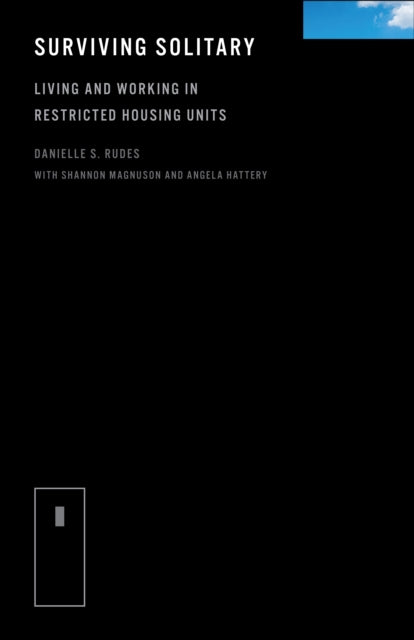
Surviving Solitary: Living and Working in Restricted Housing Units
Surviving Solitary: Living and Working in Restricted Housing Units
💎 Earn 83 Points (£0.83) on this item.
YOU SAVE £3.34
- Condition: Brand new
- UK Delivery times: Usually arrives within 2 - 3 working days
- UK Shipping: Fee starts at £2.39. Subject to product weight & dimension
Bulk ordering. Want 15 or more copies? Get a personalised quote and bigger discounts. Learn more about bulk orders.
Couldn't load pickup availability
- More about Surviving Solitary: Living and Working in Restricted Housing Units
In her book "Surviving Solitary," Danielle S. Rudes provides an inside look at restricted housing units (RHUs) in the US prison system, highlighting the harm they cause to residents and staff. Rudes argues for the improvement of RHUs over harm and calls for more humane and dignified treatment.
Format: Paperback / softback
Length: 272 pages
Publication date: 22 March 2022
Publisher: Stanford University Press
Solitary confinement is a harsh and controversial practice that is used in prisons across the United States, with estimates suggesting that anywhere from 20 to 40 percent of the prison population will spend time in these restricted housing units. These units are designed to provide enhanced security measures and are under the constant control and supervision of thousands of staff members. While it is commonly believed that solitary confinement is reserved for the most dangerous and violent offenders, it is also used in response to minor infractions, such as disobedience or disrespect.
In her book "Surviving Solitary," Danielle S. Rudes provides an unprecedented look inside these restricted housing units and a powerful call to address the intentions and realities of these structures. Through the narratives she presents, we witness the slow and systematic damage that solitary confinement inflicts upon those living and working inside. This damage is manifested in increased risks, arbitrary rules, and strained or absent social interactions, which can have profound psychological and physical consequences.
Rudes makes a compelling case that we must prioritize improvement over harm when it comes to solitary confinement. Residents of these units uniformly call for more humane and dignified treatment, while staff members yearn for more expansive control over their work. However, as Rudes demonstrates, there is also fierce resilience among residents and staff, as well as across the communities they forge. This resilience is a testament to the human spirit and the hope that people can have a different future, even in the most challenging of circumstances.
Solitary confinement is a complex issue that requires a multifaceted approach. It is essential to address the underlying causes of behavior that lead to solitary confinement, such as mental health issues and substance abuse. Additionally, it is important to ensure that solitary confinement is used only as a last resort and that alternative measures are in place to address behavior that poses a risk to the safety of others.
Furthermore, it is crucial to provide proper training and support to staff members who work in solitary confinement units. These staff members are often faced with challenging and demanding situations, and they need the resources and support to provide humane and effective care to their residents.
In conclusion, solitary confinement is a harsh and controversial practice that has profound consequences for those who are subjected to it. While it is commonly believed to be a punishment for only the most dangerous behaviors, it is also used in response to minor infractions. It is essential to prioritize improvement over harm and to address the intentions and realities of solitary confinement through a multifaceted approach that includes addressing the underlying causes of behavior, ensuring that solitary confinement is used only as a last resort, providing proper training and support to staff members, and advocating for policies that prioritize human rights and dignity.
Dimension: 216 x 140 (mm)
ISBN-13: 9781503631236
This item can be found in:
UK and International shipping information
UK and International shipping information
UK Delivery and returns information:
- Delivery within 2 - 3 days when ordering in the UK.
- Shipping fee for UK customers from £2.39. Fully tracked shipping service available.
- Returns policy: Return within 30 days of receipt for full refund.
International deliveries:
Shulph Ink now ships to Australia, Belgium, Canada, France, Germany, Ireland, Italy, India, Luxembourg Saudi Arabia, Singapore, Spain, Netherlands, New Zealand, United Arab Emirates, United States of America.
- Delivery times: within 5 - 10 days for international orders.
- Shipping fee: charges vary for overseas orders. Only tracked services are available for most international orders. Some countries have untracked shipping options.
- Customs charges: If ordering to addresses outside the United Kingdom, you may or may not incur additional customs and duties fees during local delivery.