JustinSchon
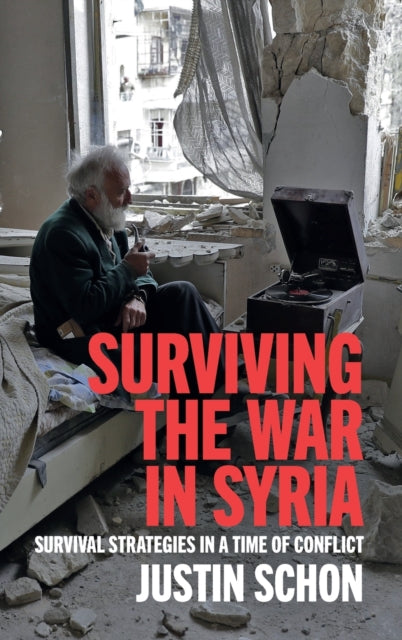
Surviving the War in Syria: Survival Strategies in a Time of Conflict
Surviving the War in Syria: Survival Strategies in a Time of Conflict
💎 Earn 174 Points (£1.74) on this item.
We can order this item for you. Delivery usually takes about 4 to 6 weeks.
This item is not held in our immediate stock. We will order it for you after checkout.
Estimated delivery: About 4 to 6 weeks
YOU SAVE £2.07
- Condition: Brand new
- UK Delivery times: Usually arrives within 2 - 3 working days
- UK Shipping: Fee starts at £2.39. Subject to product weight & dimension
Bulk ordering. Want 15 or more copies? Get a personalised quote and bigger discounts. Learn more about bulk orders.
Couldn't load pickup availability
- More about Surviving the War in Syria: Survival Strategies in a Time of Conflict
Over half of Syria's pre-war population has been displaced due to civil war, with migration being just one option for self-protection. This study highlights the need to consider a broader range of strategies, such as fighting, protesting, collaborating, or hiding, and provides a microanalysis of civilian self-protection strategies in conflict zones.
Format: Hardback
Length: 246 pages
Publication date: 08 October 2020
Publisher: Cambridge University Press
It is estimated that over half of Syria's pre-war population has been displaced from their homes, with some having moved abroad and many remaining in the country despite the threats posed by civil war from Bashar Assad's government, ISIS, foreign intervention, and a proliferation of rebel groups and militias. Despite this, migration is just one option out of a broad set of potential self-protection strategies available to civilians, with other strategies including fighting, protesting, collaborating, or hiding. In this study, Justin Schon emphasises that civilian behaviour in conflict zones includes repertoires of survival strategies, instead of migration alone. Providing a microanalysis of civilian self-protection strategies during armed conflict in Syria, Schon draws on ten months of fieldwork in Turkey, Jordan, Kenya, and the United States, with over two hundred structured interviews with Syrian refugees. Exploring how civilians select specific survival strategies, their motives and opportunities, he reveals questions which have the potential to guide new research on civil wars and affect how we think about other survival strategies, from political, violent, to environmental threats.
Introduction:
The ongoing civil war in Syria has resulted in the displacement of millions of people, with over half of the pre-war population estimated to have been forced from their homes. This displacement has led to a significant humanitarian crisis, with millions seeking refuge in neighboring countries and many remaining in the country despite the ongoing threats posed by various actors, including Bashar Assad's government, ISIS, foreign intervention, and rebel groups and militias.
Migration as a Self-Protection Strategy:
Migration is one of the most common self-protection strategies used by civilians in conflict zones. It involves leaving one's home and seeking refuge in a safer location, often in a neighboring country. For Syrian refugees, migration has become a means of survival, as it provides them with access to basic necessities such as food, water, and medical care. However, migration can also be risky and dangerous, as it exposes refugees to various risks, including human trafficking, exploitation, and violence.
Other Self-Protection Strategies:
In addition to migration, civilians in conflict zones have a range of other self-protection strategies available to them. These strategies include fighting, protesting, collaborating, and hiding. Fighting involves engaging in armed conflict with the opposing forces, while protesting involves public demonstrations and rallies against the government or other actors. Collaborating involves working with the opposing forces or other groups to achieve common goals, while hiding involves seeking refuge in safe locations, such as private homes or shelters.
Justin Schon's Study:
Justin Schon's study focuses on civilian self-protection strategies during armed conflict in Syria. He conducted ten months of fieldwork in Turkey, Jordan, Kenya, and the United States, with over two hundred structured interviews with Syrian refugees. Schon's study highlights the diversity of survival strategies used by civilians in conflict zones and the complex factors that influence their selection.
Survival Strategies:
Schon's study reveals that civilians in conflict zones use a range of survival strategies, including migration, fighting, protesting, collaborating, and hiding. Migration is the most common strategy used by Syrian refugees, as it provides them with access to basic necessities and a sense of safety. However, migration can also be risky and dangerous, as it exposes refugees to various risks, including human trafficking, exploitation, and violence.
Motivations and Opportunities:
The motivations and opportunities for civilians to select specific survival strategies vary widely. Some refugees are motivated by the desire to escape the violence and persecution in their home country, while others are motivated by the prospect of a better life in a neighboring country. Opportunities for survival strategies also vary widely, depending on the context and the specific circumstances of the conflict.
Questions for Future Research:
Schon's study raises several questions for future research on civil wars and other forms of armed conflict. For example, how do civilians select specific survival strategies in different conflict contexts? What are the factors that influence their decision-making process? How can we better understand the dynamics of civilian self-protection strategies in conflict zones?
Implications for Policy:
The findings of Schon's study have implications for policy-makers and humanitarian actors working in conflict zones. For example, policymakers should prioritize the protection of civilians and provide them with access to safe and secure environments. Humanitarian actors should also work to improve the conditions in refugee camps and other displacement settings, to ensure that refugees have access to basic necessities and a sense of safety.
Conclusion:
The ongoing civil war in Syria has resulted in the displacement of millions of people, with over half of the pre-war population estimated to have been forced from their homes. Migration is one of the most common self-protection strategies used by civilians in conflict zones, but it is not the only option available. Other self-protection strategies, such as fighting, protesting, collaborating, and hiding, are also used by civilians to survive. In this study, Justin Schon emphasises that civilian behaviour in conflict zones includes repertoires of survival strategies, instead of migration alone. Providing a microanalysis of civilian self-protection strategies during armed conflict in Syria, Schon draws on ten months of fieldwork in Turkey, Jordan, Kenya, and the United States, with over two hundred structured interviews with Syrian refugees. Exploring how civilians select specific survival strategies, their motives and opportunities, he reveals questions which have the potential to guide new research on civil wars and affect how we think about other survival strategies, from political, violent, to environmental threats.
Weight: 490g
Dimension: 159 x 234 x 18 (mm)
ISBN-13: 9781108842518
UK and International shipping information
UK and International shipping information
UK Delivery and returns information:
- Delivery within 2 - 3 days when ordering in the UK.
- Shipping fee for UK customers from £2.39. Fully tracked shipping service available.
- Returns policy: Return within 30 days of receipt for full refund.
International deliveries:
Shulph Ink now ships to Australia, Belgium, Canada, France, Germany, Ireland, Italy, India, Luxembourg Saudi Arabia, Singapore, Spain, Netherlands, New Zealand, United Arab Emirates, United States of America.
- Delivery times: within 5 - 10 days for international orders.
- Shipping fee: charges vary for overseas orders. Only tracked services are available for most international orders. Some countries have untracked shipping options.
- Customs charges: If ordering to addresses outside the United Kingdom, you may or may not incur additional customs and duties fees during local delivery.